- Home

- Oil Painting Reproduction
- Caspar David Friedrich
- Restoration workshop in the Alte Nationalgalerie

 Buy print
 Send
Send Share
Share
 Details

 Download
 Similars
 X-Ray
X-Ray Diaporama
Restoration workshop in the Alte Nationalgalerie


 Read More
Hand Made Oil Reproduction
Hand-painted oil on canvas in your size and frame, made to order by our artists.




P118B $10

P118H $10

P118W $10

P438Z $10

P508JH $12

P508YH $12

P805H $10

P805Z $10

P919BZ $10

P919G $10

P919XJ $10

P959ZH $10

P968JZ $12

W106C $8

W218G $10

W218JH $8

W218Y $10

W307PJ $10

W316G $10

W316PJ $8

W316Y $10

W398PJ $8

W4111J $10

W500HY $15

W500JH $15

W692G $12

W849H $8

W940BG $15

W953PJ $8




Pick from our preset sizes that match the artwork's original proportions.

You may enter your own dimensions to fit a specific frame or space. If your selected size does not match the original image's proportions, we will either crop the artwork or extend the painting with additional hand-painted elements. A digital mockup will be sent for your approval before production begins.
Please note that the on-screen preview does not reflect the actual cropping or extension. Only the mockup will accurately show the final composition.
While custom sizes are available, we recommend selecting a dimension from the predefined list to preserve the original proportions.
After order, AllPaintingsStore.com team will email client for instructions and provide a mockup preview
Worldwide Delivery () in 3/4 weeks instead of standard 5 weeks. (16 July). No compromise on quality.

Free Worldwide Express Shipping

High-Quality Linen Canvas

Full Shipping Insurance

Customs Tax Refund Guarantee

True Color Matching Guarantee

60-Day Return Policy (Defects Only)

100% Money-Back Guarantee

Bulk Discount Offer
 Glass option is only available in size under 110 CM

Restoration workshop in the Alte Nationalgalerie
Reproduction Medium
Reproduction Size
-


Total Price
-
Artwork Description
Restoration Workshop in the Alte Nationalgalerie: A Moment of Reverence for Romantic Art
The photograph captures a scene steeped in quiet dedication—a restoration workshop nestled within the Alte Nationalgalerie, Berlin’s cornerstone of Prussian Romanticism. Two conservators meticulously attend to a monumental painting by Caspar David Friedrich, embodying the painstaking care required to preserve artistic heritage. The image isn't merely documentation; it’s an invitation into a realm where artistry meets scholarly rigor.- Composition and Perspective: A slightly angled viewpoint draws the viewer inward, offering access to the workspace while simultaneously emphasizing the grandeur of the artwork itself. Strong directional lighting sculpts the scene, highlighting textures—the rough canvas surface, the polished metal tools—and creating dramatic contrasts that underscore the importance of each detail.
- Subject Matter and Technique: The focus is undeniably on the process of conservation – a testament to the artist’s enduring legacy. Friedrich's painting, “Casa Bartholdy Hall,” depicts a breathtaking seascape alongside a monumental mural, showcasing his masterful use of oil paint and meticulous layering techniques.
- Historical Context: Painted in 1809-1810 during the Romantic era, this artwork reflects the movement’s preoccupation with sublime landscapes and emotional expression. It stands as a symbol of Prussia's artistic ambition and its embrace of nature’s power—themes central to Friedrich’s broader oeuvre.
- Color Palette and Texture: The muted color palette – browns, grays, whites – mirrors the aged materials within the gallery and underscores the professionalism of the workshop environment. Lines are predominantly geometric, guiding the eye across the table and shelving units, while shapes are functional, reflecting the utilitarian nature of the space.
- Emotional Impact: Beyond its technical merits, the photograph conveys a palpable sense of reverence for Friedrich’s artistic vision. It speaks to the enduring fascination with preserving beauty and honoring the creative spirit—a sentiment that resonates deeply with anyone appreciating fine art.
Exploring Caspar David Friedrich's Artistic Vision
Caspar David Friedrich (1774-1840) emerged from a milieu marked by profound loss – the untimely deaths of his mother and siblings instilled in him an acute sensitivity to mortality. Initially educated by his brother Christian, he pursued both art and theology at Leipzig University, fostering a dual intellectual curiosity that would inform his artistic explorations. His formative years exposed him to influential thinkers like Ludwig Gotthard Kosegarten who championed the transformative power of nature as a conduit for spiritual contemplation—a conviction that profoundly shaped Friedrich’s artistic sensibility.The Alte Nationalgalerie and Its Role in Preservation
The Alte Nationalgalerie, established in 1890, serves as a vital repository of Prussian Romantic art, safeguarding masterpieces like “Casa Bartholdy Hall” for future generations. The gallery’s commitment to meticulous conservation—exemplified by the ongoing restoration project depicted in the photograph—demonstrates an unwavering dedication to preserving artistic heritage and ensuring that Friedrich's evocative landscapes continue to inspire awe and contemplation.Technical Analysis: Layers of Skill and Observation
Detailed scientific examination revealed that Friedrich employed a technique characterized by thin layers of paint applied over primed canvas, reflecting the prevailing artistic conventions of his time. The meticulous attention to detail—evident in the photograph’s sharp focus—underscores the artist's commitment to capturing the sublime beauty of nature with unparalleled accuracy and emotional resonance.Related Artworks


Artist Biography
A Solitary Vision: The Life and Art of Caspar David Friedrich
Born in the Baltic port city of Greifswald in 1774, Caspar David Friedrich’s life was steeped in a melancholic atmosphere that would profoundly shape his artistic vision. His early years were marked by loss – the deaths of his mother and siblings cast a long shadow, fostering a sensitivity to mortality and transience that became central themes in his work. Initially educated by his older brother Christian in drawing, Friedrich’s formal training began at the University of Leipzig, where he pursued both art and theology, though neither degree was completed. This dual interest – a fascination with the visual world alongside a deep spiritual questioning – would prove crucial to his development as an artist. Further studies in Copenhagen honed his technical skills, exposing him to landscape painting traditions that would serve as a foundation for his unique style, yet it was not imitation he sought but rather expression—a means of conveying inner emotional states through the language of nature.The Birth of Romantic Landscape
Friedrich’s artistic journey wasn't merely about depicting scenery; it was about imbuing landscapes with profound symbolic meaning. He moved away from the meticulous detail favored by earlier artists, embracing a more personal and expressive approach. His paintings are characterized by an emphasis on the sublime – evoking feelings of awe, terror, and spiritual connection in the face of nature’s grandeur. The use of *Rückenfiguren*, figures seen from behind, became a signature element, inviting viewers to step into the scene and share in the contemplative experience. Natural elements like ancient trees, towering mountains, swirling fog, and crumbling ruins weren't simply picturesque details; they were potent symbols representing life’s cycles, spiritual longing, and the weight of history. His palette, often muted with blues, grays, and browns, further enhanced the mood of introspection and solemnity that pervades his work. He pioneered a way to depict landscapes not as mere views but as reflections of the human soul—a revolutionary concept for its time.Iconic Works and Enduring Themes
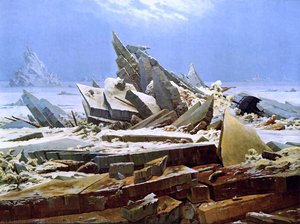
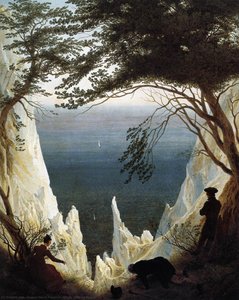
Several paintings stand out as defining examples of Friedrich’s artistic achievement. "The Abbey in the Oakwood" (1809-1810), a haunting image of a ruined churchyard enveloped by bare trees, speaks powerfully to themes of mortality and spiritual decay. Perhaps his most famous work, "Wanderer above the Sea of Fog" (c. 1818), encapsulates the Romantic ideal of the individual confronting the vastness and mystery of existence. The figure, silhouetted against a swirling sea of mist, embodies both human aspiration and insignificance. "Chalk Cliffs on Rügen" (1818) demonstrates his mastery of atmospheric effects and subtly conveys a sense of national identity—a growing concern in the fragmented political landscape of early 19th-century Germany. Even more dramatic is "The Sea of Ice" (1824), a chilling depiction of an Arctic wasteland, representing nature’s immense power and indifference to human fate. Recurring throughout his oeuvre are themes of nature as a manifestation of the divine, the fragility of humanity in the face of cosmic forces, melancholy, solitude, spiritual yearning, and a burgeoning sense of German nationalism.Legacy and Rediscovery
Friedrich’s influences were diverse, ranging from Dutch Golden Age landscape painting – particularly the works of Jacob van Ruisdael – to the philosophical writings of Immanuel Kant, which explored the limits of human perception and the power of subjective experience. His own personal experiences with loss and spirituality also played a crucial role in shaping his artistic vision. While celebrated during his lifetime, Friedrich’s popularity waned as artistic tastes shifted. However, he experienced a significant rediscovery in the late 20th century, becoming widely recognized as one of the most important figures in German Romanticism. His emphasis on subjective experience and emotional expression paved the way for later movements like Symbolism and Surrealism, influencing generations of artists who sought to explore the inner world through visual means. He remains a pivotal figure whose work continues to resonate with audiences today, reminding us of the profound connection between humanity and the natural world, and the enduring power of art to evoke contemplation and spiritual awakening.Historical Significance
Caspar David Friedrich’s art captured the very spirit of the Romantic era—a period defined by a rejection of Enlightenment rationalism in favor of emotion, imagination, and individualism. His landscapes served as powerful symbols of German national identity during a time of political fragmentation, fostering a sense of shared cultural heritage. Though he died in Dresden in 1840, his legacy extends far beyond the confines of 19th-century Germany. He didn’t simply paint what he saw; he painted what he *felt*, and it is this emotional honesty that continues to captivate and inspire. His work stands as a testament to the enduring power of art to explore the deepest questions of human existence, reminding us of our place within the vastness of nature and the mysteries of the universe.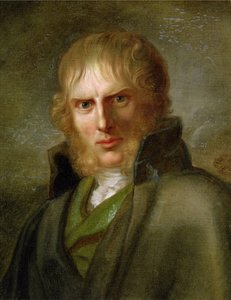
Caspar David Friedrich
1774 - 1840 , Germany
Quick Facts
- Artistic Movement Or Style: Romanticism
- Artists Or Movements Influenced By This Artist:
- Symbolists
- Surrealists
- Artists Who Influenced This Artist:
- Dutch Masters
- J.C. Dahl
- Date Of Birth: September 5, 1774
- Date Of Death: May 7, 1840
- Full Name: Caspar David Friedrich
- Nationality: German
- Notable Artworks:
- Abbey in the Oakwood
- Wanderer above the Sea...
- Chalk Cliffs on Rügen
- The Sea of Ice
- Place Of Birth: Greifswald, Germany
Related Articles

The Evocation of Tranquility: Exploring Serenity in Visual Art Across Movements & Media
Explore the history of serenity in art with AllPaintingsStore. Discover calming landscapes by Cole, Corot & Van Gogh. Find paintings that evoke peace and create a tranquil atmosphere in your home. Expert guidance & handmade reproductions.

The Enchanted Canopy: Exploring Forests in Art History – From Romantic Idealization to Ecological Consciousness
Explore the rich history of forests in art! Discover Romantic masterpieces by Friedrich & Monet, Symbolist depths, and contemporary visions. Find inspiration & quality reproductions at AllPaintingsStore.

Historical Realism: A Pursuit of Truthful Representation in 19th-Century Art
Explore the captivating world of 19th-century Realism! Discover key artists like Courbet, groundbreaking techniques & the social context behind this influential art movement. Expert insights at AllPaintingsStore.
The Enduring Legacy of 18th & 19th Century Art: Movements, Masters & Societal Reflections
Explore the rich history of 18th & 19th-century art! Discover Romanticism, Realism, and iconic masters like Delacroix & Courbet. Expert insights & high-quality reproductions at AllPaintingsStore.

Beyond the Portrait: Félix Nadar & the Psychological Depths of 19th-Century Photography
Explore the revolutionary photography of Félix Nadar – pioneer of portraiture, aerial imaging & psychological depth. Discover his iconic portraits of Baudelaire, Hugo & more. A deep dive into 19th-century art history.