


 Preview
 Send
Send Share
Share
 Details
 Guide
Guide

 Download
 Similars
 X-Ray
X-Ray Diaporama
 Q&A
Q&A Stats
Statsuntitled (238)


 Read More
Giclée / Art Print
Museum-quality giclée or canvas print with fast production and flexible finish options. ( Buy Hand Made Painting Switch to Digital Image)




P118B $10

P118H $10

P118W $10

P438Z $10

P508JH $12

P508YH $12

P805H $10

P805Z $10

P919BZ $10

P919G $10

P919XJ $10

P959ZH $10

P968JZ $12

W106C $8

W218G $10

W218JH $8

W218Y $10

W307PJ $10

W316G $10

W316PJ $8

W316Y $10

W398PJ $8

W4111J $10

W500HY $15

W500JH $15

W692G $12

W849H $8

W940BG $15

W953PJ $8




Pick from our preset sizes that match the artwork's original proportions.

Type the width and the height you need, to fit your frame or your wall. A print can only be cut, never made bigger than the picture, so a size with a different shape loses a part of the image. We send you a digital mockup to approve before we print anything. The picture shown on this page does not show the real cut — only the mockup does.
Worldwide Delivery () in 2 weeks instead of standard 4/5 weeks. (28 October)

Free Worldwide Express Shipping

High-Quality Linen Canvas

Full Shipping Insurance

Customs Tax Refund Guarantee

True Color Matching Guarantee

100-Day Return Policy (Defects Only)

100% Money-Back Guarantee

Bulk Discount Offer
 Glass option is only available in size under 110 CM

untitled (238)
Giclée / Art Print
Reproduction Size
-


Total Price
$ 65
A Moment Frozen in Light: Monet’s “Untitled (238)”
Claude Monet's "Untitled (238)" isn’t merely a depiction of a lakeside scene; it’s an invitation to step into a fleeting, sun-drenched memory. Painted around 1897, during his most prolific period at Giverny, this work embodies the very essence of Impressionism – capturing not just what is seen, but how light and atmosphere transform our perception of reality. The canvas presents two elegant sailboats gliding across the tranquil waters of a Normandy lake, their white sails billowing gently in the breeze. Behind them, a dense grove of trees—a mix of birch and poplar—provides a textured backdrop, hinting at both the solidity of nature and its ephemeral quality. A subtle bridge arches gracefully across the water, adding depth and drawing the eye into the heart of the composition, while figures – likely Monet’s family and friends – are scattered along the shore, engaged in quiet leisure activities. It's a scene brimming with serenity, yet subtly charged with an awareness of time passing.
Monet’s technique is, as always, revolutionary for its time. He employed his signature *plein air* method—working directly from nature outdoors—allowing him to meticulously observe and translate the shifting qualities of light onto the canvas. Notice how he uses broken brushstrokes, applied in short, vibrant dabs of color rather than blended smoothly. This technique creates a shimmering effect, mimicking the way sunlight dances on water and reflects off foliage. The colors themselves are remarkably delicate – pale blues and greens dominate, punctuated by flashes of white and ochre. He masterfully avoided precise outlines, instead relying on subtle gradations and tonal variations to suggest form and depth. The overall impression is one of hazy luminosity, as if the scene were viewed through a veil of heat or mist.
The Giverny Legacy: A World Constructed of Light
Giverny, the estate Monet purchased in 1883, became his lifelong studio and sanctuary. It was here that he cultivated a meticulously designed garden—a carefully orchestrated landscape of water lilies, Japanese bridges, and vibrant flowerbeds – specifically to provide endless inspiration for his paintings. “Untitled (238)” is inextricably linked to this environment; the lake, the trees, even the bridge, were all elements chosen and arranged to maximize their visual potential. Monet wasn’t simply painting a landscape; he was constructing an idealized world of light, color, and atmosphere—a testament to his profound understanding of how perception shapes reality. The garden itself became a living canvas, constantly evolving with the changing seasons, offering him an inexhaustible source of artistic material.
Symbolism in the Everyday
While seemingly simple, “Untitled (238)” is rich in symbolic meaning. The sailboats represent freedom and movement, evoking a sense of idyllic escape. The figures on the shore symbolize human connection and the pleasures of leisure—a key theme in Monet’s work during this period. The bridge, acting as a visual link between land and water, can be interpreted as a metaphor for transition or perhaps even the passage of time. More broadly, the painting speaks to the Impressionist fascination with capturing fleeting moments – the ephemeral beauty of nature and the subjective experience of seeing. The scene is not about documenting reality precisely, but rather conveying the *feeling* of being present in that particular moment.
Bringing Monet’s Vision Home
AllPaintingsStore offers meticulously crafted hand-painted reproductions of “Untitled (238)” that faithfully capture the spirit and artistry of this iconic Impressionist masterpiece. Each reproduction is created by skilled artists using traditional techniques, ensuring exceptional detail and color accuracy. Whether you're an art collector, a design enthusiast seeking to infuse your space with timeless elegance, or simply someone who appreciates the beauty of Monet’s vision, our reproductions provide a stunning way to bring this evocative scene into your home. Experience the magic of Giverny – and the genius of Claude Monet – with a AllPaintingsStore reproduction.
Questions & Answers
Why is the copyright status of "untitled (238)" what it is?
The copyright status of "untitled (238)" - in the public domain - its copyright has expired - follows from the artist's death in 1926.
Which period of Claude Monet's career does "untitled (238)" belong to?
"untitled (238)" represents the Mature Period of Claude Monet.
Is "untitled (238)" by Claude Monet in the public domain?
"untitled (238)" by Claude Monet is in the public domain - its copyright has expired. This status governs how the image of the work may be reproduced.
Related Artworks


Artist Biography
A Life Shaped by Light and Water
The story of Oscar-Claude Monet begins in the streets of Paris, though his heart was often found wandering the salt-misted air of Le Havre. As a young boy, he moved to Normandy, where his father initially hoped he would follow a path in commerce. Yet, the boy possessed a restless eye for detail, finding early success by selling charcoal caricatures to local acquaintances. It was during these formative years that a chance encounter with Eugène Boudin changed everything. Boudin did not merely offer lessons in oil paint; he introduced the young man to the practice of painting en plein air, teaching him to set his easel directly within the unpredictable elements of nature.
This early training instilled a lifelong obsession with the fleeting moment. When the Franco-Prussian War forced him into the streets of London, Monet found himself absorbing the atmospheric effects seen in the works of J.M.W. Turner. He returned to France with a new understanding of how mist and light could dissolve solid forms. In Paris, he sought formal instruction under Charles Gleyre, where he formed deep bonds with fellow painters like Auguste Renoir. These friendships were forged in a shared desire to break away from the rigid, dark constraints of the academic Salon, seeking instead a way to record the world as it was actually perceived by the eye.
The Rebellion of Impression
The year 1874 marked a turning point for this group of rebels. Dissatisfied with conservative standards, they organized their own independent exhibitions. It was during one such showing that his painting, Impression, Sunrise, gave a name to a movement that many initially viewed with derision. The term "Impressionism" emerged from the very criticism meant to mock his loose brushstrokes and unfinished appearance. Monet did not recoil from this label; he embraced it, using it to define a style centered on the subjective sensation of a scene.
His technique became a study in optical truth. He applied unmixed colors side-by-side, a method known as broken color, allowing the viewer's eye to blend the hues. He rejected traditional dark grounds, opting instead for light-colored primers that added a new brightness to his canvases. His work often focused on the following elements:
- The use of rapid, visible brushstrokes to capture movement.
- The study of how sunlight alters the appearance of a single subject over time.
- The rejection of linear perspective in favor of asymmetrical, flattened arrangements influenced by Japanese prints.
Giverny and the Final Vision
In 1883, Monet settled in Giverny, creating a sanctuary that would become his most profound subject. He transformed his property into an elaborate garden, complete with a water lily pond and a Japanese bridge. This was no mere landscape; it was a living laboratory where he could observe the interplay of light on water and foliage under controlled conditions. The gardens at Giverny provided him with a steady stream of inspiration for decades.
The later years of his life were defined by the monumental Water Lilies series. These vast canvases, often painted while he struggled with cataracts, moved toward a near-abstract state where the horizon line vanished entirely. He painted the same pond repeatedly, documenting the way shadows danced across the surface at dusk or how morning mist clung to the lilies. Through these works, he achieved a sense of immersion, inviting anyone who looked upon them to lose themselves in a world of pure, shifting color. He left behind a legacy that fundamentally altered the trajectory of modern art, proving that the most transient moment could be captured through the power of paint.
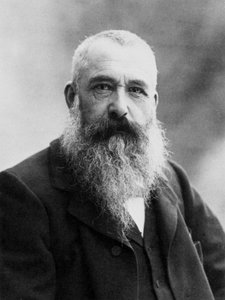
Claude Monet
1840 - 1926 , France
Quick Facts
- Full Name: Oscar-Claude Monet
- Nationality: French
- Date Of Birth: 1840
- Date Of Death: 1926
- Place Of Birth: Paris, France
- Notable Artworks:
- Impression, Sunrise
- Water Lilies
- Haystacks
- Rouen Cathedral
- Artistic Movement Or Style: Impressionism
- Artists Who Influenced This Artist:
- Eugène Boudin
- J.M.W. Turner
- Artists Or Movements Influenced By This Artist: ['Modern Art']
Related Articles

Monet's Serial Vision: How Light and Time Revolutionized Modern Art
Explore the revolutionary impact of Claude Monet's serial vision. Discover how his mastery of light, color, and time transformed Impressionism from a rebellion against tradition into the foundation of modern art history.


