Preview
 Send
Send Share
Share
 Details
 Guide
Guide

 Download
 Similars
 X-Ray
X-Ray Diaporama
 Stats
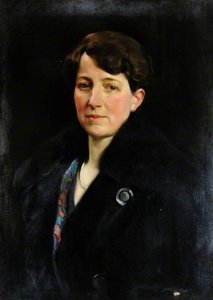
StatsKathleen
 91.0 x 71.0 cm
 Read More
The artwork displayed on this page is protected by copyright law, which means we cannot legally create or sell an identical reproduction. This protection is enforced under international agreements such as the Berne Convention and by national laws, including those outlined by the U.S. Copyright Law - Title 17.
This method fully complies with copyright regulations because it does not involve copying or duplicating the protected artwork. Instead, it is a creative reinterpretation - a new painting that is influenced by the original but not identical to it.
Giclée / Art Print
Museum-quality giclée or canvas print with fast production and flexible finish options. ( Buy Hand Made Painting Switch to Digital Image)




































Pick from our preset sizes that match the artwork's original proportions.

Type the width and the height you need, to fit your frame or your wall. A print can only be cut, never made bigger than the picture, so a size with a different shape loses a part of the image. We send you a digital mockup to approve before we print anything. The picture shown on this page does not show the real cut — only the mockup does.
Worldwide Delivery () in 2 weeks instead of standard 4/5 weeks. (23 October)

Free Worldwide Express Shipping

High-Quality Linen Canvas

Full Shipping Insurance

Customs Tax Refund Guarantee

True Color Matching Guarantee

100-Day Return Policy (Defects Only)

100% Money-Back Guarantee

Bulk Discount Offer
 Glass option is only available in size under 110 CM

Kathleen
Giclée / Art Print
Reproduction Size
-


Total Price
$ 65
Related Artworks


Artist Biography
A Legacy of Elegance: The Life of David Jagger
Born in Kilnhurst, near Rotherham, David Jagger emerged as one of the most accomplished English portrait painters of his era. His journey into the world of fine art was deeply rooted in a family of immense creative talent; he was the son of colliery manager Enoch Jagger and Mary Sargeant, and grew up alongside siblings who would also leave their mark on the British art scene. His sister, Edith, became a noted landscape artist and textile designer, while his brother, Charles Sargeant Jagger, rose to prominence as a celebrated sculptor. This environment of artistic rigor shaped David’s early development, leading him to the Sheffield School of Art, where he honed the technical precision that would later define his professional career.
As an accomplished draughtsman and skilled illustrator, Jagger’s talent was recognized early through accolades in mural design and painting. Following his formal education, he moved to London, a transition that marked the beginning of his ascent within the prestigious circles of British society. Initially balancing commercial art studio work with evening portrait commissions, he eventually established his own professional portrait studio in Chelsea, south of London. This period of his life was not only marked by professional growth but also by profound personal inspiration; his marriage to Catherine Gardiner brought a muse into his life whose features would grace many of his most accomplished works, often appearing under a pseudonym.
Mastery of the Portrait
Jagger’s work is characterized by a remarkable realism that, while highly detailed, maintained a soft, painterly quality that avoided the harshness of hard-edge styles. He possessed a rare ability to capture the essence of his subjects, whether they were members of the British aristocracy or figures of significant historical importance. His technical mastery allowed him to navigate the delicate balance between formal, official-looking commissions and more intimate, thoughtfully posed compositions. This skill earned him a place among the leading exhibitors of his time, with regular appearances at the Royal Academy, the Royal Society of British Artists, and the Royal Institute of Oil Painters.
The breadth of his subject matter reflects the high society and civic authority of early 20th-century Britain. His portfolio includes a breathtaking array of notable figures, such as:
- Robert Baden-Powell, whose 1929 portrait remains one of Jagger's most enduring legacies, with numerous copies displayed in Scouting premises worldwide.
- Queen Mary, captured in significant works during 1930 and 1932.
- Winston Churchill, a monumental subject for any portraitist of the era.
- King George VI, documented in 1937.
- Vivien Leigh, representing the glamour of the cinematic age in 1941.
- Prince Philip, Duke of Edinburgh, one of his final notable subjects.
Historical Significance and Artistic Standing
Beyond the individual brilliance of his brushwork, David Jagger holds a significant place in the history of British portraiture due to his role in documenting the faces of an era. His ability to secure commissions from the highest echelons of power—ranging from royalty to political leaders—cemented his reputation as a premier chronicler of his time. His work serves as a visual record of the dignity, tradition, and shifting social landscape of mid-century England.
His contribution to the art community was further solidified through his active membership in prestigious societies like the Royal Society of Portrait Painters. Through these institutions, Jagger helped maintain the high standards of oil painting and portraiture during a period of significant artistic transition. Today, his portraits remain cherished not only for their technical excellence but as windows into the character and prestige of the individuals who shaped the twentieth century.

David Jagger
1891 - 1958 , United Kingdom
Quick Facts
- Artistic Movement Or Style: Portrait painting
- Full Name: David Jagger
- Nationality: English
- Notable Artworks:
- Robert Baden-Powell
- Queen Mary
- King George VI
- Winston Churchill
- Vivien Leigh
- Prince Philip
- Place Of Birth: Kilnwood Hill, United Kingdom
- Date Of Birth: 1891
- Date Of Death: 1958