


 Preview
 Send
Send Share
Share
 Details
 Guide
Guide

 Download
 Similars
 X-Ray
X-Ray Diaporama
 Stats
StatsMarcel Archinard

 Read More
Purchase a high-resolution, enhanced digital image, far superior to the online preview.
Each file is meticulously prepared by our in-house specialists using advanced tools and expert manual retouching. We ensure every image has exceptional clarity, precise color accuracy, and fine detail.
The final file is delivered via email within 72 hours, optimized for immediate use in professional, editorial, and print environments. This is the same quality trusted by top-tier design studios, publishers, and galleries.
Digital Image
Download a high-resolution file for personal display, printing, and creative projects. ( Switch to Print Buy Hand Made Painting)
Included in Every Digital Image Order
Expert Digital Delivery, Guaranteed
When you choose AllPaintingsStore.com, you're not just getting an image - you're receiving a professionally enhanced digital artwork, crafted with precision and backed by a satisfaction guarantee. Here's everything that comes with your order, automatically:

Fast Email Delivery
Your high-resolution digital image file will be emailed to you within 72 hours of ordering - ready for immediate use.

AI-Enhanced Digital File
Your artwork is professionally optimized using advanced AI tools and manual editing, ensuring maximum detail, clarity, and color accuracy.

Free Lifetime Re-Delivery
Accidentally deleted or lost your file? No worries - we'll resend it to you anytime, free of charge.

No Import Fees - Ever
Enjoy your artwork instantly with zero customs, duties, or delivery fees - digital downloads are always tax-free.

Color Accuracy Guarantee
We ensure your digital image reflects the original colors as closely as possible using professional tools and color management.

100-Day Satisfaction Guarantee
If you're not satisfied with your digital image, we'll revise it or refund 100% within 100 days - no questions asked.

100% Money-Back Guarantee
Not satisfied? Get a full refund within 100 days of receiving your digital file - no questions asked.

Bulk Order Discounts
Buy 3 images, save 10% - Buy 5, save 15% - Buy 10+, save 20%. Great for creative projects, galleries, and agencies.
A Glimpse into Parisian Bohemia: Edvard Munch’s *Marcel Archinard*
Edvard Munch, a name synonymous with the raw emotionality of Expressionism, is perhaps best known for his iconic depiction of existential dread in *The Scream*. However, to limit one's understanding of Munch to this single masterpiece would be to overlook the breadth and depth of his artistic exploration. *Marcel Archinard*, painted around 1904, offers a fascinating counterpoint to the angst-ridden imagery that often defines his work, revealing a more nuanced side of the artist—one captivated by the vibrant energy of Parisian life and the complexities of human connection. The painting portrays Marcel Archinard, a French writer and critic whom Munch encountered during his time in Paris, a period crucial for the development of his artistic style.
The Portrait as a Reflection of an Era
Munch’s *Marcel Archinard* is not merely a likeness; it's a distillation of atmosphere. The subject, dressed in a dark suit accented by a striking red tie, commands attention with a direct and somewhat serious gaze. He isn’t presented as aloof or unattainable, but rather as an engaged participant in the world around him. This sense of engagement is subtly reinforced by the inclusion of two figures in the background—ghostly presences that suggest a bustling social environment. The color palette is particularly striking: bold blues and oranges clash and complement each other, creating a dynamic tension that mirrors the intellectual ferment of early 20th-century Paris. Munch’s brushwork, while not as frenzied as in some of his more emotionally charged pieces, remains visible and expressive, lending texture and vitality to the composition. The painting is executed with oil on unprimed canvas, a technique that allowed Munch to achieve a unique luminosity and immediacy.
Symbolism and Psychological Depth
While seemingly straightforward as a portrait, *Marcel Archinard* carries layers of symbolic weight. The red tie, for instance, can be interpreted as a symbol of passion or perhaps even danger—a subtle hint at the complexities hidden beneath the surface of polite society. The contrast between the dark suit and the vibrant background colors suggests a tension between conformity and individuality, a theme that resonated deeply with Munch throughout his career. Having battled personal demons for much of his life, Munch was acutely aware of the fragility of the human psyche. Even in this seemingly balanced portrait, there’s an underlying sense of melancholy, a quiet introspection that invites viewers to contemplate the inner world of both the sitter and the artist. The painting reflects Munch's exploration of modern anxieties and the search for meaning in a rapidly changing world.
A Legacy of Emotional Resonance
*Marcel Archinard* stands as a testament to Edvard Munch’s versatility and his ability to capture not just physical appearances, but also the essence of a person and the spirit of an era. It's a painting that invites contemplation, prompting viewers to consider the complexities of human relationships and the enduring power of art to reveal hidden truths. For those seeking to bring a touch of intellectual sophistication and emotional depth to their surroundings, a reproduction of *Marcel Archinard* offers a compelling choice—a window into the world of Parisian bohemia and the mind of one of history’s most influential artists.
Questions & Answers
Which artist and which style stand behind "Marcel Archinard"?
Behind "Marcel Archinard" stand Edvard Munch and the Expressionism movement.
How is the palette of "Marcel Archinard" by Edvard Munch described?
"Marcel Archinard" by Edvard Munch uses an earthy color palette. The palette summarizes the work's overall color character.
Which color stands out most in "Marcel Archinard"?
The dominant color of "Marcel Archinard" by Edvard Munch is espresso (#625954).
Related Artworks


Artist Biography
A Life Shaped by Loss
Edvard Munch arrived in the world in 1863, born into the stark landscapes of Norway. His early years were defined by a heavy presence of grief that would later find its way onto his canvases. The deaths of his mother and his sister, Sophie, both taken by tuberculosis, left a deep mark on his young mind. These losses created a preoccupation with mortality and the fragility of life that stayed with him forever. He grew up in a household where the shadows of sickness were never far away.
His father, Christian, was a physician who struggled with intense religious devotion and mental instability. This atmosphere of dread and the vivid ghost stories told in his childhood helped shape his later visions. Munch did not merely paint what he saw; he sought to externalize his internal state. He called this approach soul painting. It was a way to translate psychological distress into visual form, using the colors and shapes of his own experience.
The Path to Expressionism
Munch began his formal studies at the Royal School of Art and Design in Kristiania, which is now known as Oslo. During this time, he moved within bohemian circles that challenged the strict rules of academic art. A significant influence was Hans Jæger, a nihilist who encouraged Munch to abandon conventional styles and instead focus on his own subjective emotions. This shift led him toward the development of Expressionism.
Travels through Europe brought new perspectives to his work. In Paris, he encountered the techniques of artists like Paul Gauguin and Vincent van Gogh, particularly their use of color. In Berlin, his connections with figures such as August Strindberg further pushed his investigations into psychological themes. He began to move away from naturalistic representation, opting instead for distorted forms and rhythmic lines that could communicate the tremors of human existence.
Themes and Lasting Impact
Much of his work belongs to a series he called The Frieze of Life, where he explored the recurring cycles of love, fear, death, and anxiety. Some of his most recognized paintings include:
- The Scream: A work from 1893 that uses swirling, fiery landscapes to represent existential dread.
- Madonna: A piece that explores themes of sexuality and mortality.
- The Sick Child: A poignant reminder of the loss of his sister.
- Puberty: An exploration of the physical and psychological changes of youth.
Munch was a highly active printmaker, using techniques like etching, lithography, and woodcut to expand his reach. He possessed over one thousand paintings at the time of his death in 1944. His ability to confront the darker aspects of the human condition helped pave the way for later movements like German Expressionism. Today, much of his legacy is preserved in the Munch Museum in Oslo, where his work continues to speak to the complexities of the human psyche.
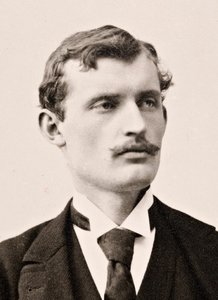
Edvard Munch
1863 - 1944 , Sweden
Quick Facts
- Artistic Movement Or Style:
- Expressionism
- Symbolism
- Post-Impressionism
- Artists Or Movements Influenced By This Artist: ['German Expressionism']
- Artists Who Influenced This Artist:
- Paul Gauguin
- Vincent van Gogh
- Toulouse-Lautrec
- Full Name: Edvard Munch
- Nationality: Norwegian
- Notable Artworks:
- The Scream
- Madonna
- The Sick Child
- Puberty
- Place Of Birth: Adelsbruk, Sweden
- Date Of Birth: 1863
- Date Of Death: 1944

