Preview
 Send
Send Share
Share
 Details
 Guide
Guide

 Download
 Similars
 X-Ray
X-Ray Diaporama
 Stats
StatsSalome II


 Read More
Giclée / Art Print
Museum-quality giclée or canvas print with fast production and flexible finish options. ( Buy Hand Made Painting Switch to Digital Image)




P118B $10

P118H $10

P118W $10

P438Z $10

P508JH $12

P508YH $12

P805H $10

P805Z $10

P919BZ $10

P919G $10

P919XJ $10

P959ZH $10

P968JZ $12

W106C $8

W218G $10

W218JH $8

W218Y $10

W307PJ $10

W316G $10

W316PJ $8

W316Y $10

W398PJ $8

W4111J $10

W500HY $15

W500JH $15

W692G $12

W849H $8

W940BG $15

W953PJ $8




Pick from our preset sizes that match the artwork's original proportions.

Type the width and the height you need, to fit your frame or your wall. A print can only be cut, never made bigger than the picture, so a size with a different shape loses a part of the image. We send you a digital mockup to approve before we print anything. The picture shown on this page does not show the real cut — only the mockup does.
Worldwide Delivery () in 2 weeks instead of standard 4/5 weeks. (27 October)

Free Worldwide Express Shipping

High-Quality Linen Canvas

Full Shipping Insurance

Customs Tax Refund Guarantee

True Color Matching Guarantee

100-Day Return Policy (Defects Only)

100% Money-Back Guarantee

Bulk Discount Offer
 Glass option is only available in size under 110 CM

Salome II
Giclée / Art Print
Reproduction Size
-


Total Price
$ 65
Salome II: A Descent into Melancholy – An Exploration of Edvard Munch’s Haunting Vision
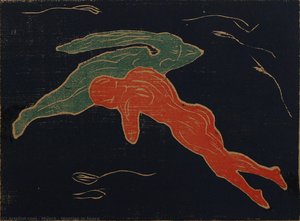
Edvard Munch's "Salome II," painted in 1905, isn’t merely a depiction of a biblical scene; it’s a visceral plunge into the artist’s own tormented psyche. This arresting black and white drawing, rendered with a deliberate roughness reminiscent of charcoal or pencil, captures a moment suspended between violence and vulnerability – a potent distillation of Munch's lifelong preoccupation with death, anxiety, and the fragility of human connection. The image immediately commands attention: a woman, identified as Salome (though her precise identity remains shrouded in historical ambiguity), holds the head of a man aloft, his lifeless form dominating the right side of the composition. Her expression is unsettlingly ambiguous – a mixture of triumph, sorrow, and perhaps even a chilling detachment. The stark contrast between the dark, almost suffocating background and the pale flesh tones of Salome creates an immediate sense of drama and isolation.
Munch’s artistic journey was profoundly shaped by personal tragedy and philosophical questioning. Born in 1863 amidst a landscape scarred by illness and premature loss – his mother and sister succumbed to tuberculosis early in life – Munch developed a uniquely sensitive awareness of mortality. This wasn't simply biographical; it became the bedrock of his art, fueling an exploration of the darkest corners of the human experience. The influence of figures like Hans Jæger, a Norwegian nihilist who encouraged him to paint “soul painting,” further propelled Munch toward expressing inner turmoil rather than merely replicating external reality. “Salome II” embodies this approach; it’s less about a literal retelling of the biblical story and more about conveying the emotional weight of power, loss, and the unsettling consequences of transgression.
The Symbolism of Head and Hand
The central image – the severed head – is laden with symbolic significance. In the original biblical narrative, Salome demands the head of John the Baptist as a gruesome trophy. However, Munch’s interpretation transcends this literal event. The head itself becomes an emblem of death, vulnerability, and the ultimate loss of innocence. Notice how it's presented: not dramatically posed or gloriously displayed, but rather laid limply in Salome’s hands, suggesting a profound sense of defeat and perhaps even pity. Her hand, pale and slightly trembling, is equally evocative – it’s both an instrument of violence and a gesture of hesitant restraint.
The woman's attire—a hat that partially obscures her face—adds to the air of mystery and detachment. It suggests a deliberate attempt to conceal emotion, reinforcing the idea that Salome isn’t simply a vengeful figure but someone wrestling with complex inner conflicts. The overall composition is deliberately unbalanced, mirroring the emotional instability at play. The man's head occupies a significant portion of the frame, emphasizing its importance and highlighting the devastating impact of its loss.
Technique and Expressionist Style
Munch’s technique in “Salome II” is characterized by a deliberate lack of polish. The lines are rough and sketchy, creating a sense of immediacy and urgency. This raw approach contrasts sharply with the idealized forms often found in academic art of the period. The use of charcoal or pencil lends the drawing a tactile quality, inviting the viewer to engage with its surface directly. Notice the expressive shading—the deep shadows that engulf the background and the subtle gradations of tone used to depict Salome’s face – all contribute to the work's emotional intensity.
This style firmly places “Salome II” within the realm of Expressionism, a movement that sought to convey subjective emotions rather than objective reality. Munch was a key figure in this movement, and his art served as a powerful vehicle for exploring the anxieties and psychological complexities of modern life. The drawing’s unsettling atmosphere and ambiguous narrative continue to resonate with viewers today, cementing its place as one of Munch's most compelling and enduring works.
Bringing “Salome II” into Your Space
AllPaintingsStore offers meticulously crafted hand-painted reproductions of "Salome II," allowing you to experience the power and emotional depth of this iconic artwork in a way that is both authentic and accessible. Our skilled artists replicate Munch’s distinctive style with remarkable precision, capturing the drawing's raw energy and haunting beauty. Whether displayed as a statement piece in a contemporary interior or as a thoughtful addition to a classic setting, a AllPaintingsStore reproduction of “Salome II” will undoubtedly spark conversation and evoke profound contemplation.
Questions & Answers
Can I examine "Salome II" in more detail?
The X-Ray page of "Salome II" by Edvard Munch is an interactive viewer that lets you slide through eleven optical layers of the artwork's image, including an X-ray style view.
What type of artwork is "Salome II" by Edvard Munch?
In the catalog, "Salome II" by Edvard Munch is filed as wall art. The category helps find similar works.
Can I see "Salome II" by Edvard Munch on my own wall before buying?
"Salome II" by Edvard Munch can be previewed on your own wall with the artwork's AR Preview page, using augmented reality on a compatible device.


Artist Biography
A Life Shaped by Loss
Edvard Munch arrived in the world in 1863, born into the stark landscapes of Norway. His early years were defined by a heavy presence of grief that would later find its way onto his canvases. The deaths of his mother and his sister, Sophie, both taken by tuberculosis, left a deep mark on his young mind. These losses created a preoccupation with mortality and the fragility of life that stayed with him forever. He grew up in a household where the shadows of sickness were never far away.
His father, Christian, was a physician who struggled with intense religious devotion and mental instability. This atmosphere of dread and the vivid ghost stories told in his childhood helped shape his later visions. Munch did not merely paint what he saw; he sought to externalize his internal state. He called this approach soul painting. It was a way to translate psychological distress into visual form, using the colors and shapes of his own experience.
The Path to Expressionism
Munch began his formal studies at the Royal School of Art and Design in Kristiania, which is now known as Oslo. During this time, he moved within bohemian circles that challenged the strict rules of academic art. A significant influence was Hans Jæger, a nihilist who encouraged Munch to abandon conventional styles and instead focus on his own subjective emotions. This shift led him toward the development of Expressionism.
Travels through Europe brought new perspectives to his work. In Paris, he encountered the techniques of artists like Paul Gauguin and Vincent van Gogh, particularly their use of color. In Berlin, his connections with figures such as August Strindberg further pushed his investigations into psychological themes. He began to move away from naturalistic representation, opting instead for distorted forms and rhythmic lines that could communicate the tremors of human existence.
Themes and Lasting Impact
Much of his work belongs to a series he called The Frieze of Life, where he explored the recurring cycles of love, fear, death, and anxiety. Some of his most recognized paintings include:
- The Scream: A work from 1893 that uses swirling, fiery landscapes to represent existential dread.
- Madonna: A piece that explores themes of sexuality and mortality.
- The Sick Child: A poignant reminder of the loss of his sister.
- Puberty: An exploration of the physical and psychological changes of youth.
Munch was a highly active printmaker, using techniques like etching, lithography, and woodcut to expand his reach. He possessed over one thousand paintings at the time of his death in 1944. His ability to confront the darker aspects of the human condition helped pave the way for later movements like German Expressionism. Today, much of his legacy is preserved in the Munch Museum in Oslo, where his work continues to speak to the complexities of the human psyche.
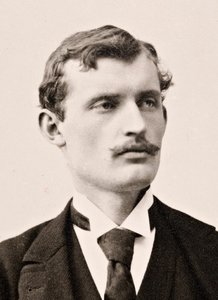
Edvard Munch
1863 - 1944 , Sweden
Quick Facts
- Artistic Movement Or Style:
- Expressionism
- Symbolism
- Post-Impressionism
- Artists Or Movements Influenced By This Artist: ['German Expressionism']
- Artists Who Influenced This Artist:
- Paul Gauguin
- Vincent van Gogh
- Toulouse-Lautrec
- Full Name: Edvard Munch
- Nationality: Norwegian
- Notable Artworks:
- The Scream
- Madonna
- The Sick Child
- Puberty
- Place Of Birth: Adelsbruk, Sweden
- Date Of Birth: 1863
- Date Of Death: 1944
Related Articles

Mastering Charcoal: A Professional Guide to Texture and Depth for Large-Scale Interior Art Commissions
Discover professional techniques for mastering charcoal texture and depth. An expert guide for hotel designers and procurement managers looking to integrate high-impact monochrome art into large-scale hospitality projects with precision and scale.