Preview
 Send
Send Share
Share
 Details
 Guide
Guide

 Download
 Similars
 X-Ray
X-Ray Diaporama
 Stats
StatsSelf-Portrait
 Oil On Board
- WallArt
- Symbolic Expression
 1882
1882- 19th Century
 26.0 x 19.0 cm
 Munch Museum
 Read More
Hand Made Oil Reproduction
Hand-painted oil on canvas in your size and frame, made to order by our artists. ( Switch to Print Switch to Digital Image)




P118B $10

P118H $10

P118W $10

P438Z $10

P508JH $12

P508YH $12

P805H $10

P805Z $10

P919BZ $10

P919G $10

P919XJ $10

P959ZH $10

P968JZ $12

W106C $8

W218G $10

W218JH $8

W218Y $10

W307PJ $10

W316G $10

W316PJ $8

W316Y $10

W398PJ $8

W4111J $10

W500HY $15

W500JH $15

W692G $12

W849H $8

W940BG $15

W953PJ $8




Pick from our preset sizes that match the artwork's original proportions.

Type the width and the height you need, to fit your frame or your wall. This is hand-painted, so for a size with a different shape the artist can paint a bit more around the picture, or cut a bit — you choose. We send you a digital mockup to approve before the painting starts. The picture shown on this page does not show the real result — only the mockup does.
After order, AllPaintingsStore.com team will email client for instructions and provide a mockup preview
Worldwide Delivery () in 3/4 weeks instead of standard 5 weeks. (22 October). No compromise on quality.

Free Worldwide Express Shipping

High-Quality Linen Canvas

Full Shipping Insurance

Customs Tax Refund Guarantee

True Color Matching Guarantee

100-Day Return Policy (Defects Only)

100% Money-Back Guarantee

Bulk Discount Offer
 Glass option is only available in size under 110 CM

Self-Portrait
Reproduction Medium
Reproduction Size
-


Total Price
$ 258
A Window into Munch’s Soul
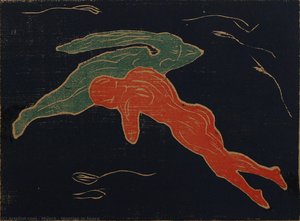
In his 1882 Self-Portrait, Edvard Munch offers far more than a mere reflection of his physical likeness; he provides a profound window into the psychological complexities that would eventually define his artistic legacy. At just eighteen years old, while studying at the Royal School of Drawing in Kristiania, Munch captured himself in a strikingly candid pose against a muted, somber backdrop of ochre and grey. The composition is intimate and direct, with the artist's gaze confronting the viewer with an unsettling honesty. This piercing look anticipates the raw, emotional intensity that would later make him a pioneer of Expressionism, transforming the canvas from a simple record of appearance into a conduit for inner turmoil.
The technique employed in this early work reveals a fascinating tension between academic training and burgeoning personal expression. Executed in oil on board, the painting utilizes a fine brush to render certain details with meticulous care—such as the individual strands of hair and the subtle folds of the ear—yet it simultaneously embraces a departure from strict realism. Munch employs loose brushstrokes and flattened planes that prioritize emotional resonance over photographic accuracy. The face is masterfully modeled through the interplay of light and shadow, creating a sense of depth that makes the subject feel palpably present, even as the surrounding tones remain cool and dark.
The Weight of Experience and Symbolism
To truly appreciate this portrait, one must consider the heavy historical context that shaped Munch’s vision. Created during a period of intense personal upheaval following the tragic deaths of his mother and sister, the painting is steeped in a visceral awareness of mortality and loss. This early encounter with grief instilled in him an existential dread that would permeate his entire oeuvre. The symbolism within the work is subtle yet powerful; the pallid complexion of his face serves as a deliberate exaggeration to symbolize vulnerability and fragility, while his dark, slightly off-center eyes convey a deep sense of melancholy and introspection.
For the discerning collector or interior designer, a reproduction of this Self-Portrait offers an opportunity to invite a piece of art history into a contemporary space. It is a work that demands attention, not through loud colors, but through its quiet, haunting strength. The nuanced tonal palette and the textured quality of the oil on board make it a sophisticated addition to any curated collection, providing a focal point that encourages deep contemplation. Owning such a piece means engaging with the very beginnings of a movement—a moment where an ambitious young artist first began to translate his internal psychological landscape into a visual language that continues to resonate with audiences across the world.
Questions & Answers
Is Edvard Munch, creator of "Self-Portrait", known under other names?
Other names recorded for Edvard Munch, creator of "Self-Portrait", include Munch.
Who is the author of "Self-Portrait", and in which movement?
Edvard Munch created "Self-Portrait" within the Symbolic Expression movement.
How does "Self-Portrait" fit into Edvard Munch's themes and style?
"Self-Portrait" shares with Edvard Munch's other works its Symbolic Expression style and the recorded themes: emotional intensity, symbolism roots, existential dread, munch legacy.
Artist Biography
A Life Shaped by Loss
Edvard Munch arrived in the world in 1863, born into the stark landscapes of Norway. His early years were defined by a heavy presence of grief that would later find its way onto his canvases. The deaths of his mother and his sister, Sophie, both taken by tuberculosis, left a deep mark on his young mind. These losses created a preoccupation with mortality and the fragility of life that stayed with him forever. He grew up in a household where the shadows of sickness were never far away.
His father, Christian, was a physician who struggled with intense religious devotion and mental instability. This atmosphere of dread and the vivid ghost stories told in his childhood helped shape his later visions. Munch did not merely paint what he saw; he sought to externalize his internal state. He called this approach soul painting. It was a way to translate psychological distress into visual form, using the colors and shapes of his own experience.
The Path to Expressionism
Munch began his formal studies at the Royal School of Art and Design in Kristiania, which is now known as Oslo. During this time, he moved within bohemian circles that challenged the strict rules of academic art. A significant influence was Hans Jæger, a nihilist who encouraged Munch to abandon conventional styles and instead focus on his own subjective emotions. This shift led him toward the development of Expressionism.
Travels through Europe brought new perspectives to his work. In Paris, he encountered the techniques of artists like Paul Gauguin and Vincent van Gogh, particularly their use of color. In Berlin, his connections with figures such as August Strindberg further pushed his investigations into psychological themes. He began to move away from naturalistic representation, opting instead for distorted forms and rhythmic lines that could communicate the tremors of human existence.
Themes and Lasting Impact
Much of his work belongs to a series he called The Frieze of Life, where he explored the recurring cycles of love, fear, death, and anxiety. Some of his most recognized paintings include:
- The Scream: A work from 1893 that uses swirling, fiery landscapes to represent existential dread.
- Madonna: A piece that explores themes of sexuality and mortality.
- The Sick Child: A poignant reminder of the loss of his sister.
- Puberty: An exploration of the physical and psychological changes of youth.
Munch was a highly active printmaker, using techniques like etching, lithography, and woodcut to expand his reach. He possessed over one thousand paintings at the time of his death in 1944. His ability to confront the darker aspects of the human condition helped pave the way for later movements like German Expressionism. Today, much of his legacy is preserved in the Munch Museum in Oslo, where his work continues to speak to the complexities of the human psyche.
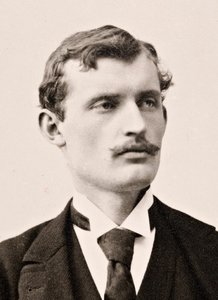
Edvard Munch
1863 - 1944 , Sweden
Quick Facts
- Artistic Movement Or Style:
- Expressionism
- Symbolism
- Post-Impressionism
- Artists Or Movements Influenced By This Artist: ['German Expressionism']
- Artists Who Influenced This Artist:
- Paul Gauguin
- Vincent van Gogh
- Toulouse-Lautrec
- Full Name: Edvard Munch
- Nationality: Norwegian
- Notable Artworks:
- The Scream
- Madonna
- The Sick Child
- Puberty
- Place Of Birth: Adelsbruk, Sweden
- Date Of Birth: 1863
- Date Of Death: 1944
Related Articles

How Much Does It Cost to Commission an Oil Painting from a Photo? The Full Price Ladder
Wondering how much an oil painting from a photo costs? Our expert guide breaks down the full price ladder, comparing ateliers vs. independent artists. Learn why canvas size and face count drive costs, plus transparent pricing for AllPaintingsStore, Etsy, and more. Plan your commission with confidence.

The Red Dates on the Calendar: What Actually Makes You Wait for a Commissioned Oil Painting
Ever wondered why custom oil paintings take weeks? Discover the truth behind art commissions, from atelier efficiency to the science of paint curing. Learn how to navigate queues, manage timelines, and get expert value for your next masterpiece with AllPaintingsStore's professional guide.

Priced by the Square Centimetre: What a Commissioned Oil Portrait Really Costs
Confused by portrait prices? Discover the truth about commissioning oil paintings. Learn why atelier pricing differs from independent artists, how canvas size dictates cost, and how to find expert value for your custom portrait without overpaying.

Waiting for the Paint to Cure: How Long a Commissioned Oil Painting Actually Takes
Discover the real timeline for commissioned oil paintings. From atelier speed to independent artist queues, learn how much time painting and curing actually takes so you can plan your perfect gift or collection with expert confidence.

Waiting for the Paint to Cure: How Long a Commissioned Oil Painting Really Takes
Expert oil painting insights on wait times, curing, and pricing. Learn how studios and independent artists differ, build trust with transparent timelines, and maximize value for commissions with reliable guidance from AllPaintingsStore editorial experts.