


 Preview
 Send
Send Share
Share
 Details
 Guide
Guide

 Download
 Similars
 X-Ray
X-Ray Diaporama
 Stats
Statsuntitled (7446)


 Read More
Purchase a high-resolution, enhanced digital image, far superior to the online preview.
Each file is meticulously prepared by our in-house specialists using advanced tools and expert manual retouching. We ensure every image has exceptional clarity, precise color accuracy, and fine detail.
The final file is delivered via email within 72 hours, optimized for immediate use in professional, editorial, and print environments. This is the same quality trusted by top-tier design studios, publishers, and galleries.
Digital Image
Download a high-resolution file for personal display, printing, and creative projects. ( Switch to Print Buy Hand Made Painting)
Included in Every Digital Image Order
Expert Digital Delivery, Guaranteed
When you choose AllPaintingsStore.com, you're not just getting an image - you're receiving a professionally enhanced digital artwork, crafted with precision and backed by a satisfaction guarantee. Here's everything that comes with your order, automatically:

Fast Email Delivery
Your high-resolution digital image file will be emailed to you within 72 hours of ordering - ready for immediate use.

AI-Enhanced Digital File
Your artwork is professionally optimized using advanced AI tools and manual editing, ensuring maximum detail, clarity, and color accuracy.

Free Lifetime Re-Delivery
Accidentally deleted or lost your file? No worries - we'll resend it to you anytime, free of charge.

No Import Fees - Ever
Enjoy your artwork instantly with zero customs, duties, or delivery fees - digital downloads are always tax-free.

Color Accuracy Guarantee
We ensure your digital image reflects the original colors as closely as possible using professional tools and color management.

100-Day Satisfaction Guarantee
If you're not satisfied with your digital image, we'll revise it or refund 100% within 100 days - no questions asked.

100% Money-Back Guarantee
Not satisfied? Get a full refund within 100 days of receiving your digital file - no questions asked.

Bulk Order Discounts
Buy 3 images, save 10% - Buy 5, save 15% - Buy 10+, save 20%. Great for creative projects, galleries, and agencies.
A Haunting Echo of the Human Condition
This powerful work by Edvard Munch is a quintessential example of Expressionism, distilling anxieties and emotional turmoil into a visually arresting scene. Created during a period marked by personal tragedy and philosophical questioning for the artist, it offers a poignant glimpse into themes of isolation, longing, and perhaps even despair – emotions that continue to resonate deeply with viewers today.Subject & Composition: Figures Within a Psychological Space
The composition centers around two figures set within an ambiguous outdoor environment. A woman, strikingly pale with flowing golden hair, dominates the left side of the canvas. Her gaze is directed away from the viewer, lost in contemplation or sorrow. To her right, a slumped figure – likely male – leans against what appears to be a building fragment, embodying resignation and sadness. The setting itself feels less like a physical location and more like an internal landscape, constructed from blurred shapes suggesting buildings, foliage, and water. This deliberate ambiguity invites viewers to project their own interpretations onto the scene, enhancing its dreamlike quality. The chaotic overlapping of forms and flattened perspective further intensify this sense of disorientation and emotional intensity.Style & Technique: Impasto and Expressive Lines
Munch’s masterful technique amplifies the work's emotional impact. He employs a heavily textured *impasto* style, applying thick layers of paint that create a tactile surface and emphasize the physicality of emotion. The brushstrokes are loose and visible, eschewing precise delineation in favor of expressive lines that convey feeling rather than form. This approach is characteristic of Expressionism, where distortion and exaggeration serve to communicate inner states. The color palette is predominantly cool – blues and whites – punctuated by the warmth of the woman’s hair and strategically placed red dots. These crimson accents act as visual jolts, hinting at underlying tension or perhaps even trauma.Historical Context: A Pioneer of Psychological Expression
Edvard Munch (1863-1944) was a pivotal figure in the development of modern art, particularly Expressionism. His life was profoundly shaped by loss and illness; his mother and sister both succumbed to tuberculosis during his childhood, and he lived with the constant fear of inheriting his father’s mental instability. These experiences fueled a lifelong preoccupation with themes of mortality, anxiety, and psychological distress – all powerfully reflected in his art. He rejected academic conventions, committing himself to exploring the darker recesses of the human psyche. He sought not to depict *what* he saw, but *how* he felt about what he saw, paving the way for future generations of artists to embrace subjective expression.Symbolism & Emotional Resonance: Loneliness and Unfulfilled Desire
The symbolism within this painting is open to interpretation, yet certain elements consistently evoke feelings of loneliness and unfulfilled desire. The woman’s distant gaze suggests a longing for something unattainable, while the slumped figure embodies defeat and resignation. The ambiguous setting reinforces these themes, creating a sense of isolation and disorientation. The red dots scattered throughout the canvas can be interpreted as symbols of passion, pain, or even blood – adding layers of complexity to the emotional narrative. Ultimately, this painting is not simply a depiction of two figures; it’s a powerful evocation of universal human emotions that continue to resonate with viewers today.For Collectors & Designers: A Statement Piece
This work would serve as a compelling statement piece in any collection or interior design scheme. Its muted color palette and emotionally charged subject matter lend themselves well to spaces seeking depth and introspection. The textured surface adds visual interest, while the painting’s historical significance provides intellectual weight. Whether displayed in a modern loft, a classic study, or a contemporary living room, this work by Munch is guaranteed to spark conversation and inspire contemplation.Key Features
- Artist: Edvard Munch (1863-1944)
- Style: Expressionism
- Technique: Impasto, Expressive Brushwork
- Themes: Isolation, Longing, Despair, Psychological Turmoil
Questions & Answers
What is the overall mood of "untitled (7446)" by Edvard Munch?
"untitled (7446)" by Edvard Munch is described as dramatic in mood. This classification can help match the work to a setting.
Is "untitled (7446)" typical of what Edvard Munch usually created?
Among Edvard Munch's recorded themes - key expressionist piece, recurring melancholy, central to munch's vision, symbolism, expressionism, post-impressionist roots, psychological realism, anxiety & modernity - "untitled (7446)" brings its own focus on melancholy, isolation, emotional distress, symbolic figures, psychological art, dark palette colors, human expression, surreal landscape.
How do the colors of "untitled (7446)" by Edvard Munch relate to its emotion?
In "untitled (7446)", neutrals colors accompany a melancholic feeling.
Related Artworks


Artist Biography
A Life Shaped by Loss
Edvard Munch arrived in the world in 1863, born into the stark landscapes of Norway. His early years were defined by a heavy presence of grief that would later find its way onto his canvases. The deaths of his mother and his sister, Sophie, both taken by tuberculosis, left a deep mark on his young mind. These losses created a preoccupation with mortality and the fragility of life that stayed with him forever. He grew up in a household where the shadows of sickness were never far away.
His father, Christian, was a physician who struggled with intense religious devotion and mental instability. This atmosphere of dread and the vivid ghost stories told in his childhood helped shape his later visions. Munch did not merely paint what he saw; he sought to externalize his internal state. He called this approach soul painting. It was a way to translate psychological distress into visual form, using the colors and shapes of his own experience.
The Path to Expressionism
Munch began his formal studies at the Royal School of Art and Design in Kristiania, which is now known as Oslo. During this time, he moved within bohemian circles that challenged the strict rules of academic art. A significant influence was Hans Jæger, a nihilist who encouraged Munch to abandon conventional styles and instead focus on his own subjective emotions. This shift led him toward the development of Expressionism.
Travels through Europe brought new perspectives to his work. In Paris, he encountered the techniques of artists like Paul Gauguin and Vincent van Gogh, particularly their use of color. In Berlin, his connections with figures such as August Strindberg further pushed his investigations into psychological themes. He began to move away from naturalistic representation, opting instead for distorted forms and rhythmic lines that could communicate the tremors of human existence.
Themes and Lasting Impact
Much of his work belongs to a series he called The Frieze of Life, where he explored the recurring cycles of love, fear, death, and anxiety. Some of his most recognized paintings include:
- The Scream: A work from 1893 that uses swirling, fiery landscapes to represent existential dread.
- Madonna: A piece that explores themes of sexuality and mortality.
- The Sick Child: A poignant reminder of the loss of his sister.
- Puberty: An exploration of the physical and psychological changes of youth.
Munch was a highly active printmaker, using techniques like etching, lithography, and woodcut to expand his reach. He possessed over one thousand paintings at the time of his death in 1944. His ability to confront the darker aspects of the human condition helped pave the way for later movements like German Expressionism. Today, much of his legacy is preserved in the Munch Museum in Oslo, where his work continues to speak to the complexities of the human psyche.
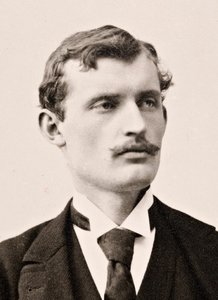
Edvard Munch
1863 - 1944 , Sweden
Quick Facts
- Artistic Movement Or Style:
- Expressionism
- Symbolism
- Post-Impressionism
- Artists Or Movements Influenced By This Artist: ['German Expressionism']
- Artists Who Influenced This Artist:
- Paul Gauguin
- Vincent van Gogh
- Toulouse-Lautrec
- Full Name: Edvard Munch
- Nationality: Norwegian
- Notable Artworks:
- The Scream
- Madonna
- The Sick Child
- Puberty
- Place Of Birth: Adelsbruk, Sweden
- Date Of Birth: 1863
- Date Of Death: 1944

