


 Preview
 Send
Send Share
Share
 Details
 Guide
Guide

 Download
 Similars
 X-Ray
X-Ray Diaporama
 Stats
Statsuntitled (7987)

 Read More
Purchase a high-resolution, enhanced digital image, far superior to the online preview.
Each file is meticulously prepared by our in-house specialists using advanced tools and expert manual retouching. We ensure every image has exceptional clarity, precise color accuracy, and fine detail.
The final file is delivered via email within 72 hours, optimized for immediate use in professional, editorial, and print environments. This is the same quality trusted by top-tier design studios, publishers, and galleries.
Digital Image
Download a high-resolution file for personal display, printing, and creative projects. ( Switch to Print Buy Hand Made Painting)
Included in Every Digital Image Order
Expert Digital Delivery, Guaranteed
When you choose AllPaintingsStore.com, you're not just getting an image - you're receiving a professionally enhanced digital artwork, crafted with precision and backed by a satisfaction guarantee. Here's everything that comes with your order, automatically:

Fast Email Delivery
Your high-resolution digital image file will be emailed to you within 72 hours of ordering - ready for immediate use.

AI-Enhanced Digital File
Your artwork is professionally optimized using advanced AI tools and manual editing, ensuring maximum detail, clarity, and color accuracy.

Free Lifetime Re-Delivery
Accidentally deleted or lost your file? No worries - we'll resend it to you anytime, free of charge.

No Import Fees - Ever
Enjoy your artwork instantly with zero customs, duties, or delivery fees - digital downloads are always tax-free.

Color Accuracy Guarantee
We ensure your digital image reflects the original colors as closely as possible using professional tools and color management.

100-Day Satisfaction Guarantee
If you're not satisfied with your digital image, we'll revise it or refund 100% within 100 days - no questions asked.

100% Money-Back Guarantee
Not satisfied? Get a full refund within 100 days of receiving your digital file - no questions asked.

Bulk Order Discounts
Buy 3 images, save 10% - Buy 5, save 15% - Buy 10+, save 20%. Great for creative projects, galleries, and agencies.
A Window into the Soul: Exploring Munch’s Fauvist-Inflected Interior
This striking work by Edvard Munch offers a compelling glimpse into the artist's ongoing exploration of the human condition, presented through a lens surprisingly divergent from his most famous Symbolist creations. While instantly recognizable as a product of Munch’s unique vision, this piece demonstrates a fascinating engagement with the burgeoning Fauvist movement – a stylistic detour that amplifies the emotional intensity at its core. It is a testament to Munch's willingness to experiment and adapt while remaining true to his deeply personal themes.Decoding the Language of Color & Form
The painting’s most immediate characteristic is its bold, unapologetic use of color. This isn’t the naturalistic palette of academic tradition; instead, Munch employs intensely saturated hues – a hallmark of Fauvism – to express emotion rather than simply depict reality. Notice how colors are *felt* rather than seen: skin tones aren't rendered realistically but become emotional signifiers, contributing to the overall visceral impact.- Brushwork & Texture: Loose, gestural brushstrokes build up a rich texture and contribute to the dynamism of the composition. The lines writhe and flow, mirroring the internal turmoil often associated with Munch’s work.
- Flattened Perspective: The deliberately flattened perspective prioritizes expressive quality over illusionistic depth, further intensifying the emotional resonance.
- Fauvist Influence & Personal Style: While clearly influenced by Fauvism's liberation of color, Munch doesn’t fully abandon his own stylistic tendencies. A distinct psychological weight remains, anchoring the work within his established artistic identity.
Introspection and the Vulnerable Figure
The central figure – a nude woman seated in an interior space – commands immediate attention through her direct gaze. This isn’t a confrontational stare but one imbued with vulnerability, quiet introspection, and perhaps even a plea for understanding. The nude form, a recurring motif throughout art history, is here stripped of idealized beauty; it feels raw, exposed, and profoundly human. The composition focuses intently on the figure, contrasting her with a somewhat chaotic background. This juxtaposition draws our eye to her internal state, suggesting she exists within – or perhaps *against* – a turbulent world. The draped fabric adds an element of intimacy and concealment, hinting at layers of emotional complexity beneath the surface.A Life Marked by Loss: Historical Context
To truly understand Munch’s work, one must acknowledge the profound tragedies that shaped his life. The early deaths of his mother and sister to tuberculosis, coupled with a family history of mental illness, instilled within him a lifelong preoccupation with mortality, sickness, and psychological distress. While this painting doesn't explicitly depict these traumas, they undoubtedly inform its emotional undercurrent. Munch was also deeply influenced by the philosophical currents of his time, particularly the nihilism espoused by Hans Jæger, who encouraged artistic exploration of inner turmoil. This piece can be seen as a continuation of that exploration – a visual manifestation of anxieties and vulnerabilities inherent in the human condition. It’s a testament to art's power to transform personal suffering into universal expression.Emotional Resonance & Contemporary Appeal
This work transcends mere representation; it is an evocation of feeling. The bold colors, expressive brushstrokes, and direct gaze combine to create a powerful emotional impact that resonates deeply with viewers. It speaks to timeless themes of loneliness, vulnerability, the search for meaning, and the complexities of human existence – themes that remain profoundly relevant today. For collectors and interior designers, this piece offers a striking blend of historical significance and contemporary aesthetic appeal. Its vibrant colors and dynamic composition would make a bold statement in any space, while its underlying emotional depth invites contemplation and conversation. A high-quality reproduction promises to bring not just visual interest but also a sense of artistic weight and psychological resonance to any collection or interior design scheme.Questions & Answers
What is "untitled (7987)" made with, and in which style?
"untitled (7987)" by Edvard Munch combines the acrylic on canvas technique with the Fauvism style. Technique and movement describe the making and the style of the work.
Where can I buy a print of "untitled (7987)" by Edvard Munch?
"untitled (7987)" is available as a fine art print on cotton canvas or archival canvas paper. Orders are placed on its Fine Art Print page, in the size of your choice.
Is "untitled (7987)" by Edvard Munch in the public domain, and why?
The copyright status of "untitled (7987)" - in the public domain - its copyright has expired - follows from the artist's death in 1944.
Related Artworks


Artist Biography
A Life Shaped by Loss
Edvard Munch arrived in the world in 1863, born into the stark landscapes of Norway. His early years were defined by a heavy presence of grief that would later find its way onto his canvases. The deaths of his mother and his sister, Sophie, both taken by tuberculosis, left a deep mark on his young mind. These losses created a preoccupation with mortality and the fragility of life that stayed with him forever. He grew up in a household where the shadows of sickness were never far away.
His father, Christian, was a physician who struggled with intense religious devotion and mental instability. This atmosphere of dread and the vivid ghost stories told in his childhood helped shape his later visions. Munch did not merely paint what he saw; he sought to externalize his internal state. He called this approach soul painting. It was a way to translate psychological distress into visual form, using the colors and shapes of his own experience.
The Path to Expressionism
Munch began his formal studies at the Royal School of Art and Design in Kristiania, which is now known as Oslo. During this time, he moved within bohemian circles that challenged the strict rules of academic art. A significant influence was Hans Jæger, a nihilist who encouraged Munch to abandon conventional styles and instead focus on his own subjective emotions. This shift led him toward the development of Expressionism.
Travels through Europe brought new perspectives to his work. In Paris, he encountered the techniques of artists like Paul Gauguin and Vincent van Gogh, particularly their use of color. In Berlin, his connections with figures such as August Strindberg further pushed his investigations into psychological themes. He began to move away from naturalistic representation, opting instead for distorted forms and rhythmic lines that could communicate the tremors of human existence.
Themes and Lasting Impact
Much of his work belongs to a series he called The Frieze of Life, where he explored the recurring cycles of love, fear, death, and anxiety. Some of his most recognized paintings include:
- The Scream: A work from 1893 that uses swirling, fiery landscapes to represent existential dread.
- Madonna: A piece that explores themes of sexuality and mortality.
- The Sick Child: A poignant reminder of the loss of his sister.
- Puberty: An exploration of the physical and psychological changes of youth.
Munch was a highly active printmaker, using techniques like etching, lithography, and woodcut to expand his reach. He possessed over one thousand paintings at the time of his death in 1944. His ability to confront the darker aspects of the human condition helped pave the way for later movements like German Expressionism. Today, much of his legacy is preserved in the Munch Museum in Oslo, where his work continues to speak to the complexities of the human psyche.
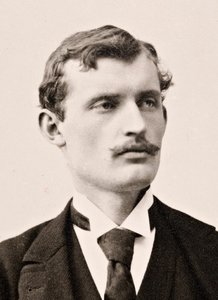
Edvard Munch
1863 - 1944 , Sweden
Quick Facts
- Artistic Movement Or Style:
- Expressionism
- Symbolism
- Post-Impressionism
- Artists Or Movements Influenced By This Artist: ['German Expressionism']
- Artists Who Influenced This Artist:
- Paul Gauguin
- Vincent van Gogh
- Toulouse-Lautrec
- Full Name: Edvard Munch
- Nationality: Norwegian
- Notable Artworks:
- The Scream
- Madonna
- The Sick Child
- Puberty
- Place Of Birth: Adelsbruk, Sweden
- Date Of Birth: 1863
- Date Of Death: 1944

