


 Preview
 Send
Send Share
Share
 Details
 Guide
Guide

 Download
 Similars
 X-Ray
X-Ray Diaporama
 Q&A
Q&A Stats
StatsWendingen


 Read More
Get a print-ready file that goes far beyond the web preview. Every digital image we sell comes from a high-resolution master in our stock database — usually 5,000 to 15,000 pixels wide — so you can print large, crop tightly, or reproduce fine detail with confidence.
No file leaves our studio untouched. A digital expert checks the colors against the original painting and corrects them if needed, then improves clarity and detail with professional retouching tools — always staying faithful to the artist's brushwork and style. The result is an image that looks like the painting, not like a filtered scan.
You approve before you're done: our expert sends the image by e-mail within 72 hours for your review. Not satisfied? Ask for improvements or corrections, or request a refund if the quality falls short.
This is the quality relied on by publishers, design studios, galleries and print shops.
Digital Image
Download a high-resolution file for personal display, printing, and creative projects. ( Switch to Print Buy Hand Made Painting)
Included in Every Digital Image Order
Expert Digital Delivery, Guaranteed
When you choose AllPaintingsStore.com, you're not just getting an image - you're receiving a professionally enhanced digital artwork, crafted with precision and backed by a satisfaction guarantee. Here's everything that comes with your order, automatically:

Fast Email Delivery
Your high-resolution digital image file will be emailed to you within 72 hours of ordering - ready for immediate use.

AI-Enhanced Digital File
Your artwork is professionally optimized using advanced AI tools and manual editing, ensuring maximum detail, clarity, and color accuracy.

Free Lifetime Re-Delivery
Accidentally deleted or lost your file? No worries - we'll resend it to you anytime, free of charge.

No Import Fees - Ever
Enjoy your artwork instantly with zero customs, duties, or delivery fees - digital downloads are always tax-free.

Color Accuracy Guarantee
We ensure your digital image reflects the original colors as closely as possible using professional tools and color management.

100-Day Satisfaction Guarantee
If you're not satisfied with your digital image, we'll revise it or refund 100% within 100 days - no questions asked.

100% Money-Back Guarantee
Not satisfied? Get a full refund within 100 days of receiving your digital file - no questions asked.

Bulk Order Discounts
Buy 3 images, save 10% - Buy 5, save 15% - Buy 10+, save 20%. Great for creative projects, galleries, and agencies.
El Lissitzky's "Wendingen": A Geometric Symphony of Form and Space
- Overview: El Lissitzky’s “Wendingen,” created in 1921, is a striking example of early abstract art, deeply rooted in the Constructivist and Suprematist movements. This artwork isn't merely a painting but a cover design for the Dutch magazine "Wendingen," dedicated to modern architecture and design. It embodies Lissitzky’s vision of “Proun,” a concept aiming to synthesize architecture, engineering, and art into a dynamic visual language.
Subject Matter & Style: A Dialogue Between Geometry and Dynamism
- Abstract Composition: The artwork eschews representational imagery, instead presenting a purely abstract composition of geometric forms. Sharp angles, intersecting lines, and flat planes dominate the canvas, creating a sense of structured dynamism. Rectangles, circles, and diagonal lines interact to generate spatial tension and visual pathways.
- Constructivist & Suprematist Influences: "Wendingen" clearly reflects the principles of Constructivism, emphasizing functional design and geometric abstraction. It also draws from Suprematism, Malevich’s movement focused on pure artistic feeling through basic geometric forms. Lissitzky's unique approach integrates these influences, creating a style that is both rigorously structured and emotionally resonant.
- The "Wendingen" Magazine Context: The piece was designed as a cover for a magazine dedicated to modern architecture. This context highlights the artwork’s purpose: not just aesthetic beauty but also communication and visual impact within a design-focused publication. The stylized lettering of “WENDINGEN” integrated into the composition further emphasizes this functional aspect.
Technique & Materials: Precision and Clarity
- Lithography on Paper: Lissitzky employed lithography, a printing technique that allows for precise lines and tonal variations. This method was ideal for reproducing the artwork’s sharp geometric forms and limited color palette.
- Color Palette & Texture: The color scheme is deliberately restrained, featuring strong contrasts between red, gray, black, and beige against a neutral background. This simplicity enhances the clarity of the geometric shapes and prevents visual clutter. The texture appears smooth and flat, characteristic of a printed surface.
Historical Context & Symbolism: A Vision for a New Era
- Post-War Reconstruction: Created in 1921, "Wendingen" emerged from the aftermath of World War I and the Russian Revolution. It reflects the era’s desire for radical change and innovation across all fields – art, architecture, and society.
- Proun Concept: Lissitzky's “Proun” concept aimed to transcend traditional artistic boundaries by uniting art, technology, and architecture. "Wendingen" serves as a visual manifestation of this ambition, suggesting a harmonious integration of these disciplines.
- Symbolic Interpretation: The artwork’s geometric forms can be interpreted as symbols of progress, order, and the potential for a new, rational world. The dynamic arrangement of shapes suggests movement and energy, reflecting the optimism and forward-looking spirit of the early 20th century.
Emotional Impact & Legacy: A Timeless Expression of Modernity
- Visual Harmony: Despite its abstract nature, "Wendingen" evokes a sense of visual harmony and balance. The carefully arranged geometric forms create a pleasing composition that is both intellectually stimulating and aesthetically satisfying.
- Influence on Design: Lissitzky’s work has had a lasting impact on graphic design, typography, and architectural aesthetics. "Wendingen" remains an iconic example of early modernism, inspiring generations of artists and designers.
Questions & Answers
What does "Wendingen" by El Lissitzky bring to an interior?
"Wendingen" by El Lissitzky has a modern atmosphere and is recommended for a living room. The mood is what the work brings to the space around it.
What use is suggested for "Wendingen" by El Lissitzky?
The recommended use of a print of "Wendingen" is statement.
What is the overall mood of "Wendingen" by El Lissitzky?
The overall mood of "Wendingen" by El Lissitzky is modern. The mood describes the general atmosphere of the work.
Related Artworks


Artist Biography
A Revolutionary Vision: The Life and Art of El Lissitzky
El Lissitzky, born Lazar Markovich Lissitzky in 1890 in the small Russian town of Pochinok, emerged as a pivotal figure in the tumultuous landscape of early 20th-century art. His journey was one of constant reinvention, driven by a fervent belief in the power of art to shape society and reflect the dynamism of the modern world. From his initial training as an architect and engineer – pursuits hampered by restrictions placed upon Jewish students – Lissitzky’s path diverged towards artistic expression, initially through illustrations steeped in Jewish folklore. These early works, like his cover for ‘Chad Gadya’, reveal a nascent talent already grappling with narrative and visual storytelling, hinting at the profound cultural roots that would continue to inform his aesthetic. A move to Berlin and Darmstadt broadened his horizons, but it was upon returning to Russia that Lissitzky truly found his artistic voice, becoming inextricably linked with the revolutionary fervor sweeping through the nation.The Embrace of Abstraction: Suprematism and Proun
A defining moment arrived with his encounter with Kazimir Malevich and the embrace of Suprematism. This radical movement, dedicated to pure geometric abstraction, resonated deeply with Lissitzky’s desire to transcend representational art and tap into a universal visual language. He became a key member of UNovis, the Suprematist group established in Vitebsk, actively disseminating its principles through teaching and artistic production. However, Lissitzky didn't simply replicate Malevich’s style; he forged his own distinct path with the development of *Proun*. This unique series, born from a fusion of Suprematism and Constructivism, explored spatial relationships and geometric forms in dynamic compositions that often resembled architectural blueprints or exploded diagrams. Proun wasn't merely painting; it was an investigation into the very structure of space itself, a premonition of future architectural possibilities. These works, with their floating planes and intersecting lines, embodied Lissitzky’s belief in art as a force capable of constructing new realities. The influence of his engineering background is palpable here, lending a structural logic to the abstract forms.Art as Propaganda and Social Commentary
Lissitzky's artistic vision extended far beyond the canvas. He passionately believed that art should serve a social purpose, actively engaging with political ideologies and seeking ways to integrate design into everyday life. This conviction led him to become deeply involved in Soviet propaganda efforts, creating powerful posters and graphic designs intended to mobilize public support for the Bolshevik regime. His 1941 poster calling for tank construction stands as a testament to this commitment – a stark, impactful image reflecting the urgency of wartime. Beyond propaganda, Lissitzky revolutionized typography, exhibition design, and photomontage. He understood that effective communication required innovative visual strategies, and he fearlessly experimented with new techniques to convey his message. His photomontages, such as ‘The Constructor’ (1924), are particularly striking – self-portraits that blend photography with geometric abstraction, offering a complex commentary on identity and the role of the artist in society.A Cultural Ambassador: Spreading Constructivist Ideals
Lissitzky's influence transcended national borders. He served as a crucial cultural ambassador for Soviet art, disseminating Constructivist ideas throughout Western Europe, particularly in Germany. His innovative exhibition designs challenged traditional gallery spaces, creating immersive environments that actively engaged viewers. These exhibitions weren’t simply displays of artwork; they were carefully constructed experiences designed to provoke thought and inspire action. His work had a profound impact on the Bauhaus and De Stijl movements, influencing generations of artists and designers with its emphasis on geometric abstraction, functionalism, and social responsibility. He collaborated with figures like Kurt Schwitters and Theo van Doesburg, fostering a cross-cultural exchange that enriched the artistic landscape of the era.Legacy and Enduring Influence
El Lissitzky’s life was tragically cut short in 1941 in Moscow, but his legacy continues to resonate today. He bridged the gap between art and architecture, abstraction and social purpose, leaving behind a body of work that is both intellectually stimulating and visually captivating. The establishment of the Lissitzky Foundation in 2014 underscores the ongoing commitment to preserving his artistic heritage and preparing a comprehensive catalogue raisonné of his creations. His innovations in typography, exhibition design, and photomontage continue to inspire contemporary artists and designers, while his unwavering belief in the power of art as a force for social change remains profoundly relevant.- His work is held in numerous international collections
- Museums featuring his works include the Taganrog Art Museum and Novokuznetsk Art Museum.
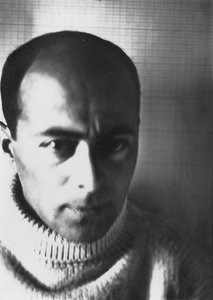
El Lissitzky
1890 - 1941 , Russia
Quick Facts
- Artistic Movement Or Style:
- Suprematism
- Constructivism
- Proun
- Artists Or Movements Influenced By This Artist:
- Bauhaus
- De Stijl
- Artists Who Influenced This Artist: ['Kazimir Malevich']
- Full Name: Lazar Markovich Lissitzky
- Nationality: Russian and Soviet
- Notable Artworks:
- Chad Gadya cover
- The Constructor
- Beat the Whites with the Red Wedge
- Iron in Clouds
- Place Of Birth: Pochinki, Russia
- Date Of Birth: 1890
- Date Of Death: 1941

