- Home

- Oil Painting Reproduction
- Eliot Porter
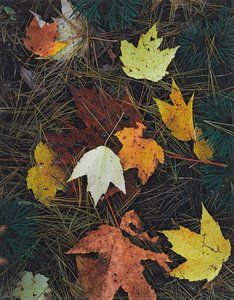
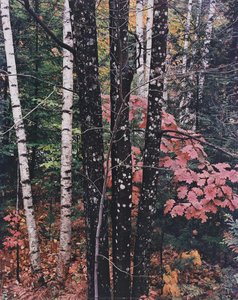
- Maple Leaves and Pine Needles, Tamworth, New Hampshire, October 3, 1956

 Buy print
 Send
Send Share
Share
 Details

 Download
 Similars
 X-Ray
X-Ray Diaporama
Maple Leaves and Pine Needles, Tamworth, New Hampshire, October 3, 1956
 Giclée Print
- Digital
- Contemporary Realism
 1956
1956- 19th Century
 20.0 x 26.0 cm
 Amon Carter Museum of American Art
 Read More
Hand Made Oil Reproduction
Hand-painted oil on canvas in your size and frame, made to order by our artists.




































Pick from our preset sizes that match the artwork's original proportions.

You may enter your own dimensions to fit a specific frame or space. If your selected size does not match the original image's proportions, we will either crop the artwork or extend the painting with additional hand-painted elements. A digital mockup will be sent for your approval before production begins.
Please note that the on-screen preview does not reflect the actual cropping or extension. Only the mockup will accurately show the final composition.
While custom sizes are available, we recommend selecting a dimension from the predefined list to preserve the original proportions.
After order, AllPaintingsStore.com team will email client for instructions and provide a mockup preview
Worldwide Delivery () in 3/4 weeks instead of standard 5 weeks. (16 July). No compromise on quality.

Free Worldwide Express Shipping

High-Quality Linen Canvas

Full Shipping Insurance

Customs Tax Refund Guarantee

True Color Matching Guarantee

60-Day Return Policy (Defects Only)

100% Money-Back Guarantee

Bulk Discount Offer
 Glass option is only available in size under 110 CM

Maple Leaves and Pine Needles, Tamworth, New Hampshire, October 3, 1956
Reproduction Medium
Reproduction Size
-


Total Price
-
Artwork Description
Eliot Porter’s Evocative Study of Autumnal Decay
This exquisite black and white photograph, “Maple Leaves and Pine Needles, Tamworth, New Hampshire, October 3, 1956,” by Eliot Porter, transcends a simple depiction of fallen foliage. It's a profound meditation on the transient beauty of nature, meticulously captured with a keen eye for detail and an understanding of light that elevates it beyond mere documentation. Porter, a pioneer in bringing color to the natural world through photography – a revolutionary approach at the time – demonstrates here his mastery of composition and tonal range, creating an image brimming with texture and atmosphere. The photograph’s quiet drama stems from Porter's deliberate framing, drawing the viewer into a carefully orchestrated tableau of decay and renewal.
A Pioneer’s Vision: Eliot Porter and the Rise of Naturalism
Born in Winnetka, Illinois, in 1901, Eliot Porter’s artistic journey was remarkably unconventional. Initially pursuing a path in chemical engineering and medicine – influenced by his scientific father – he ultimately found his true calling through the encouragement of his brother, Fairfield Porter, a celebrated painter and art critic. This familial connection ignited a passion for observation and representation, leading Porter to embrace photography as a means of translating his profound appreciation for the natural world. His work, particularly during the mid-20th century, played a crucial role in shifting photographic focus from grand landscapes to intimate studies of flora and fauna, anticipating the rise of environmental awareness that would characterize later decades.
Technique and Composition: The Language of Light
- Black and White Mastery: Porter’s skillful manipulation of black and white photography is central to the image's power. He expertly utilizes tonal variations – from the deepest blacks of shadowed leaves to the brightest whites reflecting off sunlit surfaces – to create a sense of depth, volume, and texture.
- Layered Composition: The arrangement of leaves, ranging from tightly curled specimens to those lying flat on the ground, establishes a layered composition that draws the eye through the scene. Porter’s use of foreground, middleground, and background creates a spatial illusion, inviting the viewer into this autumnal landscape.
- Geometric Precision: Notice the subtle geometric patterns formed by the leaves themselves – spirals, curves, and angles – adding to the photograph's visual complexity and reinforcing its scientific observation.
Symbolism of Decay and Renewal
The subject matter itself—a pile of fallen maple leaves and pine needles—holds significant symbolic weight. Autumn represents a period of decline, but also of preparation for winter’s dormancy and the promise of rebirth in spring. Porter doesn't shy away from depicting this process of decay; instead, he celebrates it as an integral part of nature’s cycle. The photograph becomes a poignant reminder of the ephemeral nature of beauty and the inevitability of change – themes that resonate deeply within the human experience.
A Timeless Reproduction
This hand-painted reproduction faithfully captures the essence of Porter's original work, offering an exceptional piece for art collectors, interior designers, or anyone seeking to bring a touch of natural beauty into their space. The meticulous detail and tonal accuracy ensure that this image will remain a captivating focal point for years to come.
Related Artworks


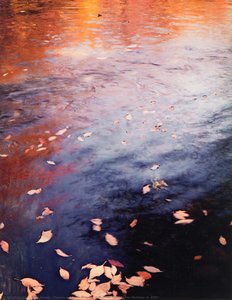
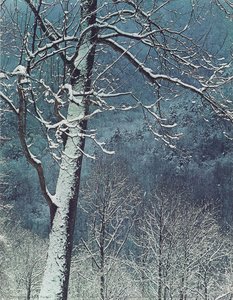
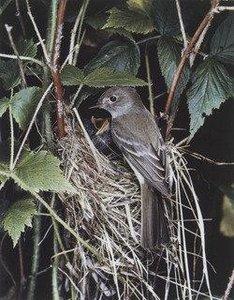
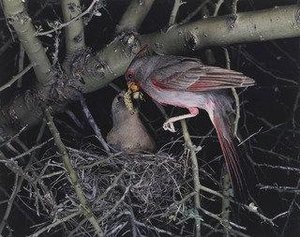

Artist Biography
A Pioneer of Color in the Natural World
Eliot Porter, born in Winnetka, Illinois, in 1901, wasn’t destined for a life steeped in artistic expression, at least not initially. His early years were shaped by a unique blend of scientific rigor and an abiding love for nature, instilled by his father, James Porter. The family estate provided ample opportunity to explore the natural world, a passion further nurtured during summers spent on Great Spruce Head Island in Maine – a landscape that would become inextricably linked with Porter’s artistic vision. He pursued formal education at Harvard University, earning degrees not in art, but in chemical engineering and medicine, ultimately working as a biochemical researcher. It was through his brother, Fairfield Porter, a renowned painter and art critic, that an appreciation for the arts truly blossomed within the family, subtly laying the groundwork for Eliot’s eventual artistic path. This scientific background, however, would prove to be not a detour from, but rather a crucial foundation *for* his groundbreaking work in photography.From Scientific Observation to Artistic Vision
Porter's journey into photography began in the 1930s, initially influenced by the iconic Alfred Stieglitz. However, a pivotal moment arrived when a publisher rejected a book proposal featuring his black and white bird photographs. This rejection wasn’t a setback, but a catalyst. It prompted Porter to embrace color photography – a medium then largely dismissed as lacking artistic merit. He recognized the potential of capturing nature's subtleties with a fidelity previously unattainable. Mastering Kodachrome film was no small feat; it demanded an understanding of chemistry and light that few possessed at the time, particularly when attempting to freeze the fleeting movements of birds in flight. His scientific training proved invaluable, allowing him to overcome technical hurdles and unlock the vibrant possibilities of color. This dedication culminated in a groundbreaking exhibition at the Museum of Modern Art in 1943 – a watershed moment that challenged prevailing notions about the artistic potential of color photography.Landscapes of Intimacy and Preservation
Porter’s impact extends far beyond technical innovation; he fundamentally altered how we perceive nature through the lens. His seminal work, American Birds (1953), established him as a leading figure in nature photography, demonstrating the exquisite detail and beauty achievable with color film. But it was In Wildness Is the Preservation of the World (1962), a collaboration with Henry David Thoreau, that truly cemented his legacy. Combining Porter’s evocative photographs with excerpts from Thoreau's writings, the book eloquently underscored the importance of wilderness preservation and pioneered the now-ubiquitous nature photography coffee-table book genre. His documentation of Glen Canyon before its inundation by Lake Powell stands as a poignant record of a disappearing landscape – a visual elegy for a natural wonder lost to progress. Later works, like Nature’s Chaos (1990), co-authored with James Gleick, explored the fascinating intersection of nature photography and chaos theory, revealing hidden patterns and complexities within seemingly random forms.A Lasting Legacy: Elevating Color to Fine Art
Eliot Porter is widely credited with legitimizing color photography as a serious art form. Before his work, it was often relegated to the realm of documentation or commercial application. He challenged this perception by demonstrating that color could be used to create images of profound aesthetic and emotional depth. His intimate landscapes, characterized by close-range compositions, muted colors, and meticulous attention to detail, defined a new aesthetic within nature photography. Porter didn’t simply *capture* nature; he revealed its inner life, its delicate textures, and its hidden harmonies. He influenced generations of photographers, demonstrating the power of observation, scientific understanding, and technical skill in capturing the beauty of the natural world. His work continues to inspire environmental awareness and a deep appreciation for the importance of preserving wild spaces – a testament to his enduring vision and artistic brilliance.Recognition and Honors
Throughout his career, Eliot Porter received significant recognition for his contributions to photography and conservation. He was awarded a Fellowship at the American Academy of Arts and Sciences in 1971, solidifying his place among leading intellectuals and artists. A particularly momentous occasion arrived in 1979 with his first one-person show of color photography at The Metropolitan Museum of Art – a landmark event that signaled the full acceptance of color photography as a legitimate art form within the established art world. This exhibition showcased the culmination of decades of dedicated work, demonstrating Porter’s mastery of the medium and his unique artistic vision. His legacy continues to resonate today, inspiring photographers and nature enthusiasts alike to look more closely at the world around them and appreciate its inherent beauty and fragility.
Eliot Porter
1901 - 1990 , United States of America
Quick Facts
- Artistic Movement Or Style: Color Nature Photography
- Artists Or Movements Influenced By This Artist:
- Nature Photography
- Environmental Art
- Artists Who Influenced This Artist:
- Alfred Stieglitz
- Ansel Adams
- Date Of Birth: December 6, 1901
- Date Of Death: November 2, 1990
- Full Name: Eliot Porter
- Nationality: American
- Notable Artworks:
- Northern Parula Warbler
- Pool in a Brook
- Pyrrhuloxia
- In Wildness Is the World
- Place Of Birth: Winnetka, USA
Related Articles

Beyond the Lens: Photography's Enduring Influence on Modern & Contemporary Art
Explore photography's pivotal role in shaping modern & contemporary art. Discover key movements, influential artists like Stieglitz, and expert collecting advice from AllPaintingsStore.

From Snapshot to Canvas: The Art of Transforming Travel Photography into Timeless Oil Paintings
Transform your cherished travel photos into timeless oil paintings with expert artists at AllPaintingsStore.com. Museum-quality reproductions & custom portraits – preserve your memories beautifully.

William Trost Richards: Luminism, Spirituality & the American Landscape Tradition
Explore the captivating landscapes of William Trost Richards, a master of Luminism associated with both the Hudson River School & American Pre-Raphaelite movements. Discover his spiritual connection to nature and lasting influence on American art.

Echoes of Time: Exploring the Enduring Appeal & Historical Context of Vintage Art Prints
Explore the captivating world of vintage art prints! Discover their history, collecting tips & enduring appeal. Expert insights on chromolithography and building a legacy collection with AllPaintingsStore.

Witnessing History: Documentary Photography as an Art Movement
Explore the powerful history of documentary photography – from its origins to contemporary masters like Gordon Parks. Discover how this art form shapes our understanding of society and witness pivotal moments in time.