


 Send
Send Share
Share
 Details

 Download
 Similars
 Diaporama
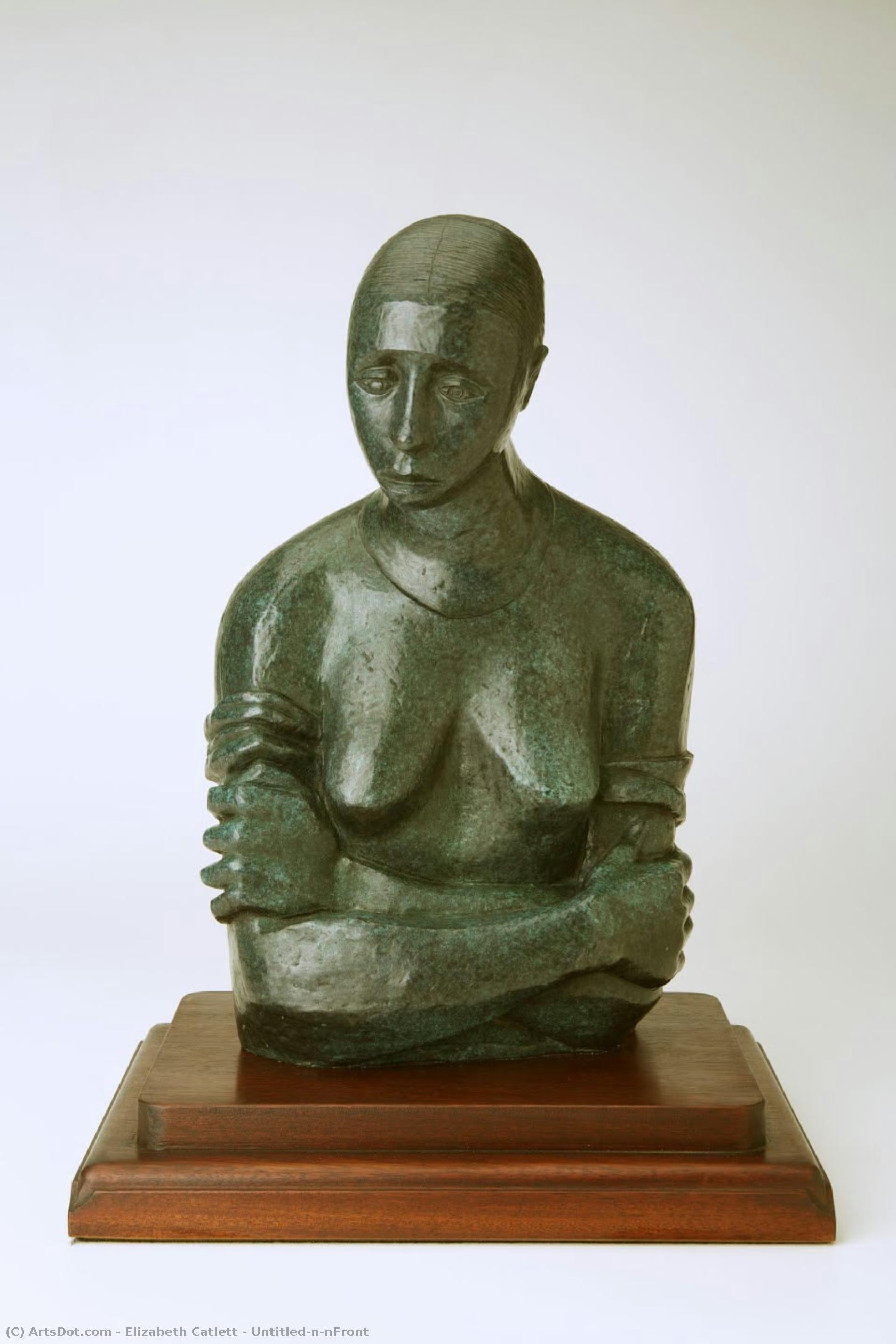
Untitled\n\nFront
 Sculpture Bronze
- Sculpture
- Contemporary Realism
 1991
1991 The Kinsey African American Art - History Collection
 Read More
Giclée / Art Print
Museum-quality giclée or canvas print with fast production and flexible finish options. ( Buy Hand Made Painting Buy Image)




































Pick from our preset sizes that match the artwork's original proportions.

You may enter your own dimensions to fit a specific frame or space. If your selected size does not match the original image's proportions, we will either crop the artwork or extend the image with a mirrored or solid-fill edge. A digital mockup will be sent for your approval before production begins.
Please note that the on-screen preview does not reflect the actual cropping or extension. Only the mockup will accurately show the final composition.
While custom sizes are available, we recommend selecting a dimension from the predefined list to preserve the original proportions.
Worldwide Delivery () in 2 weeks instead of standard 4/5 weeks. (16 August)

Free Worldwide Express Shipping

High-Quality Linen Canvas

Full Shipping Insurance

Customs Tax Refund Guarantee

True Color Matching Guarantee

60-Day Return Policy (Defects Only)

100% Money-Back Guarantee

Bulk Discount Offer
 Glass option is only available in size under 110 CM

Untitled\n\nFront
Giclée / Art Print
Reproduction Size
-


Total Price
$ 65
Collectible Description
A Sculptor's Voice: Exploring Elizabeth Catlett’s “Untitled”
Elizabeth Catlett’s “Untitled,” created in 1991, stands as a testament to her unwavering commitment to portraying the dignity and resilience of Black women—a theme that permeated throughout her prolific artistic career. This striking bronze sculpture captures a woman's torso, positioned with her hands gently resting on her breasts, presenting an image both serene and subtly unsettling. The stark white wall behind the statue serves as a deliberate counterpoint, amplifying the sculpture’s presence and emphasizing its sculptural form.- Style: Catlett’s work embodies Social Realism, aligning with the artistic currents of her time—particularly influenced by Mexican muralists like Diego Rivera, Rufino Tamayo, and Francisco Mora—who championed narratives reflecting social justice and cultural identity.
- Technique: Crafted from bronze, a material known for its durability and ability to capture intricate detail, “Untitled” exemplifies Catlett’s mastery of sculptural technique. The smooth surface finish contributes to the sculpture's contemplative atmosphere, inviting viewers to contemplate the woman’s posture and expression.
Related Artworks


Artist Biography
A Life Forged in Art and Activism
Alice Elizabeth Catlett, known to the world as Elizabeth Catlett, was more than an artist; she was a visual storyteller who dedicated her life to portraying the strength, resilience, and beauty of Black and Mexican people. Born in Washington D.C. in 1915, Catlett’s artistic journey began not with formal training, but with a profound childhood fascination sparked by a wood carving crafted by her father. This early encounter ignited a passion that would define her life's work. Her parents, both educators – her father taught at Tuskegee University and later in the D.C. public school system, while her mother served as a truant officer – instilled in her a deep appreciation for learning and social responsibility. As grandchildren of formerly enslaved people, they carried within them a legacy of struggle and perseverance that would profoundly influence Catlett’s artistic vision. Even during her high school years, studying art with a descendant of Frederick Douglass, the seeds of socially conscious artistry were firmly planted.From Iowa to Mexico: A Blossoming Artistic Voice
Catlett's formal education began at Howard University in 1931, where she excelled, graduating cum laude and immersing herself in design, drawing, printmaking, and art history. It was here that her talent truly began to flourish. She continued her studies at the University of Iowa, becoming the first African American woman to earn an MFA in sculpture from the institution in 1940. A pivotal figure during this period was Grant Wood, whose encouragement to depict subjects she intimately knew – particularly Black women – proved transformative. It was also at Iowa that she befriended Margaret Walker, a future novelist and poet, forging a connection that underscored the vibrant intellectual climate surrounding her. Her thesis project, Negro Mother and Child, immediately garnered recognition, winning first prize at the American Negro Exposition in Chicago—a powerful early indication of the impact her work would have. However, Catlett’s artistic development wasn't confined to a single style or medium. She absorbed influences from diverse sources: the raw power of African sculpture, the elegant simplicity of Barbara Hepworth, the emotive intensity of Käthe Kollwitz, and the graphic traditions of Mexico. This eclectic blend would become a hallmark of her unique aesthetic. A turning point came in 1946 when she received a Rosenwald Fellowship that allowed her to travel to Mexico City. There, she joined the Taller de Gráfica Popular, a collective of artists dedicated to using art as a tool for social change. This twenty-year association profoundly shaped her understanding of art’s potential and solidified her commitment to depicting the lives and struggles of marginalized communities. It was during this time that she shifted her focus towards printmaking, mastering techniques like woodblock and linocut which allowed for wider dissemination of her powerful messages.Themes of Identity, Justice, and Resilience
Catlett’s art is characterized by a bold social realism, defined by strong lines, simplified forms, and an unwavering focus on the experiences of Black women and Mexican people. Her work consistently addressed issues of race, class, and gender inequality with unflinching honesty. The Black Woman Series (1946), comprised of fifteen linoleum cuts, stands as a testament to her commitment—a poignant exploration of the realities faced by Black women in America. She reinterpreted traditional iconography, most notably the Madonna and Child motif, imbuing it with new meaning through depictions of Black mothers and children, celebrating maternal love and strength within a specific cultural context. Beyond these central themes, Catlett created striking portraits of prominent figures like Martin Luther King Jr. and Phyllis Wheatley, honoring their contributions to social justice and intellectual thought. Malcolm X Speaks for Us, a powerful print reflecting the fervor of the Civil Rights Movement and the rising tide of Black Power ideologies, exemplifies her ability to capture the spirit of an era. Her sculptures, often rendered in wood or terracotta, possess a monumental quality that conveys dignity and resilience.A Legacy Beyond Borders
Political activism and artistic expression were inextricably linked for Catlett, which led to challenges when seeking to return to the United States after extended periods abroad. Denied a visa due to her political beliefs, she became a Mexican citizen in 1962, solidifying her commitment to her adopted homeland. From 1958 until her retirement in 1976, Catlett dedicated herself to teaching at the National School of Fine Arts in Mexico City, nurturing generations of young artists and passing on her knowledge and passion. Throughout her life, Catlett received numerous accolades, including membership in the Salón de la Plástica Mexicana, the Art Institute of Chicago Legends and Legacy Award, honorary doctorates from Pace University and Carnegie Mellon, and the International Sculpture Center’s Lifetime Achievement Award. Her legacy extends far beyond these honors, however. Elizabeth Catlett broke barriers as one of the first African American women to earn an MFA, paving the way for future generations of Black artists. Her work continues to be studied for its powerful depictions of race, gender, and class issues, and her emphasis on representing marginalized communities has inspired countless artists to use their voices for social change. She remains a vital figure in African American art, social realism, and the ongoing struggle for equality and justice.Enduring Influence
- Breaking Barriers: Catlett’s achievements opened doors for countless Black artists who followed.
- Social Commentary: Her art served as a potent form of protest and advocacy during the Civil Rights era and beyond.
- Representation Matters: She provided crucial visibility to Black experiences, particularly those of Black women, which were often overlooked in mainstream artistic narratives.
- Inspiring the Black Arts Movement: Catlett’s work significantly influenced artists associated with this movement, who shared her commitment to using art as a tool for liberation and social transformation.

Elizabeth Catlett
1915 - 2012 , United States of America
Quick Facts
- Artistic Movement Or Style: Social Realism
- Artists Or Movements Influenced By This Artist: ['Black Arts Movement']
- Artists Who Influenced This Artist:
- Grant Wood
- Barbara Hepworth
- Käthe Kollwitz
- Date Of Birth: April 15, 1915
- Date Of Death: April 2, 2012
- Full Name: Elizabeth Catlett
- Nationality: American, Mexican
- Notable Artworks:
- Negro Mother and Child
- The Black Woman Series
- Malcolm X Speaks for Us
- Place Of Birth: Washington, USA
Related Articles

Mexican Muralism for Commercial Interiors: A Procurement Guide to Large-Scale Masterpiece Reproductions
Elevate commercial interiors with premium Mexican Muralism reproductions. Our guide for hotel designers covers large-scale Diego Rivera-style murals, custom sizing, and bulk procurement solutions for high-impact hospitality spaces. Reliable global shipping and professional art consultation.





