- Home

- Oil Painting Reproduction
- Eugène Delacroix
- Lion and Caiman (also known as Lion Clutching a Lizard or Lion Devouring an Alligator)

 Buy print
 Send
Send Share
Share
 Details

 Download
 Similars
 X-Ray
X-Ray Diaporama
Lion and Caiman (also known as Lion Clutching a Lizard or Lion Devouring an Alligator)
 Acrylic On Canvas
- WallArt
- Romanticism
 1855
1855 32.0 x 42.0 cm
 The Louvre
 Read More
Hand Made Oil Reproduction
Hand-painted oil on canvas in your size and frame, made to order by our artists.




P118B $10

P118H $10

P118W $10

P438Z $10

P508JH $12

P508YH $12

P805H $10

P805Z $10

P919BZ $10

P919G $10

P919XJ $10

P959ZH $10

P968JZ $12

W106C $8

W218G $10

W218JH $8

W218Y $10

W307PJ $10

W316G $10

W316PJ $8

W316Y $10

W398PJ $8

W4111J $10

W500HY $15

W500JH $15

W692G $12

W849H $8

W940BG $15

W953PJ $8




Pick from our preset sizes that match the artwork's original proportions.

You may enter your own dimensions to fit a specific frame or space. If your selected size does not match the original image's proportions, we will either crop the artwork or extend the painting with additional hand-painted elements. A digital mockup will be sent for your approval before production begins.
Please note that the on-screen preview does not reflect the actual cropping or extension. Only the mockup will accurately show the final composition.
While custom sizes are available, we recommend selecting a dimension from the predefined list to preserve the original proportions.
After order, AllPaintingsStore.com team will email client for instructions and provide a mockup preview
Worldwide Delivery () in 3/4 weeks instead of standard 5 weeks. (16 July). No compromise on quality.

Free Worldwide Express Shipping

High-Quality Linen Canvas

Full Shipping Insurance

Customs Tax Refund Guarantee

True Color Matching Guarantee

60-Day Return Policy (Defects Only)

100% Money-Back Guarantee

Bulk Discount Offer
 Glass option is only available in size under 110 CM

Lion and Caiman (also known as Lion Clutching a Lizard or Lion Devouring an Alligator)
Reproduction Medium
Reproduction Size
-


Total Price
-
Artwork Description
A Savage Embrace: Delacroix’s Lion and Caiman – A Study in Romantic Drama
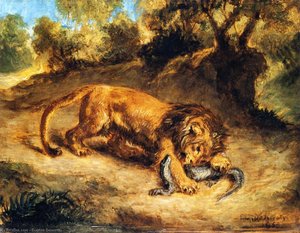
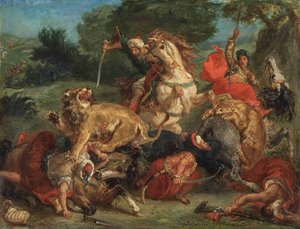
Eugène Delacroix's “Lion and Caiman,” completed in 1855, stands as a cornerstone of French Romanticism—a movement defined by its fervent embrace of emotion, imagination, and dramatic narrative. Currently residing within the hallowed halls of the Musée du Louvre, this oil on panel painting transcends mere depiction; it’s an immersive experience into the primal forces of nature and a masterful articulation of Delacroix's artistic vision.
- Composition & Context: The scene unfolds with breathtaking immediacy. A colossal lion dominates the canvas, its muscular form poised mid-strike as it consumes a hapless caiman—a reptile known for its aggressive behavior. Strategically positioned on a dirt road bordered by sparse foliage, the composition directs the viewer’s gaze and reinforces the painting's unsettling atmosphere. Delacroix meticulously crafted this tableau to capture the spirit of exploration and adventure prevalent during his time, reflecting the fascination with exotic locales like North Africa.
- Artistic Significance: Delacroix’s signature style—characterized by bold color palettes and expressive brushstrokes—is vividly apparent in “Lion and Caiman.” Loose, swirling strokes convey dynamism and vitality, particularly evident in the lion's mane and fur. The artist skillfully contrasts the lion’s powerful physicality with the lifeless stillness of the caiman, creating a visual tension that underscores the brutal realities of survival.
- Delacroix’s Legacy: Beyond “Lion and Caiman,” Delacroix produced an astonishing array of works exploring themes of heroism, mythology, and social commentary. His influence extended far beyond his own lifetime, inspiring subsequent generations of artists and cementing his place as a titan of Romantic art.
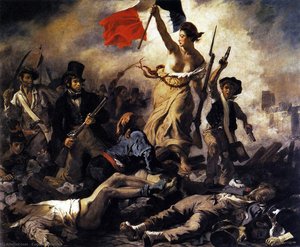
- The Louvre Experience: Visiting the Musée du Louvre is more than just admiring art; it’s stepping into history. Explore the museum's vast collection of masterpieces—including Delacroix’s “Liberty Leading the People”—and immerse yourself in the artistic heritage of France.
Symbolism and Emotional Resonance
“Lion and Caiman” operates on multiple symbolic levels. The lion represents strength, courage, and nobility—qualities championed by Romantic ideals. Simultaneously, it embodies predatory instinct and dominance. Contrasting this is the caiman, symbolizing vulnerability and defeat. Delacroix’s masterful use of color—primarily earthy tones punctuated by flashes of crimson—amplifies the painting's emotional impact, conveying a palpable sense of urgency and primal terror.
Technique: Romantic Brushwork
Delacroix’s technique exemplifies the Romantic preoccupation with capturing fleeting moments of sensation. He employed impasto—thickly applied paint—to build up textural surfaces that mimic the roughness of stone and earth. This method allows for a remarkable degree of luminosity, enhancing the vibrancy of his colors and conveying an unparalleled sense of movement. Observe how Delacroix’s brushstrokes seem to pulsate with energy, mirroring the drama unfolding before our eyes.
A Timeless Masterpiece
"Lion and Caiman" continues to captivate audiences today because it speaks directly to fundamental human emotions—fear, awe, and admiration for the untamed beauty of nature. Its enduring appeal lies in Delacroix’s ability to distill complex ideas into a single, unforgettable image. For those seeking inspiration or desiring a stunning reproduction of this iconic artwork, AllPaintingsStore.com offers exceptional quality reproductions that faithfully capture the essence of Delacroix's genius.
Related Artworks


Artist Biography
A Revolutionary Brush: The Life and Legacy of Eugène Delacroix
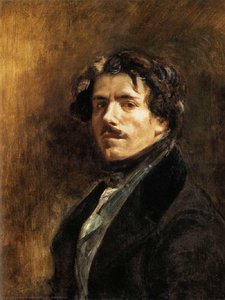
Ferdinand Victor Eugène Delacroix, born in Charenton-Saint-Maurice near Paris in 1798, was more than just a painter; he was the embodiment of Romanticism’s fervent spirit. Emerging as a leading figure in French art during a period of societal upheaval and shifting aesthetic ideals, Delacroix rejected the rigid formalism of Neoclassicism, instead embracing drama, emotion, and a vibrant palette that would forever alter the course of painting. His life, though marked by personal tragedy, became inextricably linked with his artistic vision—a quest to capture the sublime, explore exotic realms, and express the raw power of human experience.
Delacroix’s early years were shaped by a complex family history and a somewhat fragile health. Orphaned at sixteen, he found guidance in the influential figure of Charles-Maurice de Talleyrand-Périgord, who many believed to be his true father. This connection provided him with crucial patronage and access to the Parisian art world. He initially studied under Pierre-Narcisse Guérin, a respected academic painter, but it was the work of Théodore Géricault—particularly his monumental *The Raft of the Medusa*—that truly ignited Delacroix’s artistic passion. He even posed for Géricault, absorbing the elder artist's commitment to realism and emotional intensity.
From Historical Scenes to Exotic Visions
Delacroix burst onto the Salon scene in 1822 with *Dante and Virgil in Hell*, a work that immediately signaled his departure from established norms. Inspired by Dante Alighieri’s *Inferno*, the painting showcased a bold use of color, dynamic composition, and a palpable sense of psychological turmoil. This marked the beginning of a career dedicated to exploring themes of passion, conflict, and the human condition. While initially met with mixed reactions—some critics lauded his originality, others dismissed his work as chaotic and lacking in classical refinement—Delacroix persevered, developing a distinctive style characterized by loose brushwork, rich textures, and an emphasis on movement.
His fascination extended beyond historical and literary subjects. A pivotal journey to North Africa in 1832 profoundly impacted his artistic trajectory. Immersing himself in the vibrant culture of Morocco, Delacroix was captivated by the exotic landscapes, the nomadic lifestyle of the Arab tribes, and the intensity of their traditions. This experience infused his paintings with a newfound sense of color, light, and energy, as seen in works like *Arab Horses Fighting* and numerous studies of Algerian life. He wasn’t merely documenting these scenes; he was seeking to understand the underlying spirit of a culture vastly different from his own.
The Power of Color and Political Engagement
Delacroix's mastery of color is arguably his most enduring legacy. He drew inspiration from the Baroque exuberance of Rubens and the Venetian Renaissance masters, prioritizing chromatic intensity over precise draftsmanship. He understood that color could evoke emotion, create atmosphere, and convey meaning in ways that line alone could not. This innovative approach profoundly influenced subsequent generations of artists, paving the way for Impressionism and Post-Impressionism.
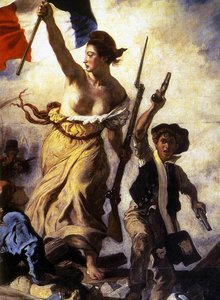
Beyond his aesthetic innovations, Delacroix was a politically engaged artist. His most iconic work, *Liberty Leading the People* (1830), is not simply a depiction of the July Revolution; it’s a powerful allegory for freedom and rebellion. The painting's dynamic composition, allegorical figures, and raw emotional power cemented its place in art history as a symbol of French national identity and revolutionary ideals. It wasn’t just about documenting an event; it was about capturing the spirit of a nation fighting for its liberty.
A Lasting Influence
Delacroix continued to paint prolifically throughout his life, exploring diverse themes ranging from Shakespearean tragedies to biblical narratives. He also made significant contributions as a lithographer, illustrating works by literary giants like William Scott and Johann Wolfgang von Goethe. His studio became a hub for artistic exchange, attracting aspiring painters who were drawn to his unconventional approach.
By the time of his death in 1863, Delacroix had firmly established himself as one of France’s greatest artists. His influence extended far beyond the Romantic movement, shaping the development of modern painting and inspiring countless artists with his bold use of color, dynamic compositions, and unwavering commitment to emotional expression. He remains a pivotal figure in art history—a testament to the power of individual vision and the enduring allure of the sublime.

Eugène Delacroix
1798 - 1863 , France
Quick Facts
- Artistic Movement Or Style: Romanticism
- Artists Or Movements Influenced By This Artist:
- Impressionism
- Post-Impressionism
- Artists Who Influenced This Artist:
- Rubens
- Venetian Renaissance painters
- Date Of Birth: April 26, 1798
- Date Of Death: August 13, 1863
- Full Name: Eugène Delacroix
- Nationality: French
- Notable Artworks:
- Liberty Leading the People
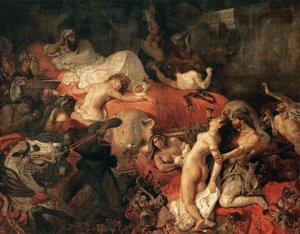
- The Death of Sardanapalus
- Arab Horses Fighting
- Place Of Birth: Chantonnay, France
Related Articles

The Sublime and the Picturesque: Exploring Emotion & Nature in Romantic Landscape Painting
Explore the emotional power of Romantic landscape painting! Discover the sublime & picturesque traditions, key artists like Friedrich & Cole, and find your perfect artwork at AllPaintingsStore.

Alonzo Chappel: Historical Narrative & Romantic Vision in 19th-Century American Painting
Explore the captivating world of Alonzo Chappel, a master of 19th-century American historical painting. Discover his iconic works, Romantic style & lasting legacy. Learn about collecting Chappel's art today!
The Rococo Style: Aristocratic Leisure & the Pursuit of Delight in 18th-Century Art
Explore the opulent world of Rococo art! Discover Watteau, Boucher & Nattier's masterpieces. Expert insights for collectors seeking museum-quality reproductions and custom portraits at AllPaintingsStore.

Anselm Feuerbach: Romantic Idealism & the Search for Spiritual Harmony in 19th-Century Painting
Explore the life & work of Anselm Feuerbach, a leading German Neoclassical painter. Discover his Romantic idealism, mythological scenes, and stunning portraits. Learn about his influences & lasting legacy with AllPaintingsStore.

Richard Parkes Bonington: A Brief but Brilliant Career – Romantic Landscapes & the Dawn of Plein Air Painting
Explore the short but impactful career of Richard Parkes Bonington, a pivotal figure bridging British Romanticism & French plein air painting. Discover his luminous landscapes and lasting influence on Delacroix & beyond.