

Cubism · 1920
Machine elements (Fernand Léger, 1920)
Machine elements is a work of Fernand Léger (1881–1955). It dates from 1920. It belongs to the Cubism movement. It is made in oil on canvas.
- 1920
- Oil On Canvas

 Preview

 Print
 Send
 Share
 Fact sheet


 Download
 Similars
 X-Ray
 Diaporama
 Q&A

 Stats
Machine elements: key details
- Title
- Machine elements
- Artist
- Fernand Léger (1881–1955)
- Artist born in
- Argentan, France
- Date
- 1920
- Medium
- Oil On Canvas
- Movement
- Cubism
- Period
- Modern
- Subject
- machine elements, cubism, geometry, industrial art, dynamism, futurism
What does Machine elements show?
A Symphony of Steel and Geometry
The year 1920 marked a profound shift in the visual language of modernity, and few works capture this seismic transition as vibrantly as Fernand Léger’s Machine Elements. At first glance, the viewer is confronted by a rhythmic, almost percussive arrangement of mechanical fragments that seem to pulse with the energy of a factory floor. The composition is anchored by a commanding wheel, its surface adorned with striking red and white stripes that draw the eye into a swirling vortex of industrial motion. This is not merely a depiction of objects; it is a Cubist vision where the boundaries between organic life and mechanical precision begin to blur. Through the clever fragmentation of form, Léger invites us to witness a world being reconstructed by the very gears and cogs that define our era, transforming static canvas into a dynamic, breathing landscape of progress.The Art of the Industrial Pulse
Léger’s technique in Machine Elements serves as a masterclass in the application of Cubist principles to celebrate the machine age. Moving away from the soft, ethereal qualities of Impressionism, he employs a bold, structural approach characterized by interlocking planes and sharp, defined edges. The artist utilizes oil on canvas with a deliberate, tactile presence, often applying paint in a way that suggests the weight and solidity of metal and iron. By dissecting familiar objects—a clock face, a chair, various smaller wheels—and reassembling them into an intricate visual tapestry, he creates a sense of spatial illusion that defies traditional perspective. This method allows the viewer to experience multiple viewpoints simultaneously, mirroring the fragmented, fast-paced perception of life in an increasingly urbanized and mechanized society.A Legacy of Modernity for the Contemporary Space
Beyond its technical brilliance, Machine Elements carries a profound emotional resonance that continues to captivate collectors and interior designers alike. It stands as a testament to the era's optimism and the relentless drive of human innovation. For those seeking to infuse a contemporary interior with character, this piece offers a sophisticated blend of bold color and structural harmony. The interplay of primary tones and geometric precision makes it an ideal focal point for spaces that value avant-garde aesthetics and intellectual depth. Owning a high-quality reproduction of this masterpiece is more than an act of decoration; it is an invitation to bring the enduring spirit of the industrial revolution into the modern home, celebrating a time when art and industry danced together in a beautiful, complex embrace.Machine elements: image files

Prepared from a higher-resolution image in our database, not the web image: 300 DPI minimum. Colours checked against the original, file retouched by a digital expert.
Buy the high-resolution imageFernand Léger, Machine elements (1920).
Fernand Léger (1881–1955), Machine elements, 1920, oil on canvas. Public domain. Image: AllPaintingsStore.com.
Questions about Machine elements
In what year was "Machine elements" by Fernand Léger created?
"Machine elements" by Fernand Léger was created in 1920.
What technique was used for "Machine elements" by Fernand Léger?
The medium of "Machine elements" by Fernand Léger is oil on canvas. Reproductions aim to render the appearance of this technique.
What subjects appear in "Machine elements" by Fernand Léger?
The themes present in "Machine elements" by Fernand Léger include machine elements, cubism, geometry, industrial art, dynamism, futurism, composition. Together they summarize the artwork's subject matter.
Is "Machine elements" by Fernand Léger in the public domain?
The copyright answer for "Machine elements" by Fernand Léger: the work is in the public domain - its copyright has expired. This determines whether reproductions of the image may be freely made.
Who is the artist behind "Machine elements"?
"Machine elements" is attributed to Fernand Léger.
Which artistic current is "Machine elements" by Fernand Léger part of?
"Machine elements" by Fernand Léger belongs to the Cubism movement. This movement provides the stylistic context of the work.
Which period of Fernand Léger's career does "Machine elements" belong to?
"Machine elements" belongs to the Mature Period of Fernand Léger's career. This classification relates the work to the artist's development.
At what age did Fernand Léger make "Machine elements"?
Fernand Léger made "Machine elements" at the age of 39. The artist was born in 1881 and the work is dated 1920.
What explains the copyright situation of "Machine elements" by Fernand Léger?
The copyright status of "Machine elements" - in the public domain - its copyright has expired - follows from the artist's death in 1955.
About Fernand Léger
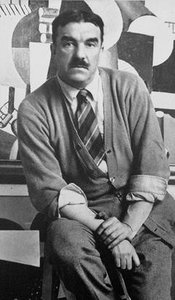
1881–1955, France
Fernand Léger
The Life of Fernand Léger The story of Fernand Léger begins in the village of Argentan, located in the Orne region of Lower Normandy. He arrived into this world on February 4, 1881, as an only son. His early years were shaped by the quietude of the French countryside and the presence of his mother, Marie-Adèle Daunou. His father, a man who made his living as a cattle dealer, passed away when Fernand was still a young boy, leaving the child to be raised by his mother in a household marked by her piety and a certain self-effacing nature.
Every Fernand Léger work, with sizes and prices → Artist page Famous works by Fernand Léger
Other works by Fernand Léger
 The City1919
 The Mechanic1920
 Three Women1921
 Nudes in the Forest1910

Articles on Machine elements
 10 Iconic Masterpieces That Defined Geometric AbstractionAmidst the radical global transformations of the early 20th century, artists moved beyond representation to find the mathematical heartbeat…
 Mastering the Machine Age: The Top 25 Fernand Léger Artworks1919 saw the birth of The City, where Léger replaced organic textures with the rhythmic, mechanical symphony of the industrial machine age.…
 Steel & Soul: 10 Powerful Artworks That Capture the Industrial VibeAndy Warhol’s 1982 Crosses uses thirteen varying shapes to mirror mass production. Compare this to the rhythmic pulse of Fernand Léger’s Th…