Preview
 Send
Send Share
Share
 Details

 Download
 Similars
 X-Ray
X-Ray Diaporama
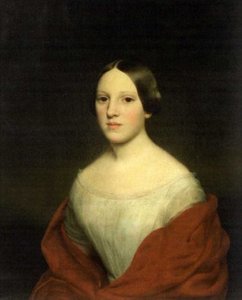
Daniel Webster (Black Dan)
 Read More
Hand Made Oil Reproduction
Hand-painted oil on canvas in your size and frame, made to order by our artists. ( Buy Print Buy Image)




































Pick from our preset sizes that match the artwork's original proportions.

You may enter your own dimensions to fit a specific frame or space. If your selected size does not match the original image's proportions, we will either crop the artwork or extend the painting with additional hand-painted elements. A digital mockup will be sent for your approval before production begins.
Please note that the on-screen preview does not reflect the actual cropping or extension. Only the mockup will accurately show the final composition.
While custom sizes are available, we recommend selecting a dimension from the predefined list to preserve the original proportions.
After order, AllPaintingsStore.com team will email client for instructions and provide a mockup preview
Worldwide Delivery () in 3/4 weeks instead of standard 5 weeks. (14 August). No compromise on quality.

Free Worldwide Express Shipping

High-Quality Linen Canvas

Full Shipping Insurance

Customs Tax Refund Guarantee

True Color Matching Guarantee

60-Day Return Policy (Defects Only)

100% Money-Back Guarantee

Bulk Discount Offer
 Glass option is only available in size under 110 CM

Daniel Webster (Black Dan)
Reproduction Medium
Reproduction Size
-


Total Price
$ 258
Related Artworks



Artist Biography
The Painter Who Captured Dickens’ Spirit
Francis Alexander (February 3, 1800 – March 27, 1880) was an American portrait painter who achieved considerable renown during the Victorian era. Born in Killingly, Connecticut, he possessed a remarkable talent for capturing human emotion and translating it onto canvas with meticulous detail and masterful technique. His artistic journey began with self-taught observation of color—a formative experience that would profoundly shape his distinctive style—and culminated in a distinguished career marked by collaborations with literary luminaries like Charles Dickens and Henry Wadsworth Longfellow.
Alexander’s upbringing on a Connecticut farm instilled in him a grounding in practical skills alongside an innate fascination for the visual arts. As a young boy, he was often found "picturin' out sunthin'", decorating barn doors and walls with chalk-drawn birds and fanciful sketches while his peers played. The vibrant tints of freshly caught fish fascinated him, sparking a lifelong devotion to the study of color. Recognizing his burgeoning potential, he traveled to New York City around 1820 to pursue formal training under Alexander Robertson. This period was crucial in immersing him in the neoclassical tradition, honing his observational abilities and establishing a foundational understanding of compositional principles that would define his later mastery.
The pursuit of artistic excellence eventually led Alexander far beyond the borders of New England. During the winters of 1831 and 1832, he resided in Rome, where he absorbed the profound influence of Italian Renaissance art. The meticulous study of ancient frescoes and classical sculptures amidst the vibrant cultural landscape of Italy refined his sensibilities, infusing his American portraiture with a sophisticated, European elegance. This international exposure allowed him to blend the rugged sincerity of his American roots with the refined grace of the Old Masters.
A Legacy of Literary and Social Eminence
By 1840, Alexander had established himself in Boston, where his studio became a focal point for the city's intellectual and social elite. His reputation as a premier portraitist flourished, driven by an ability to capture not just the likeness, but the very essence of his subjects. One of the most legendary moments of his career occurred during Charles Dickens’ visit to Boston in 1842; Alexander famously sought to capture the novelist's likeness, creating a portrait that remains a testament to their connection. His talent for rendering character also drew him to other prominent figures, such as the poet Henry Wadsworth Longfellow, cementing his place within the cultural fabric of the era.
Beyond his famous literary connections, Alexander’s work was celebrated for its romanticism and technical precision. His portraits often featured a soft, evocative light and a richness of texture that breathed life into the sitter. Notable works, such as his portrait of Mrs. Fletcher Webster—which once resided in the Boston Museum of Fine Arts—showcased his ability to use elements like ermine and fine fabrics to create a sense of grandeur and intimacy simultaneously. His achievements were recognized by his peers when he was elected as an honorary member of the National Academy of Design in 1840.
As his career progressed, Alexander’s influence extended through both his art and his family. His daughter, Francesca Alexander, followed in his footsteps as a popular illustrator and author, carrying forward the family's creative legacy. Though he eventually spent his final years in Florence, Italy, the impact of his American portraiture remained a cornerstone of 19th-century art. Today, Francis Alexander is remembered not merely as a chronicler of faces, but as an artist who captured the very spirit of a transformative age.

Francis Alexander
1800 - 1880 , United States of America
Quick Facts
- Artistic Movement Or Style: Romantic Portraiture
- Artists Or Movements Influenced By This Artist: ['Dickens']
- Artists Who Influenced This Artist: ['Alexander Robertson']
- Date Of Birth: February 3, 1800
- Date Of Death: March 27, 1880
- Full Name: Francis Alexander
- Nationality: American
- Notable Artworks:
- Aaron Baldwin
- Mrs. Beale Thayer and Miss Sarah Blanchard
- Madam Powel
- Place Of Birth: Killingly, United States