Preview
 Send
Send Share
Share
 Details
 Guide
Guide

 Download
 Similars
 X-Ray
X-Ray Diaporama
 Stats
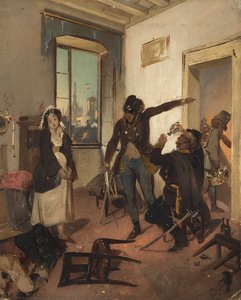
StatsButterflies
 Romanticism
 1886
1886 60.0 x 48.0 cm
 Read More
Giclée / Art Print
Museum-quality giclée or canvas print with fast production and flexible finish options. ( Buy Hand Made Painting Switch to Digital Image)




































Pick from our preset sizes that match the artwork's original proportions.

Type the width and the height you need, to fit your frame or your wall. A print can only be cut, never made bigger than the picture, so a size with a different shape loses a part of the image. We send you a digital mockup to approve before we print anything. The picture shown on this page does not show the real cut — only the mockup does.
Worldwide Delivery () in 2 weeks instead of standard 4/5 weeks. (27 October)

Free Worldwide Express Shipping

High-Quality Linen Canvas

Full Shipping Insurance

Customs Tax Refund Guarantee

True Color Matching Guarantee

100-Day Return Policy (Defects Only)

100% Money-Back Guarantee

Bulk Discount Offer
 Glass option is only available in size under 110 CM

Butterflies
Giclée / Art Print
Reproduction Size
-


Total Price
$ 65
Related Artworks


Artist Biography
The Brush and the Bayonet: The Life of Gerolamo Induno
Gerolamo Induno was far more than a mere observer of history; he was a participant in its most turbulent chapters, an artist whose very lifeblood was intertwined with the struggle for Italian unification. Born in Milan in 1825 to a father who served as a chef and butler at the Milanese court, Induno grew up in an era defined by the fiery spirit of the Risorgimento. His artistic foundation was laid within the prestigious halls of the Brera Academy, where he studied under the guidance of Luigi Sabatelli from 1839 to 1846. It was here that he absorbed the dramatic nuances and emotional depth of Romanticism, a movement that would forever dictate the pulse of his creative output.
The trajectory of Induno’s life took a profound turn in 1848, as the political landscape of Italy ignited with revolution. Alongside his older brother, the celebrated artist Domenico Induno, Gerolamo participated in the legendary Five Days of Milan, experiencing firsthand the chaos and courage of the uprising against Austrian repression. This was not merely an era he painted; it was an era he lived. His commitment to the cause led him to enlist in a volunteer regiment under General Giacomo Medici, where his role as an artist became inseparable from his duty as a soldier. During the siege of Rome, he meticulously documented the conflict through sketches that would later bloom into powerful, sweeping canvases, such as The Battle of Chernaya, a work so impactful it was acquired by King Victor Emmanuel II.
A Legacy of Romanticism and Realism
Induno’s artistic evolution is characterized by a seamless transition between the grand, heroic narratives of war and the intimate, tender observations of daily life. While his military scenes captured the smoke and steel of the battlefield, his later works often turned toward the quiet dignity of the Italian people. This duality allowed him to master both the epic scale of historical painting and the delicate nuances of genre art. His brushwork, influenced by the shared aesthetic sensibility he developed with his brother, possessed a unique ability to convey both the grit of combat and the serenity of the countryside.
His dedication to capturing the essence of his era continued even through personal hardship and physical sacrifice. Serving in the Bersaglieri during the Crimean War, Induno remained steadfast in his mission to document scenes of bravery and camaraderie. Even a grievous injury sustained during the defense of Villa del Vascello—a stabbing wound from a daring charge—could not extinguish his creative spirit. This resilience is reflected in the breadth of his repertoire:
- Military Grandeur: His profound depictions of the Risorgimento and the Crimean War, which served as vital visual records of Italy's unification.
- Genre Painting: Works such as Waiting for the Train (1871), which showcase a shift toward Realism, capturing the evocative atmosphere of rural Italian life with serene composition.
- Portraiture and Sentiment: Early explorations in portraiture and delicate studies like Flora, which highlight his ability to render classical beauty and emotional intimacy.
Ultimately, Gerolamo Induno remains a monumental figure in nineteenth-century Italian art. He bridged the gap between the battlefield and the studio, ensuring that the heroism of the Risorgimento was etched into the cultural memory of his nation. Through his eyes, we do not just see history; we feel the weight of the bayonet and the warmth of the Italian sun.

Gerolamo Induno
1825 - 1890
Quick Facts
- Full Name: Gerolamo Induno
- Nationality: Italian
- Date Of Birth: 1825
- Date Of Death: 1890
- Place Of Birth: Milan, Italy
- Notable Artworks:
- Flora
- Study for ''The Call Of Garibaldi''
- Waiting for the Train
- Artistic Movement Or Style: Romanticism, Realism
- Artists Who Influenced This Artist: ['Luigi Sabatelli']
- Artists Or Movements Influenced By This Artist: ['Domenico Induno']