Preview
 Send
Send Share
Share
 Details
 Guide
Guide

 Download
 Similars
 X-Ray
X-Ray Diaporama
 Stats
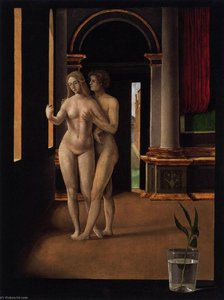
StatsJudith with the head of Holofernes in one hand, a sword in the other
 Read More
Hand Made Oil Reproduction
Hand-painted oil on canvas in your size and frame, made to order by our artists. ( Switch to Print Switch to Digital Image)




































Pick from our preset sizes that match the artwork's original proportions.

You may enter your own dimensions to fit a specific frame or space. If your selected size does not match the original image's proportions, we will either crop the artwork or extend the painting with additional hand-painted elements. A digital mockup will be sent for your approval before production begins.
Please note that the on-screen preview does not reflect the actual cropping or extension. Only the mockup will accurately show the final composition.
While custom sizes are available, we recommend selecting a dimension from the predefined list to preserve the original proportions.
After order, AllPaintingsStore.com team will email client for instructions and provide a mockup preview
Worldwide Delivery () in 3/4 weeks instead of standard 5 weeks. (21 September). No compromise on quality.

Free Worldwide Express Shipping

High-Quality Linen Canvas

Full Shipping Insurance

Customs Tax Refund Guarantee

True Color Matching Guarantee

100-Day Return Policy (Defects Only)

100% Money-Back Guarantee

Bulk Discount Offer
 Glass option is only available in size under 110 CM

Judith with the head of Holofernes in one hand, a sword in the other
Reproduction Medium
Reproduction Size
-


Total Price
$ 258
Related Artworks




Artist Biography
Jacopo Barbarini: The Venetian Trompe l'oeil Pioneer
Jacopo de’ Barbari remains one of the most elusive figures in Renaissance art, a master whose biography is pieced together from fragmentary evidence and scholarly speculation. Born sometime between 1460 and 1470 – though precise dates remain unknown – he emerged from Venice during a period of artistic ferment, profoundly influenced by the stylistic innovations championed by Andrea Mantegna and Albrecht Dürer. Contemporary accounts describe him as “old and weak” in 1511, suggesting a lifespan considerably longer than initially surmised, placing his active career well into the mid-century. Despite the lack of definitive biographical details, Barbarini’s artistic legacy speaks volumes about his talent and impact. He is celebrated primarily for his groundbreaking trompe l'oeil engravings and monumental woodcuts, techniques that revolutionized printmaking and established him as a singular visionary. These works weren’t merely aesthetically pleasing; they represented a radical departure from traditional representation, exploiting illusionistic perspective to create astonishingly realistic images that defied conventional spatial conventions. His magnum opus, the “Still Life with Fruit,” exemplifies this masterful manipulation of visual perception—a testament to his artistic genius and a cornerstone of Mannerist aesthetics.- Early Influences: Alvise Vivarini is considered Barbarini’s probable teacher, though details about his formative years remain obscure.
- German Patronage & Artistic Development: Barbarini traveled to Nuremberg in 1500 under the patronage of Maximilian I, followed by stints with Frederick III of Saxony and Joachim I of Brandenburg. During these periods he adopted the pseudonym “Jacop Walch,” reflecting his status as a foreigner.
- Venetian Engagement & Burgundian Connections: He returned to Venice with Philip II of Burgundy and subsequently worked for Margaret Tudor in Brussels, demonstrating his adaptability and artistic versatility across diverse cultural landscapes.
Major Achievements & Artistic Style
Barbari’s most enduring contribution to art history lies in his pioneering use of trompe l'oeil engraving. Unlike earlier printmakers who sought to faithfully reproduce visual reality, Barbarini deliberately deceived the eye, creating images that appeared three-dimensional despite their flat surface. This technique—known as “trompe l'oeil,” meaning "fool the eye"—became a defining characteristic of his oeuvre and profoundly impacted subsequent generations of artists. His woodcuts, particularly the monumental “Mars and Venus,” further solidified his reputation as a master craftsman and showcased his ability to convey complex narratives with striking visual impact.- Signature & Symbolism: Barbarini consistently signed his engravings with a caduceus—the symbol of Mercury—and the Munich Still Life bearing this emblem beneath his name ("jac.o de barbarj p 1504").
- Formal Innovations: His style is marked by geometric precision, flattened perspective, and an unsettling fascination with decay – elements that align perfectly with Mannerist artistic tendencies.
Historical Significance & Legacy
Jacopo Barbarini’s work transcends mere aesthetic beauty; it embodies a fundamental shift in artistic thinking. He challenged the conventions of humanist representation, prioritizing expressive distortion and psychological complexity over idealized realism. His influence extended far beyond Venice and Germany, shaping the visual language of Renaissance art across Europe. More than simply replicating existing styles, Barbarini actively interrogated them, pushing boundaries and establishing himself as an innovator whose legacy continues to inspire artists today. He stands as a testament to the transformative power of artistic experimentation and remains one of the most remarkable figures in the history of printmaking.
jacopo barbari
1460 - 1516
Quick Facts
- Artistic Movement Or Style: Mannerism
- Artists Or Movements Influenced By This Artist: ['Renaissance']
- Artists Who Influenced This Artist:
- Alvise Vivarini
- Mantegna
- Dürer
- Date Of Birth: c. 1460/70
- Date Of Death: before 1516
- Full Name: Jacopo de' Barbari
- Nationality: Italian
- Notable Artworks:
- Mars and Venus
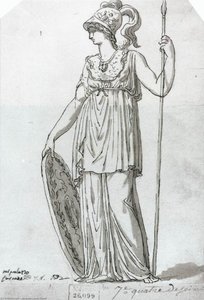
- A female figure of Victory reclining amid a pile of trophies of war
- Place Of Birth: Venice, Italy