


 Preview
 Send
Send Share
Share
 Details
 Guide
Guide

 Download
 Similars
 X-Ray
X-Ray Diaporama
 Stats
StatsThe Five Senses
 Oil
Oil- WallArt
- Baroque
 1638
1638- Early Modern
 55.0 x 68.0 cm
 Musée Des Beaux
 Read More
Giclée / Art Print
Museum-quality giclée or canvas print with fast production and flexible finish options. ( Buy Hand Made Painting Switch to Digital Image)




P118B $10

P118H $10

P118W $10

P438Z $10

P508JH $12

P508YH $12

P805H $10

P805Z $10

P919BZ $10

P919G $10

P919XJ $10

P959ZH $10

P968JZ $12

W106C $8

W218G $10

W218JH $8

W218Y $10

W307PJ $10

W316G $10

W316PJ $8

W316Y $10

W398PJ $8

W4111J $10

W500HY $15

W500JH $15

W692G $12

W849H $8

W940BG $15

W953PJ $8




Pick from our preset sizes that match the artwork's original proportions.

Type the width and the height you need, to fit your frame or your wall. A print can only be cut, never made bigger than the picture, so a size with a different shape loses a part of the image. We send you a digital mockup to approve before we print anything. The picture shown on this page does not show the real cut — only the mockup does.
Worldwide Delivery () in 2 weeks instead of standard 4/5 weeks. (25 October)

Free Worldwide Express Shipping

High-Quality Linen Canvas

Full Shipping Insurance

Customs Tax Refund Guarantee

True Color Matching Guarantee

100-Day Return Policy (Defects Only)

100% Money-Back Guarantee

Bulk Discount Offer
 Glass option is only available in size under 110 CM

The Five Senses
Giclée / Art Print
Reproduction Size
-


Total Price
$ 65
A Symphony of Sensation: The Artistry of Jacques Linard
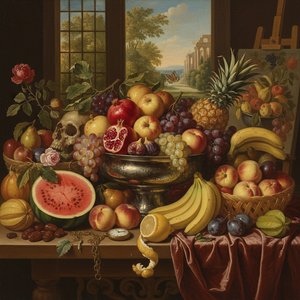
In the quiet, contemplative realm of 17th-century French still life, few works capture the delicate interplay between the physical world and the metaphysical soul as masterfully as Jacques Linard’s The Five Senses. Painted in 1638, this exquisite composition serves as more than a mere collection of objects; it is a poetic meditation on human perception. As one gazes upon the canvas, the viewer is invited into a meticulously arranged world where every element—from the soft curve of an orange to the reflective surface of a mirror—whispers a story of beauty and transience. Linard, a pioneer of the French still life tradition, utilizes a rich, Baroque sensibility to transform a simple tabletop scene into a profound sensory experience that resonates across centuries.
The composition is a masterclass in balance and depth. At the heart of the painting lies a bountiful arrangement of fruit, where the vibrant hues of apples and oranges contrast beautifully with the deep, succulent tones of clustered grapes. These organic forms are anchored by the presence of two elegant vases, which provide vertical structure to the scene, while an open book rests upon the table, suggesting the intellectual pursuit of knowledge that accompanied the era's scientific curiosity. The inclusion of a clock hanging subtly on the wall serves as a poignant memento mori, a gentle reminder of the relentless passage of time that governs all living things. This layering of objects creates a rhythmic flow that guides the eye through a landscape of textures and light.
Symbolism and the Mirror of Reality
What elevates this work from a traditional still life to a masterpiece of symbolic depth is Linard’s use of reflection and light. The presence of a mirror within the scene is particularly striking; it does not merely duplicate the fruit arrangement but adds a complex dimension of spatial illusion, pulling the viewer deeper into the painted reality. This technique reflects the 17th-century fascination with optics and the way light defines our understanding of form. Through the mirror, the artist explores the concept of truth versus appearance, inviting us to question the boundaries between what is seen and what is felt.
Every element in The Five Senses acts as a conduit for one of the human senses: the sweetness of the fruit evokes taste, the vibrant colors stir sight, the tactile presence of the textures suggests touch, the implied aroma of ripening fruit hints at smell, and the silent, scholarly atmosphere of the book and clock evokes the internal rhythm of hearing and thought. For the discerning collector or interior designer, this painting offers a sophisticated narrative that transcends simple decoration. It is an intellectual centerpiece, perfect for spaces that value quiet contemplation, classical elegance, and the enduring power of historical storytelling.
A Timeless Addition to the Modern Interior
For those seeking to infuse their living spaces with a sense of history and soulful grace, a high-quality reproduction of Linard’s work provides an unparalleled opportunity. The painting’s palette—rich in earthy tones, warm golds, and deep botanical greens—complements a wide array of interior styles, from the stately grandeur of a traditional library to the muted, organic textures of contemporary minimalist design. Owning such a piece is not merely about displaying art; it is about curating an atmosphere of refinement and intellectual depth.
As a hand-painted tribute to one of France's most significant early still-life masters, this reproduction captures the meticulous brushwork and luminous glazing that define Linard’s original technique. It brings the light of 1638 into the modern home, offering a window into a world where every object holds a secret, and every shadow tells a story of the enduring human experience.
Questions & Answers
How do contrast and harmony combine in "The Five Senses"?
The color composition of "The Five Senses" by Jacques Linard combines a statement contrast with a softly mixed palette harmony.
What is the emotional tone of "The Five Senses" by Jacques Linard?
"The Five Senses" is associated with a reflective feeling. The emotional tone describes the impression the work gives.
Where does "The Five Senses" fall in Jacques Linard's career?
"The Five Senses" represents the Mature Period of Jacques Linard.
Related Artworks


Artist Biography
A Pioneer of French Still Life: The World of Jacques Linard
Jacques Linard, a name perhaps less instantly recognizable than some of his Baroque contemporaries, occupies a pivotal position in the development of still life painting in 17th-century France. Born in Troyes in 1597 and passing away in Paris in 1645, Linard wasn’t merely documenting objects; he was crafting poetic meditations on beauty, transience, and the burgeoning scientific curiosity of his age. His early life remains somewhat shrouded in mystery, though we know his father, Jehan Linard, was also a painter active in Troyes, suggesting an initial artistic grounding within the family workshop. Records place him in Paris by the 1620s, quickly establishing himself as a skilled artist and becoming part of the vibrant artistic community clustered around the Île de la Cité and later Saint-Nicolas-des-Champs. His marriage in 1626 to Marguerite Tréhoire, daughter of Parisian master painter Romain Tréhoire, further solidified his connections within the art world. By 1631, he had achieved the prestigious title of *Peintre et Valet de Chambre du Roi* under Louis XIII, a position that afforded him both recognition and financial stability.From Flemish Roots to French Elegance
Linard’s artistic development was deeply influenced by the Northern Realist tradition, particularly the exquisite still lifes of Jan Brueghel the Elder. The meticulous detail, vibrant colors, and careful arrangement of objects characteristic of Brueghel are clearly visible in Linard's early works. However, he wasn’t simply a copyist. He infused his paintings with a distinctly French sensibility—a refined elegance and clarity that set him apart from his Flemish predecessors. While the Dutch masters were simultaneously revolutionizing still life with their hyperrealism and symbolic depth, Linard carved out a unique niche by blending meticulous observation with a poetic grace. His compositions often feature a harmonious balance of light and shadow, creating an atmosphere of quiet contemplation. He was among the first in France to explore thematic arrangements centered around the “Five Senses” and the “Four Elements,” transforming commonplace objects into allegorical representations of human experience.The Language of Objects: Symbolism and Meaning
Linard’s still lifes are far from mere depictions of fruit, flowers, or shells. They are imbued with a rich layer of symbolism that reflects the intellectual currents of his time. Exotic fruits like peaches and grapes weren't just visually appealing; they represented abundance, prosperity, and even sensual pleasure. Shells, prized as *mirabilia*—rare and fascinating objects collected by connoisseurs—evoked luxury, travel, and the wonders of the natural world. Coral, with its resemblance to blood vessels, carried religious connotations, symbolizing Christ’s sacrifice and protection against evil. The inclusion of musical instruments or playing cards hinted at the fleeting nature of earthly delights. His paintings invite viewers not just to admire their beauty but also to contemplate deeper themes of mortality, spirituality, and the passage of time. This subtle yet profound symbolism distinguishes his work from purely decorative still lifes.A Lasting Legacy: Inspiring a Generation
Though only around fifty works are definitively attributed to Linard today, his influence on French painting was considerable. He is credited with pioneering the thematic still life in France and inspiring artists like Louise Moillon, who would become the most celebrated female still-life painter of her era. Linard’s ability to combine meticulous realism with poetic elegance established a new standard for the genre. His compositions often featured delicate brushwork and vibrant colors, creating an atmosphere of quiet contemplation that resonated with contemporary audiences. Works like “Basket of Flowers,” now housed in the Louvre, demonstrate his mastery of technique and his keen eye for detail. The poem inscribed on a cup within one painting—a verse by the famous Chinese poet Su Shi—reveals a broader cultural awareness and intellectual curiosity. His paintings weren’t simply about what they depicted; they were about how those depictions connected to a wider world of knowledge, beauty, and meaning. Linard's legacy lies not just in his beautiful creations but also in his role as a catalyst for the flourishing of still life painting in 17th-century France.
Jacques Linard
1597 - 1645 , France
Quick Facts
- Artistic Movement Or Style: Northern Realism, Baroque
- Artists Or Movements Influenced By This Artist: ['Louise Moillon']
- Artists Who Influenced This Artist: ['Jan Brueghel']
- Date Of Birth: 1597
- Date Of Death: 1645
- Full Name: Jacques Linard
- Nationality: French
- Notable Artworks:
- Basket of Flowers
- Five Senses
- Four Elements
- Place Of Birth: Troyes, France
Related Articles

Simon Vouet: A Baroque Master's Journey from Italian Influence to French Classicism
Explore the life & art of Simon Vouet, a pivotal French Baroque painter who introduced Italian styles to France. Discover his masterpieces and lasting influence on 17th-century art.
The Bountiful Still Life: Symbolism & Artistic Representation of Fruit Across Art History
Explore the rich history of still life painting & the symbolism of fruit across art movements. Discover masterpieces from Caravaggio to Cézanne with AllPaintingsStore – expert guidance & museum-quality reproductions.

Nature's Bounty: The Timeless Allure and Art History of Fruit Still Life Paintings
Discover the profound beauty of fruit still life paintings. Explore the rich symbolism, Baroque mastery, and timeless allure of nature's bounty through an art-historical lens, perfect for collectors and enthusiasts of classical fine art.

Baroque Drama: Bringing Opulence & Emotion into Contemporary Interiors
Explore the opulent world of Baroque interior design! Discover key elements, modern applications & how to bring dramatic elegance into your home with AllPaintingsStore.com's authentic reproductions.

Nature's Bounty: The Art History of Fruit Arrangement Masterpieces and the Baroque Still Life Tradition
Explore the profound beauty of fruit arrangement masterpieces. From Dutch Golden Age opulence to Baroque chiaroscuro, discover the art history, symbolism, and timeless elegance of classical still life paintings for the discerning collector.


