


 Preview
 Send
Send Share
Share
 Details

 Download
 Similars
 X-Ray
X-Ray Diaporama
Rev. Joseph Sewall


 Read More
Giclée / Art Print
Museum-quality giclée or canvas print with fast production and flexible finish options. ( Switch to hand made Painting Switch to Image)




P118B $10

P118H $10

P118W $10

P438Z $10

P508JH $12

P508YH $12

P805H $10

P805Z $10

P919BZ $10

P919G $10

P919XJ $10

P959ZH $10

P968JZ $12

W106C $8

W218G $10

W218JH $8

W218Y $10

W307PJ $10

W316G $10

W316PJ $8

W316Y $10

W398PJ $8

W4111J $10

W500HY $15

W500JH $15

W692G $12

W849H $8

W940BG $15

W953PJ $8




Pick from our preset sizes that match the artwork's original proportions.

You may enter your own dimensions to fit a specific frame or space. If your selected size does not match the original image's proportions, we will either crop the artwork or extend the image with a mirrored or solid-fill edge. A digital mockup will be sent for your approval before production begins.
Please note that the on-screen preview does not reflect the actual cropping or extension. Only the mockup will accurately show the final composition.
While custom sizes are available, we recommend selecting a dimension from the predefined list to preserve the original proportions.
Worldwide Delivery () in 2 weeks instead of standard 4/5 weeks. (5 August)

Free Worldwide Express Shipping

High-Quality Linen Canvas

Full Shipping Insurance

Customs Tax Refund Guarantee

True Color Matching Guarantee

60-Day Return Policy (Defects Only)

100% Money-Back Guarantee

Bulk Discount Offer
 Glass option is only available in size under 110 CM

Rev. Joseph Sewall
Giclée / Art Print
Reproduction Size
-


Total Price
$ 65
Collectible Description
Rev. Joseph Sewall by John Smibert: A Portrait of Dignity and Piety
- Artist: John Smibert
- Date: 1730
- Medium: Oil on Canvas
A Glimpse into 18th-Century Colonial Life
John Smibert's "Rev. Joseph Sewall" offers a compelling window into the world of 18th-century colonial America. Painted around 1730, this bust-length portrait depicts Reverend Joseph Sewall, a prominent figure in Boston society and a member of a distinguished family. The artwork exemplifies the formal portraiture style prevalent during that era, intended to convey status, character, and piety. Smibert, though Scottish by birth, played a crucial role in shaping early American art through his teaching and establishment of what is considered America's first art gallery.
Composition, Color, and Technique
The composition is carefully structured around Reverend Sewall’s face and upper torso, set against a circular background. This framing device isolates the subject, emphasizing his importance and creating a sense of contained dignity. The color palette is dominated by dark tones – black in the coat and hair contrasting with the white collar – grounded by earthy browns and muted tans in the backdrop. Smibert’s technique showcases subtle blending of oil paints, minimizing harsh edges and producing a smooth, refined appearance that was characteristic of the period. The diffused lighting from the upper left gently models the face and clothing, creating depth and highlighting key features.
Symbolism and Emotional Impact
Reverend Sewall’s stern expression and formal attire immediately convey authority and seriousness. The circular frame itself holds symbolic weight; it can be interpreted as representing completeness, eternity, or perhaps even the cyclical nature of life and faith. The portrait evokes a sense of quiet contemplation and reverence, reflecting the religious values that were central to colonial society. It’s more than just a likeness; it's an attempt to capture the essence of a respected clergyman and his place within the community. The inscription on the lower spandrel, "Auris Mens Oculus Manus Os Pes Munere Fungi Dum Pergunt Praestat Discere Velle Mori," which translates roughly to “Ear, Mind, Eye, Hand, Mouth, Foot – To serve with gifts while questioning is to learn and desire to die,” further underscores the intellectual and spiritual depth of the subject.
Historical Significance & Artistic Legacy
“Rev. Joseph Sewall” stands as a significant example of Smibert’s work and provides valuable insight into colonial portraiture. Beyond its artistic merit, the painting holds historical importance as a visual record of a key figure in Boston's early history. Smibert’s influence extended beyond his own portraits; he fostered the development of American art by educating future generations of artists like Charles Willson Peale and Gilbert Stuart, solidifying his legacy as a pioneer in the field.
Related Artworks


Artist Biography
Giuseppe Castiglione: Bridging East and West in Qing Imperial Art
Giuseppe Castiglione (1688-1766) stands as a singular figure in the annals of art history, a testament to cultural exchange and artistic innovation. His remarkable fifty-year tenure at the Qing court in Beijing represents one of the most extraordinary collaborations between Western and Chinese artistic traditions. Born in Milan, Italy, Castiglione’s journey began with his ordination as a Jesuit missionary in 1715, an event that would irrevocably alter the course of his life and profoundly impact the aesthetic landscape of imperial China. Initially assigned to work in the palace enameling workshop, he unexpectedly ascended to prominence after the ascension of Emperor Yongzheng in 1723, receiving the prestigious Chinese name Lang Shining – a transformation that marked the beginning of his extraordinary artistic career.
Castiglione’s approach was revolutionary. Rather than simply replicating existing Chinese styles, he masterfully synthesized Western realism with traditional Chinese conventions. He had spent considerable time in Portugal, studying and practicing mural painting—a skill that proved invaluable in his later work at the Qing court. His training instilled a deep understanding of composition, perspective, and draftsmanship, which he skillfully integrated with the nuanced brushwork, symbolism, and philosophical underpinnings of Chinese art. This fusion resulted in paintings of unparalleled descriptive complexity, technical finish, and monumental scale – perfectly suited to the emperor’s desire for both documentary accuracy and lavish self-promotion.
The creation of “One Hundred Horses” (1735-1740) serves as a definitive example of Castiglione's unique style. This colossal handscroll, measuring nearly eight meters in length, is not merely a depiction of horses; it’s an illusionistic masterpiece. The preparatory drawing, recently unearthed and offering unprecedented insight into his process, reveals the meticulous care with which he constructed his compositions. Western techniques—precise charcoal sketches followed by bold ink outlines—were employed alongside Chinese conventions. Notably, Castiglione deliberately departed from traditional Chinese brushwork, opting for sharper lines reminiscent of Li Gonglin, a revered master known for his “baimiao” (monochrome drawings). However, unlike Li’s fluid calligraphy, Castiglione's drawing possessed a distinct European stiffness and laboriousness.
The monumental pine trees that punctuate the scroll are another striking example of this hybrid approach. Borrowed from Chinese sources, they were rendered with an unprecedented level of detail and foreshortening—a testament to Castiglione’s understanding of Western perspective. Even seemingly minor details, such as the spontaneous arabesques and cross-hatching used to depict vegetation, reflected a European sensibility – prioritizing modeling through light and shadow rather than the arbitrary contrasts of Chinese painting. This deliberate shift away from traditional Chinese techniques highlights Castiglione's conscious effort to bridge the gap between Western and Eastern artistic philosophies.
The Imperial Commission and the Constraints of Convention
The process of creating a painting for the Qing court was highly formalized, involving multiple stages of imperial approval. The practice of submitting preparatory drawings for scrutiny before commencing the final version—a standard procedure—ultimately served to inhibit spontaneity and encourage the participation of assistants. Castiglione’s focus on descriptive realism, prioritizing accurate representation over calligraphic brushwork, inadvertently contributed to a hardening of stylistic convention within his workshop.
The use of precious materials – silk as the support and mineral pigments – further complicated the creative process. These factors combined to create an environment where individual expression was often suppressed in favor of adhering to established norms. Despite these constraints, Castiglione’s work remains a remarkable achievement—a testament to his artistic skill, cultural sensitivity, and ability to navigate the complex dynamics of the Qing court.
Castiglione's Legacy: A Revolutionary Influence
Giuseppe Castiglione’s impact on Qing imperial art is undeniable. He not only established a new aesthetic standard but also profoundly influenced subsequent generations of Chinese painters. His innovative approach—combining Western realism with traditional Chinese techniques—challenged existing conventions and paved the way for further experimentation and cross-cultural exchange.
His work, particularly “One Hundred Horses,” is now recognized as a cornerstone of Qing court art, celebrated for its technical brilliance, descriptive richness, and symbolic depth. Castiglione’s legacy extends beyond his individual masterpieces; he represents a pivotal moment in the history of art—a bridge between East and West, where artistic innovation flourished through mutual respect and creative dialogue.
Early Life and Artistic Training
Born in Milan, Italy, on December 12, 1688, Giuseppe Castiglione’s early life was marked by a strong interest in art. He received his initial training as a painter, developing skills in various techniques including fresco painting and portraiture. His exposure to Western artistic traditions—particularly the Baroque style prevalent at the time—laid the foundation for his later success at the Qing court.
Prior to his arrival in China, Castiglione spent several years in Portugal, where he honed his skills as a muralist. This experience proved invaluable, providing him with a deep understanding of composition, perspective, and large-scale painting techniques—skills that would be crucial in his subsequent work at the Qing court. His time in Portugal also exposed him to different artistic styles and cultural influences, broadening his artistic horizons.
His decision to become a Jesuit missionary in 1715 marked a significant turning point in his life. The mission provided him with an opportunity to travel to China and immerse himself in the rich culture of the Qing dynasty. This journey ultimately led to his appointment as Lang Shining, a prestigious position within the imperial court—a role that would define his artistic career for the next fifty years.

john smibert
1688 - 1751 , United Kingdom
Quick Facts
- Artistic Movement Or Style: Illusionist painting
- Artists Or Movements Influenced By This Artist: ['Qing court art']
- Artists Who Influenced This Artist: ['Li Gonglin']
- Date Of Birth: 1688
- Date Of Death: 1751
- Full Name: Giuseppe Castiglione
- Nationality: Italian
- Notable Artworks: ['One Hundred Horses']
- Place Of Birth: Milan, Italy
Related Articles

Bridging Centuries: Digital Visualization & Classical Oil Painting Techniques in Contemporary Art Commissioning
Discover the art of commissioning bespoke oil paintings blending classical techniques with modern digital precision. Expert artists, personalized service & museum-quality results. Invest in a timeless masterpiece today.

Evoking Emotion & Transcendence: Romantic Landscape Painting (18th-19th Century)
Explore the emotional depth of Romantic landscape painting (18th-19th century). Discover key artists like Friedrich & Cole, and the concepts of the sublime. Expert insights for art lovers & collectors.

John Nost Sartorius: Equestrian Portraiture & the Shifting Social Landscape of 18th-Century England
Explore the captivating equestrian art of John Nost Sartorius (1759-1828). Discover his detailed paintings of racehorses, hunting scenes & aristocratic life. Learn about collecting Sartorius's work and its lasting value.

John George Brown: Capturing American Life & Sentiment in 19th-Century Genre Painting
Explore the captivating genre paintings of John George Brown, celebrated for his realistic depictions of 19th-century American life. Discover his legacy & find museum-quality reproductions at AllPaintingsStore.
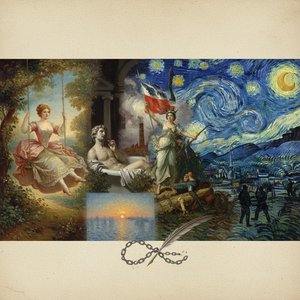
The Enduring Legacy of 18th & 19th Century Art: Movements, Masters & Societal Reflections
Explore the rich history of 18th & 19th-century art! Discover Romanticism, Realism, and iconic masters like Delacroix & Courbet. Expert insights & high-quality reproductions at AllPaintingsStore.





