


 Preview
 Send
Send Share
Share
 Details
 Guide
Guide

 Download
 Similars
 X-Ray
X-Ray Diaporama
 Stats
StatsStudy for the Back Program

 Read More
Giclée / Art Print
Museum-quality giclée or canvas print with fast production and flexible finish options. ( Buy Hand Made Painting Switch to Digital Image)




P118B $10

P118H $10

P118W $10

P438Z $10

P508JH $12

P508YH $12

P805H $10

P805Z $10

P919BZ $10

P919G $10

P919XJ $10

P959ZH $10

P968JZ $12

W106C $8

W218G $10

W218JH $8

W218Y $10

W307PJ $10

W316G $10

W316PJ $8

W316Y $10

W398PJ $8

W4111J $10

W500HY $15

W500JH $15

W692G $12

W849H $8

W940BG $15

W953PJ $8




Pick from our preset sizes that match the artwork's original proportions.

Type the width and the height you need, to fit your frame or your wall. A print can only be cut, never made bigger than the picture, so a size with a different shape loses a part of the image. We send you a digital mockup to approve before we print anything. The picture shown on this page does not show the real cut — only the mockup does.
Worldwide Delivery () in 2 weeks instead of standard 4/5 weeks. (25 October)

Free Worldwide Express Shipping

High-Quality Linen Canvas

Full Shipping Insurance

Customs Tax Refund Guarantee

True Color Matching Guarantee

100-Day Return Policy (Defects Only)

100% Money-Back Guarantee

Bulk Discount Offer
 Glass option is only available in size under 110 CM

Study for the Back Program
Giclée / Art Print
Reproduction Size
-


Total Price
$ 65
Kazimir Malevich’s Study for the Back Program: A Bold Statement of Pure Feeling
The image presented is a striking depiction of a red circle enveloped by black lettering—a deceptively simple composition that encapsulates the core tenets of Kazimir Malevich's groundbreaking Suprematism movement. This artwork, tentatively titled “Study for the Back Program,” embodies more than just visual aesthetics; it represents a radical reimagining of artistic expression and its relationship to reality. Produced around 1927, this piece exemplifies Malevich’s unwavering commitment to distilling art down to its purest form—a concept he articulated powerfully in his seminal text *The Non-Objective World*.- Style: Suprematism – Malevich’s artistic philosophy centered on rejecting representational imagery altogether. He sought to liberate painting from the constraints of depicting external objects, arguing that true art should emanate directly from inner feeling and intuition. This approach aligns perfectly with the broader cultural anxieties surrounding the aftermath of World War I and the burgeoning fervor for revolutionary ideas within Russia.
- Technique: Executed in oil paint on linen canvas, Malevich employed a meticulous layering process—a hallmark of his disciplined artistic practice. The black lettering serves not merely as textual accompaniment but as an integral element of the visual composition itself, creating a dynamic interplay between color and form that underscores Suprematism’s core principles.
- Historical Context: Created during the turbulent years following the October Revolution, Malevich's work reflects the intellectual ferment of the time—a desire to dismantle established artistic conventions and forge new paths toward spiritual enlightenment. The influence of Vladimir Lenin’s ideology is palpable in Malevich’s rejection of traditional symbolism and his embrace of geometric abstraction as a tool for conveying universal truths.
- Symbolism: The red circle, according to Malevich, symbolizes “the sun,” representing not just celestial illumination but also the source of life and vitality—a concept deeply rooted in Orthodox Christian iconography. Simultaneously, the black lettering embodies negation and emptiness, symbolizing the annihilation of illusion and the attainment of pure consciousness. Together, they represent a profound meditation on duality and transcendence.
- Emotional Impact: Viewing “Study for the Back Program” evokes a visceral response—a confrontation with the fundamental questions surrounding art’s role in human experience. Malevich's intention was to bypass rational thought altogether, inviting viewers into a realm of pure feeling where form transcends representation and communicates directly with the subconscious mind.
Exploring Kazimir Malevich’s Artistic Journey
Kazimir Severinovich Malevich (1879-1935) began his artistic explorations in Kyiv Oblast, Ukraine, absorbing the traditions of Ukrainian folk art and cultivating an appreciation for visual storytelling. However, he swiftly moved toward Moscow, immersing himself in the avant-garde currents sweeping across Europe—particularly influenced by Parisian Impressionism, Symbolism, Fauvism, and Cubism. His formative trip to Paris ignited his passion for experimentation and propelled him towards a radical departure from representational art.The Suprematist Manifesto: A Paradigm Shift
Malevich’s magnum opus, *Black Square* (1915), irrevocably altered the trajectory of artistic thought. Alongside fellow artists Mikhail Larionov and Natalia Goncharova, he championed Suprematism—a movement predicated on the assertion that art should transcend objective reality and tap into the realm of pure feeling. This revolutionary stance resonated powerfully with the intellectual climate of post-war Russia, signaling a decisive rejection of bourgeois aesthetics and embracing geometric abstraction as a vehicle for spiritual liberation. ### Where to Acquire Authentic ReproductionsBringing Malevich’s Vision Home
At Art Kingdom, you can immerse yourself in the captivating world of Kazimir Malevich's art with our meticulously crafted oil painting reproductions. Experience museum quality prints at a fraction of the gallery price—fast delivery and 100% satisfaction guaranteed! Explore sizes ranging from 24x20 inch to 72x48 inch, perfectly suited for enhancing any interior space. Don’t hesitate to contact us today at +1-888-472-1867 or visit our website: art-kingdom.com to personalize your order and bring Malevich’s groundbreaking aesthetic into your home! Item number: 2460558425Questions & Answers
What is the perceived brightness of "Study for the Back Program" by Kazimir Malevich?
The perceived brightness of "Study for the Back Program" by Kazimir Malevich is brilliant. It can be matched to the light of the intended space.
What emotion does "Study for the Back Program" by Kazimir Malevich convey?
"Study for the Back Program" by Kazimir Malevich conveys a reflective emotional tone.
What is "Study for the Back Program" about, and what atmosphere does it have?
"Study for the Back Program" shows geometric forms, pure feeling, russian art, avant-garde, minimalism, color theory, abstract expression, and its recorded mood is minimalist.
Related Artworks


Artist Biography
Kazimir Malevich: A Pioneer of Abstract Art
Early Life and Influences
- Born in Kyiv Oblast, Ukraine in 1878 to a Polish family, Kazimir Severinovich Malevich’s early life was shaped by the rural Ukrainian landscape and its rich folk culture.
- His upbringing instilled in him an appreciation for traditional artistic expressions that would later subtly influence his work.
- Formal training began in Kyiv, but Malevich quickly sought broader artistic horizons, moving towards Moscow and eventually engaging with the burgeoning avant-garde movements of Europe.
- Key Influences: Early exposure to folk art, combined with a desire for modern expression, formed the foundation of his unique style.
Artistic Development & Key Movements
- Initially, Malevich explored various styles including Impressionism, Symbolism, Fauvism, and Cubism. A pivotal trip to Paris in 1912 exposed him to the latest developments in European art.
- He gradually moved away from representational forms, seeking a purely artistic language based on geometric shapes and color.
- This led to the development of Suprematism around 1915 – an abstract movement focused on “the supremacy of pure feeling” in art.
- Suprematism rejected any attempt to depict objects from the visible world, instead prioritizing basic geometric forms like squares, circles, and rectangles.
Major Achievements & Notable Works
- Black Square (1915): Arguably his most famous work, it represents a radical departure from traditional art and is considered a foundational piece of abstract painting.
- White on White (1918): A series exploring the purity of form and color, featuring white geometric shapes against a white background – pushing abstraction to its limits.
- Stroyuschiysya dom [House under Construction] (1916): An early example of Suprematism showcasing his unique perspective on Ukrainian culture through abstract forms.
- He also wrote extensively on art theory, articulating the philosophical principles behind Suprematism and advocating for a new artistic consciousness.
Historical Significance & Legacy
- Malevich’s work profoundly impacted the development of 20th-century abstract art, influencing movements like Minimalism and Constructivism.
- He challenged conventional notions of representation and paved the way for non-objective art.
- His ideas about pure feeling and geometric abstraction continue to resonate with artists today.
- Despite facing political persecution under Stalin – initially supported, then suppressed – Malevich persevered in his practice and teaching.
- Influence on Later Artists: He directly influenced artists like El Lissitzky and indirectly shaped countless others through the enduring legacy of Suprematism.
Later Life & Death
- In his later years, Malevich revisited figurative painting, attempting to synthesize his abstract principles with representational forms.
- He continued to teach and write about art until his death in Leningrad (now St. Petersburg) in 1935.
- His work remained relatively obscure for decades after his death but experienced a resurgence of interest in the latter half of the 20th century, solidifying his place as one of the most important figures in modern art history.
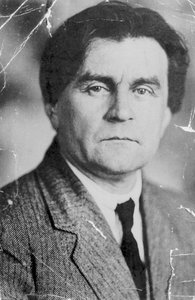
Kazimir Malevich
1878 - 1935 , Ukraine
Related Articles

Suprematism Explained: A Designer's Guide to Geometric Abstraction and Modern Architectural Impact
Master the use of Suprematism in professional design. Explore Kazimir Malevich’s geometric abstraction to elevate hotel and corporate interiors with bold, timeless art solutions, from custom oil reproductions to large-scale multi-panel installations.


![Black circle [1913] State Russian Museum,](/media/artworks/images-thumb/62/67/6267e452b0c8476772a6511e19ce1616.jpg)


