

- Home

- Oil Painting Reproduction
- Li Gonglin, Style Name Boshi, Art Name Longmian Jushi
- 北宋 李公麟 孝經圖 卷|The Classic of Filial Piety

 Buy print
 Send
Send Share
Share
 Details

 Download
 Similars
 X-Ray
X-Ray Diaporama
北宋 李公麟 孝經圖 卷|The Classic of Filial Piety
 Ink On Paper
- Other
- Traditional Chinese Painting
 1085
1085- High Medieval
 21.0 x 475.0 cm
 Metropolitan Museum of Art
 Read More
Hand Made Oil Reproduction
Hand-painted oil on canvas in your size and frame, made to order by our artists.




































Pick from our preset sizes that match the artwork's original proportions.

You may enter your own dimensions to fit a specific frame or space. If your selected size does not match the original image's proportions, we will either crop the artwork or extend the painting with additional hand-painted elements. A digital mockup will be sent for your approval before production begins.
Please note that the on-screen preview does not reflect the actual cropping or extension. Only the mockup will accurately show the final composition.
While custom sizes are available, we recommend selecting a dimension from the predefined list to preserve the original proportions.
After order, AllPaintingsStore.com team will email client for instructions and provide a mockup preview
Worldwide Delivery () in 3/4 weeks instead of standard 5 weeks. (16 July). No compromise on quality.

Free Worldwide Express Shipping

High-Quality Linen Canvas

Full Shipping Insurance

Customs Tax Refund Guarantee

True Color Matching Guarantee

60-Day Return Policy (Defects Only)

100% Money-Back Guarantee

Bulk Discount Offer
 Glass option is only available in size under 110 CM

北宋 李公麟 孝經圖 卷|The Classic of Filial Piety
Reproduction Medium
Reproduction Size
-


Total Price
-
Artwork Description
A Glimpse into Imperial Reverence: The Art of Li Gonglin
To stand before a depiction such as The Classic of Filial Piety by Li Gonglin is to step across the threshold of time and into the rarefied atmosphere of the Northern Song court. This monumental work, dating back to 1085, is far more than a mere record of an event; it is a profound meditation on social order, filial piety, and the enduring elegance of classical Chinese life. Li Gonglin himself, known by his style name Boshi, remains one of the most revered figures in Chinese art history. His brushwork possesses a unique quality—a refined delicacy that speaks not only of technical mastery but also of deep scholarly contemplation.
Mastery in Ink and Atmosphere: Technique and Composition
The visual experience is immediately captivating, dominated by the sophisticated interplay of monochrome ink washes and subtle color accents. The technique employed here showcases Li Gonglin’s unparalleled command over the brush. Observe how the artist builds depth not through Western perspective, but through meticulous layering and overlapping forms—a hallmark of traditional Chinese painting. The composition is richly populated; figures are arranged in a dense, harmonious tableau where every robe fold, every offering, and every gesture contributes to the overall narrative weight. The ink washes create an ethereal luminosity, suggesting diffused light within an important hall, allowing the viewer’s eye to wander across the scene while remaining anchored by the formal structure of the gathering.
The Weight of Tradition: Symbolism and Context
The subject matter itself—a depiction centered around filial piety—grounds the piece in deep Confucian tradition. The official receiving offerings is not just a portrait; it is a visual articulation of societal values, where respect and duty are paramount. Every element carries symbolic weight: the attire denotes status, the gathered individuals represent community structure, and the very act of presenting gifts speaks to the enduring bond between generations. For the modern collector or designer, this piece offers an unparalleled connection to a civilization that placed such profound emphasis on moral conduct as its highest art form.
An Echo of Elegance for Contemporary Spaces
While originating from a specific historical moment, the emotional resonance of this artwork transcends its era. It evokes feelings of solemnity, quiet reverence, and structured beauty. For an interior space seeking to imbue it with cultural depth, intellectual gravitas, or an air of timeless East Asian sophistication, a reproduction of this work serves as a magnificent focal point. The restrained palette and the inherent formality lend themselves beautifully to both grand halls and intimate scholarly studies, whispering tales of Song Dynasty refinement.


Artist Biography
The Refined Brush of Li Gonglin: A Legacy of Song Dynasty Scholarship
Li Gonglin, formally known as Longmian Jushi (meaning “Old Man with the Dragon Face”), and bearing the style name Boshi, stands as a towering figure in the landscape of Chinese painting during the Northern Song dynasty. Born sometime around 1009 – the exact date remains elusive – his life coincided with a period of immense cultural flourishing, yet also one marked by political turmoil that profoundly shaped his artistic vision. Unlike many artists who enjoyed patronage from the imperial court or wealthy collectors, Li Gonglin’s path was one of scholarly independence and deliberate stylistic choices rooted in a deep reverence for earlier masters. He died in 1085, leaving behind a body of work characterized by meticulous detail, restrained elegance, and an unwavering commitment to representing nature with both accuracy and philosophical depth.Early Life and Scholarly Pursuits
Li Gonglin hailed from a family of modest means but possessed a keen intellect and an insatiable thirst for knowledge. He dedicated his life to the study of calligraphy, painting, poetry, and history, passing the imperial examinations at a relatively late age – a testament to his focused dedication rather than early brilliance. This delay, however, proved formative. It allowed him ample time to cultivate his artistic skills and develop a unique aesthetic sensibility. He was deeply influenced by the intellectual climate of the Song dynasty, which emphasized Neo-Confucianism and a return to classical values. His scholarly background wasn’t merely an accompaniment to his art; it *was* his art. He believed that painting should serve as a vehicle for expressing moral principles and reflecting upon the natural world with profound understanding. He never held high office, preferring instead to live a life of quiet contemplation and artistic creation, traveling extensively throughout China and observing nature firsthand.A Style Forged in Tradition: Embracing the Ancients
Li Gonglin’s painting style is often described as a deliberate revival of earlier traditions, particularly those of the Five Dynasties period (907-960). He consciously rejected the prevailing trends of his time – the opulent and decorative styles favored by many court painters. Instead, he turned to the works of artists like Zhan Ziqian, known for his precise depictions of horses, and Fan Kuan, celebrated for his monumental landscapes. He meticulously copied their paintings, not as an act of imitation but as a form of rigorous training and scholarly investigation. This dedication led him to develop a distinctive technique characterized by fine, controlled brushwork, subtle ink washes, and a remarkable attention to detail. His subjects were primarily landscapes, bamboo, plum blossoms, and horses – all imbued with symbolic meaning deeply rooted in Chinese culture. Horses, for example, represented strength, loyalty, and the spirit of freedom, while bamboo symbolized resilience, integrity, and scholarly virtue.Major Achievements and Artistic Characteristics
Li Gonglin’s most celebrated works demonstrate his mastery of ink painting techniques and his ability to convey both physical reality and philosophical depth. His landscapes are not simply representations of scenic views; they are carefully constructed compositions that evoke a sense of tranquility, harmony, and the interconnectedness of all things. He employed a technique known as “dabi” (large brush) combined with “xiaomo” (light ink), creating paintings with layered textures and subtle tonal variations. His bamboo paintings are equally remarkable for their delicate lines, expressive forms, and evocative atmosphere.- The Pine Tree in the Clouds: This painting exemplifies his ability to capture the essence of nature through minimalist brushwork.
- Horses Grazing in a Pasture: A testament to his meticulous observation and understanding of equine anatomy.
- Landscape after Fan Kuan: Demonstrates his reverence for earlier masters while showcasing his own unique style.
Historical Significance and Enduring Legacy
Li Gonglin’s influence on subsequent generations of Chinese painters is immeasurable. He established a new standard for scholarly painting, emphasizing the importance of intellectual rigor, technical mastery, and moral integrity. His deliberate rejection of prevailing trends paved the way for a revival of classical styles and inspired countless artists to pursue their own unique visions. He is considered one of the “Four Masters of the Song Dynasty,” alongside Guo Xi, Wang Meng, and Fan Kuan – a testament to his enduring legacy and profound impact on Chinese art history. His paintings continue to be admired today for their beauty, elegance, and philosophical depth, serving as a powerful reminder of the importance of tradition, scholarship, and artistic excellence. He didn’t just paint what he saw; he painted what he *understood*, imbuing his works with a timeless quality that resonates with viewers centuries later.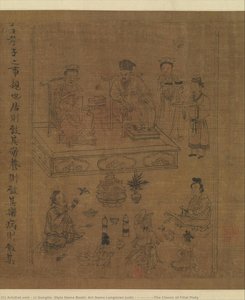
Quick Facts
- Art Name: Longmian Jushi
- Artistic Movement Or Style: Song Dynasty painting
- Date Of Birth: (Unknown)
- Date Of Death: Living
- Full Name: Li Gonglin
- Notable Artworks:
- Pine and Crane in Snow
- Lofty Bamboo
- Nine Dragons Scroll
- Style Name: Boshi
Related Articles

Xie Zhiliu: A Legacy of Ink Wash Painting & Modern Chinese Literati Tradition
Explore the legacy of Xie Zhiliu, a master of Chinese ink wash painting & prominent figure in modern art. Discover his techniques, influences, and contributions to literati tradition. A guide for discerning collectors.

Pu Xinyu's 'Puru': A Legacy of Literati Painting & Emotional Resonance
Explore the captivating world of Pu Xinyu (Puru), the last great literati painter. Discover his imperial heritage, masterful ink wash techniques & enduring legacy – a valuable addition to any discerning art collection.

The Art of Emphasis: Scaling Artwork for Impactful Statement Walls
Elevate your interiors with impactful statement walls! Expert guide on scaling artwork for perfect proportions & design harmony. Custom solutions & free consultations at AllPaintingsStore.
Ephemeral Expressions: Exploring the Nuances of Ink on Paper Through History & Contemporary Art
Explore the captivating world of ink wash painting – from its ancient origins to contemporary masters. Discover techniques, symbolism & conservation insights with AllPaintingsStore.com.

The Art of Layered Narratives: Spatial Harmony & Visual Cohesion in Multi-Piece Artwork Arrangements
Explore the art of multi-panel arrangements for impactful interiors. Expert guidance on spatial harmony, visual storytelling & psychological impact – perfect for luxury hotels and discerning collectors. Elevate your space with curated artwork.





