


 Preview
 Send
Send Share
Share
 Details
 Guide
Guide

 Download
 Similars
 X-Ray
X-Ray Diaporama
 Stats
StatsNight
 Oil On Canvas
- WallArt
- Surrealism
 1953
1953- Modern
 145.0 x 113.0 cm
 Read More
The artwork displayed on this page is protected by copyright law, which means we cannot legally create or sell an identical reproduction. This protection is enforced under international agreements such as the Berne Convention and by national laws, including those outlined by the U.S. Copyright Law - Title 17.
As a respectful and legal alternative, we offer custom, hand-painted artworks inspired by the original. Our skilled and professional artists carefully study the original's style, mood, and artistic essence to create a new, unique piece that evokes the same feeling - while remaining an original creation in its own right.
This method fully complies with copyright regulations because it does not involve copying or duplicating the protected artwork. Instead, it is a creative reinterpretation - a new painting that is influenced by the original but not identical to it.
Hand Made Oil Reproduction
Hand-painted oil on canvas in your size and frame, made to order by our artists. ( Switch to Print Switch to Digital Image)




P118B $10

P118H $10

P118W $10

P438Z $10

P508JH $12

P508YH $12

P805H $10

P805Z $10

P919BZ $10

P919G $10

P919XJ $10

P959ZH $10

P968JZ $12

W106C $8

W218G $10

W218JH $8

W218Y $10

W307PJ $10

W316G $10

W316PJ $8

W316Y $10

W398PJ $8

W4111J $10

W500HY $15

W500JH $15

W692G $12

W849H $8

W940BG $15

W953PJ $8




Pick from our preset sizes that match the artwork's original proportions.

Type the width and the height you need, to fit your frame or your wall. This is hand-painted, so for a size with a different shape the artist can paint a bit more around the picture, or cut a bit — you choose. We send you a digital mockup to approve before the painting starts. The picture shown on this page does not show the real result — only the mockup does.
After order, AllPaintingsStore.com team will email client for instructions and provide a mockup preview
Worldwide Delivery () in 3/4 weeks instead of standard 5 weeks. (23 October). No compromise on quality.

Free Worldwide Express Shipping

High-Quality Linen Canvas

Full Shipping Insurance

Customs Tax Refund Guarantee

True Color Matching Guarantee

100-Day Return Policy (Defects Only)

100% Money-Back Guarantee

Bulk Discount Offer
 Glass option is only available in size under 110 CM

Night
Reproduction Medium
Reproduction Size
-


Total Price
$ 258
A Dreamscape Unveiled: The Surreal Magic of Marc Chagall’s Night
In the quiet depths of 1953, Marc Chagall conjured a vision that defies the boundaries of reality, inviting us into a realm where the laws of physics surrender to the whims of the subconscious. His masterpiece, Night, is not merely a painting but a portal into a personal mythology, a place where memory and dream coalesce under an expansive indigo sky. As we gaze upon this canvas, we find ourselves suspended in a nocturnal reverie, caught between the tangible world of a stylized village and the ethereal flight of symbolic figures. The composition breathes with a sense of profound intimacy, pulling the viewer into a landscape that feels both alien and deeply familiar, much like the fragmented recollections of a childhood dream. The visual narrative is anchored by a striking, surreal central motif: a horse, rendered in earthy tones of ochre and muted brown, carrying a woman draped in flowing robes. This figure, often interpreted as a symbol of spiritual ascension or fertility, moves through the night with a grace that transcends gravity. Accompanying this procession are whimsical elements—a bird-headed man and a child—that populate the scene with a sense of enchantment and mystery. Chagall’s use of color is nothing short of transformative; while deep blues and purples dominate the heavens to evoke a tranquil yet melancholic atmosphere, sudden bursts of yellow and orange illuminate the village buildings and baskets of fruit. These warm accents act as beacons of life and abundance, providing a luminous contrast to the cool, nocturnal shadows.Technique and the Poetics of Naïve Art
To understand Night is to embrace the beauty of the unrefined. Chagall’s technique leans heavily into the traditions of Naïve Art, intentionally eschewing the rigid academic conventions of perspective and anatomical precision in favor of emotional truth. His brushwork is loose, gestural, and remarkably intuitive, capturing the immediate pulse of a feeling rather than the meticulous detail of an object. By flattening the perspective, Chagall removes the distance between the viewer and the subject, creating a sense of immersion that is essential to the Surrealist experience. There is no illusionistic realism here; instead, there is a deliberate reliance on vibrant hues and simplified forms to communicate the weight of human emotion and the lightness of fantasy. For the collector or the interior designer, this piece offers more than just aesthetic beauty; it provides a profound emotional anchor. The painting’s ability to evoke both peace and wonder makes it a versatile centerpiece for any sophisticated space. Whether placed in a quiet study to inspire contemplation or as a bold statement in a contemporary living area, Night brings with it the storied legacy of Chagall’s Belarusian roots and his lifelong devotion to the poetry of color. It is an invitation to look beyond the surface of the everyday and to find the extraordinary hidden within the shadows of the night.Questions & Answers
How do I discover artworks close to "Night" by Marc Chagall?
Artworks similar to "Night" by Marc Chagall are gathered on the artwork's Similars page.
What explains the copyright situation of "Night" by Marc Chagall?
The copyright status of "Night" - still protected by copyright - follows from the artist's death in 1985.
What level of contrast does "Night" by Marc Chagall show?
"Night" by Marc Chagall shows a balanced contrast between its light and dark areas.
Related Artworks


Artist Biography
A Life Painted in Dreams: The World of Marc Chagall
Marc Chagall, born Moishe Shagal in 1887 in the small Belarussian town of Liozna near Vitebsk, wasn’t merely a painter; he was a poet of color, a weaver of dreams, and a chronicler of memory. His life, spanning nearly a century, mirrored the tumultuous currents of the 20th century, yet his art remained steadfastly rooted in a deeply personal vision—one infused with the folklore of his Hasidic Jewish upbringing and an unwavering belief in the power of imagination. Vitebsk itself was more than just a birthplace; it became the emotional core of his artistic universe, a recurring motif populated by flying figures, whimsical animals, and the vibrant hues of remembered landscapes. The town’s unique blend of cultures—Russian Orthodox churches alongside bustling Jewish marketplaces—forged an aesthetic sensibility that would defy easy categorization throughout his long career. Though he sought formal training first with a local sign painter and later in St. Petersburg under Léon Bakst, and then in Paris at the Académie de la Grande Chaumière, Chagall never fully embraced any single artistic movement. He absorbed elements of Cubism, Symbolism, and Fauvism, but always filtered them through his own intensely personal lens, creating a style that was uniquely, unmistakably Chagall.Forging a Unique Visual Language
Chagall’s early works already hinted at the distinctive language he would develop. Paintings like I and the Village (1911) are not simply depictions of place; they are explorations of identity, memory, and the relationship between the individual and community. The village isn't rendered realistically but as a fragmented collection of recollections, imbued with symbolic meaning. This ability to transmute personal experience into universal themes became a hallmark of his art. His palette was bold and expressive, often employing vibrant, non-naturalistic colors to convey emotion rather than literal representation. Figures float and dance across the canvas, defying gravity and logic, creating a dreamlike atmosphere that invites viewers into his inner world. This stylistic approach wasn’t accidental; it stemmed from a desire to move beyond mere imitation of reality and capture the essence of feeling, the weight of memory, and the power of folklore. The Russian Revolution brought Chagall back to Vitebsk, where he became involved in cultural initiatives, establishing an art school that briefly flourished before succumbing to the restrictions imposed by the new regime. This period was marked by both creative energy and political disillusionment, a tension that would continue to shape his artistic trajectory.A Life Between Worlds: Paris, New York, and Beyond
Eventually, Chagall left Russia for good, settling in France in 1923. This marked the beginning of a period of international recognition and prolific creativity. Works like Over Vitebsk (1920-1922) demonstrate his continued engagement with his childhood memories, while paintings inspired by biblical stories—such as Jacob’s Dream—reveal a growing interest in religious themes. The outbreak of World War II forced him to flee occupied France for the United States, where he spent seven years in New York City. This period was marked by profound emotional upheaval and artistic experimentation. He found solace in his art, creating powerful works that reflected the anxieties and uncertainties of the time. White Crucifixion (1938), a haunting depiction of suffering and persecution, stands as a testament to this era. After the war, Chagall returned to France, where he continued to paint and create until his death in 1985 at the age of 97.Legacy and Enduring Influence
In his later years, Marc Chagall received numerous prestigious commissions, including the ceiling of the Paris Opera (1964), a breathtaking explosion of color and form that celebrated musical masterpieces, and stunning stained glass windows for the Hadassah Hebrew University Medical Center synagogue in Jerusalem. These large-scale projects allowed him to translate his artistic vision into architectural spaces, creating immersive environments that continue to inspire awe and wonder. Chagall’s influence on subsequent generations of artists is undeniable. His lyrical quality, emotional depth, and imaginative power resonated with Surrealists and other movements that embraced fantasy and symbolism. He bridged the gap between European modernism and Jewish cultural identity, becoming known as “the quintessential Jewish artist of the twentieth century.” His ability to synthesize personal experience, folklore, and universal themes continues to resonate with audiences worldwide. His work reminds us of the power of art to transcend boundaries, to connect us to our shared humanity, and to illuminate the beauty and mystery of life.A Lasting Impression
Marc Chagall’s legacy extends beyond his paintings and stained glass; it resides in the enduring power of his vision—a vision that celebrates love, memory, and the boundless possibilities of the human imagination. He left behind a body of work that is both deeply personal and universally accessible, inviting viewers to lose themselves in a world painted with dreams and illuminated by hope. The Musée Marc Chagall in Nice stands as a testament to his enduring influence, housing an extensive collection of his works and offering visitors a glimpse into the heart and soul of this extraordinary artist. His art continues to inspire, challenge, and move us, ensuring that his vibrant and imaginative spirit will live on for generations to come.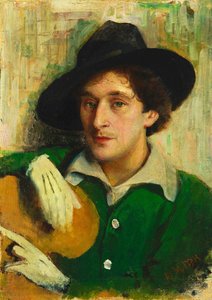
Marc Chagall
1887 - 1985 , Belarus
Quick Facts
- Artistic Movement Or Style:
- Cubism
- Symbolism
- Fauvism
- Artists Or Movements Influenced By This Artist: ['Surrealists']
- Artists Who Influenced This Artist: ['Léon Bakst']
- Full Name: Marc Chagall
- Nationality: Russian-French
- Notable Artworks:
- I and the Village
- Over Vitebsk
- White Crucifixion
- Jacob's Dream
- Place Of Birth: Liovana, Belarus
- Date Of Birth: 1887
- Date Of Death: 1985
Related Articles

The Enduring Form: Exploring Themes & Techniques in Sculpture Across Historical Periods
Explore the rich history of sculpture from ancient masterpieces to contemporary innovations. Discover key techniques, influential artists & investment potential for discerning art collectors.
Bronze Sculptures That Defined Art History | AllPaintingsStore
Journey through art history with our Top 10 bronze sculptures! Explore masterpieces by Rodin, Michelangelo & more. Discover stories behind iconic statues and find museum-quality reproductions for your home decor at AllPaintingsStore.com.

The Enduring Legacy of Bronze Sculpture: History, Techniques & Contemporary Interpretations
Explore the rich history & enduring appeal of bronze sculpture. Learn about casting techniques, iconic artists, collecting tips, & contemporary interpretations. Expert insights for discerning art collectors.

The Enduring Form: Sculpture Across History, Technique & Emotional Resonance
Explore the rich history of sculpture with AllPaintingsStore. Discover key techniques, influential artists & investment potential for discerning collectors. Expert insights into valuing and collecting timeless masterpieces.

Bronze Age to Modern Masters: 10 Sculptures That Redefined Art | AllPaintingsStore
Journey through art history with 10 legendary bronze sculptures – from Michelangelo's David to Rodin’s Thinker. Explore the stories, techniques & timeless beauty of these masterpieces. Find museum-quality reproductions & elevate your home decor on AllPaintingsStore.com.


