


 Preview
 Send
Send Share
Share
 Details

 Download
 Similars
 X-Ray
X-Ray Diaporama
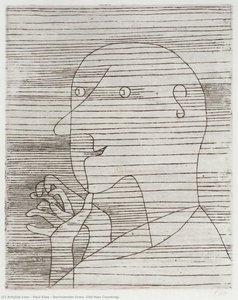
C'est Moi
 1964
1964 34.0 x 41.0 cm
 Read More
Giclée / Art Print
Museum-quality giclée or canvas print with fast production and flexible finish options. ( Buy Hand Made Painting Buy Image)




































Pick from our preset sizes that match the artwork's original proportions.

You may enter your own dimensions to fit a specific frame or space. If your selected size does not match the original image's proportions, we will either crop the artwork or extend the image with a mirrored or solid-fill edge. A digital mockup will be sent for your approval before production begins.
Please note that the on-screen preview does not reflect the actual cropping or extension. Only the mockup will accurately show the final composition.
While custom sizes are available, we recommend selecting a dimension from the predefined list to preserve the original proportions.
Worldwide Delivery () in 2 weeks instead of standard 4/5 weeks. (17 August)

Free Worldwide Express Shipping

High-Quality Linen Canvas

Full Shipping Insurance

Customs Tax Refund Guarantee

True Color Matching Guarantee

60-Day Return Policy (Defects Only)

100% Money-Back Guarantee

Bulk Discount Offer
 Glass option is only available in size under 110 CM

C'est Moi
Giclée / Art Print
Reproduction Size
-


Total Price
$ 65
Related Artworks




Artist Biography
Early Life and Artistic Beginnings
Martial Raysse, born in the picturesque coastal town of Golfe-Juan, France, on February 12, 1936, emerged from a family deeply rooted in the ceramic arts. This early exposure to tactile creation undoubtedly shaped his aesthetic sensibility, though his initial artistic explorations weren’t confined to clay. Even as a child, Raysse demonstrated a dual passion for both visual expression – painting and writing poetry at the tender age of twelve – and physical prowess, dedicating himself to rigorous athletic training. This seemingly disparate combination would later inform his art, creating a unique tension between the ephemeral beauty of form and the enduring presence of objects.
The formative years were marked by an accumulation of discarded materials, “rubbish odds and ends” as he described them, meticulously preserved under plexiglas. This practice wasn’t merely collecting; it was a nascent investigation into the power of found objects, foreshadowing his later involvement with Nouveau Réalisme. His first public showing in 1958 alongside the celebrated Jean Cocteau at Galerie Longchamp signaled an early recognition of his burgeoning talent and a willingness to engage with established artistic circles.
The “Hygiene of Vision” and Nouveau Réalisme
Raysse’s breakthrough came with the development of what he termed his “vision hygiene.” Captivated by the vibrant, often garish beauty of plastic – a material synonymous with postwar consumerism – he began to plunder low-cost shops, amassing a collection that would become central to his artistic vocabulary. This wasn't about celebrating consumption itself, but rather dissecting it, presenting its artificiality and abundance in a way that forced viewers to confront their relationship with the manufactured world. The critical acclaim received in 1961, culminating in a complete sell-out of an exhibition in Milan just fifteen minutes after opening, propelled him onto the international art stage.
In October 1960, Raysse became a founding member of Nouveau Réalisme, a pivotal movement that challenged the prevailing abstract expressionist dominance. Alongside artists like Arman, Yves Klein, François Dufrêne, and Daniel Spoerri, he sought “new perspective approaches of reality,” incorporating everyday objects into their work to blur the boundaries between art and life. The group’s manifesto called for a reassertion of humanistic ideals in the face of industrial expansion, advocating for an art that reflected the complexities – and contradictions – of modern society.
Pop Art Influences and American Sojourn
A pivotal journey to New York City in 1962 exposed Raysse to the burgeoning Pop Art scene. Immersing himself in the bohemian atmosphere of Chelsea Hotel, he connected with artists like Claes Oldenburg and Robert Rauschenberg, absorbing their techniques and sensibilities. This encounter proved transformative, leading him to embrace silkscreening, filmic projection, and a bolder aesthetic that mirrored American consumer culture.
His 1962 installation, Raysse Beach, debuted at the Stedelijk Museum in Amsterdam, offering a simulated slice of the French Riviera complete with inflatable pools, artificial palm trees, and mannequins. This immersive environment was a playful yet unsettling commentary on idealized leisure and manufactured paradise. A subsequent move to Los Angeles further solidified his connection to Pop Art, inspiring him to create works that explored the city’s unique blend of sunshine and consumer excess.
Later Developments and Lasting Legacy
The events of May 1968 in France profoundly impacted Raysse. Disillusioned by what he perceived as the failure of revolutionary change, he distanced himself from the established art world in 1970, seeking alternative forms of creative expression within an artists’ commune. This period saw experimentation with collective production and psychedelic themes.
However, it was his return to painting in the late 1970s that ultimately cemented his enduring legacy. He renewed his engagement with traditional techniques while retaining a distinctive visionary quality, creating tableaux rich in literary and pictorial references. His work continued to explore diverse materials – plastic, plexiglas, cardboard, neon – each chosen for its specific symbolic weight.
In 2011, the sale of Last Year in Capri (Exotic Title) for $6.58 million at Christie’s auction marked a watershed moment, establishing Raysse as the most expensive living French artist. This resurgence in interest coincided with a broader reevaluation of his contributions to contemporary art and a recognition of his unique ability to capture the complexities of modern life through evocative imagery and layered narratives.
- Raysse’s early work challenged traditional notions of artistic materials, elevating discarded objects to the status of fine art.
- His involvement with Nouveau Réalisme redefined the relationship between art and everyday life.
- The “hygiene of vision” concept remains a powerful commentary on consumer culture and its impact on perception.
- His later paintings demonstrate a masterful command of technique and a distinctive visionary style.
Martial Raysse’s artistic journey is one of constant evolution, marked by a willingness to experiment, challenge conventions, and confront the complexities of the modern world. His work continues to resonate with audiences today, offering a compelling reflection on beauty, consumption, and the enduring power of human creativity.

martial raysse
1936 - , France
Quick Facts
- Artistic Movement Or Style: New Realism, Pop Art
- Artists Who Influenced This Artist:
- Yves Klein
- Robert Rauschenberg
- Date Of Birth: February 12, 1936
- Full Name: Martial Raysse
- Nationality: French
- Notable Artworks:
- C'est Moi
- Last Year in Capri
- Place Of Birth: Golfe-Juan, France



