- Home

- Oil Painting Reproduction
- Max Ernst
- Les dieux obscurs (Dark Gods)

 Buy print
 Send
Send Share
Share
 Details

 Download
 Similars
 X-Ray
X-Ray Diaporama
Les dieux obscurs (Dark Gods)


 Read More
Hand Made Oil Reproduction
Hand-painted oil on canvas in your size and frame, made to order by our artists.




P118B $10

P118H $10

P118W $10

P438Z $10

P508JH $12

P508YH $12

P805H $10

P805Z $10

P919BZ $10

P919G $10

P919XJ $10

P959ZH $10

P968JZ $12

W106C $8

W218G $10

W218JH $8

W218Y $10

W307PJ $10

W316G $10

W316PJ $8

W316Y $10

W398PJ $8

W4111J $10

W500HY $15

W500JH $15

W692G $12

W849H $8

W940BG $15

W953PJ $8




Pick from our preset sizes that match the artwork's original proportions.

You may enter your own dimensions to fit a specific frame or space. If your selected size does not match the original image's proportions, we will either crop the artwork or extend the painting with additional hand-painted elements. A digital mockup will be sent for your approval before production begins.
Please note that the on-screen preview does not reflect the actual cropping or extension. Only the mockup will accurately show the final composition.
While custom sizes are available, we recommend selecting a dimension from the predefined list to preserve the original proportions.
After order, AllPaintingsStore.com team will email client for instructions and provide a mockup preview
Worldwide Delivery () in 3/4 weeks instead of standard 5 weeks. (16 July). No compromise on quality.

Free Worldwide Express Shipping

High-Quality Linen Canvas

Full Shipping Insurance

Customs Tax Refund Guarantee

True Color Matching Guarantee

60-Day Return Policy (Defects Only)

100% Money-Back Guarantee

Bulk Discount Offer
 Glass option is only available in size under 110 CM

Les dieux obscurs (Dark Gods)
Reproduction Medium
Reproduction Size
-


Total Price
-
Artwork Description
A Realm of Shadow and Form: Exploring Max Ernst’s ‘Les dieux obscurs’
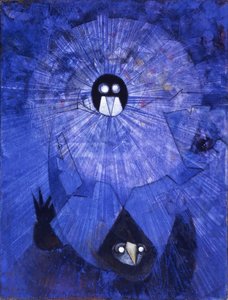
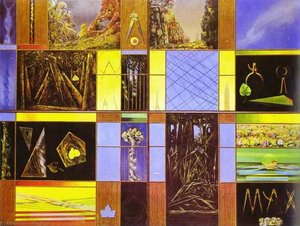
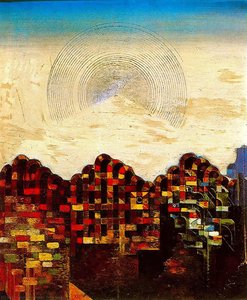
This captivating work by Max Ernst, titled *Les dieux obscurs* (Dark Gods), plunges the viewer into a surreal landscape brimming with psychological weight. The painting exemplifies Ernst's pivotal role in both Dadaism and Surrealism, movements dedicated to challenging artistic conventions and exploring the depths of the unconscious mind.Subject & Composition
The composition centers around two distinct yet interconnected figures. A colossal, shadowy form dominates the scene – vaguely humanoid but rendered with an unsettling ambiguity. Its prominent eyes suggest a watchful, perhaps even oppressive presence. Beneath this looming entity resides a smaller, bird-like figure, seemingly vulnerable and dwarfed by its counterpart. Radiating lines emanate from the larger figure, creating a dynamic sense of expansion or outward force, while simultaneously emphasizing a feeling of confinement within the canvas’s vertical orientation. The layering of shapes and directional lines contribute to a strong sense of depth and unease.Style & Technique
*Les dieux obscurs* is deeply rooted in Expressionism, yet transcends simple categorization through Ernst's unique stylistic blend. He masterfully employs oil paint on canvas, utilizing visible brushstrokes and textural variations – from thick *impasto* to smoother blended areas – to create a rich visual experience. The interplay of geometric and organic shapes adds to the work’s chaotic energy, mirroring the turbulent inner world often explored in Surrealist art. The diffuse lighting and dramatic shadows further heighten the emotional impact.Historical Context & Symbolism
Max Ernst (1891-1976) was a restless innovator who experimented with various techniques throughout his career, including *frottage* and collage. His work frequently draws upon mythology, dreams, and personal anxieties. The title itself, “Dark Gods,” hints at primal forces or archetypal figures lurking beneath the surface of consciousness. The bird-like figure could symbolize fragility, freedom, or perhaps a connection to the spiritual realm – often recurring motifs in Ernst’s oeuvre. Considering his experiences with war and societal upheaval, it's plausible to interpret this work as an exploration of power dynamics, vulnerability, and the darker aspects of human nature.Emotional Impact & Interpretation
The overall emotional tone is melancholic and slightly ominous. The painting evokes a sense of mystery and invites contemplation on themes of control, submission, and the unknown. It’s a work that doesn't offer easy answers but instead encourages viewers to confront their own subconscious associations and interpretations. For collectors, *Les dieux obscurs* represents a significant example of Ernst’s mature style. Interior designers might find its dramatic palette and evocative imagery ideal for creating a focal point in a modern or eclectic space, adding depth and intrigue to any room. The painting's enduring power lies in its ability to resonate with viewers on a deeply personal level, prompting introspection and sparking the imagination.Key Characteristics
- Movement: Surrealism & Dada
- Medium: Oil on Canvas
- Dominant Colors: Deep Blues & Blacks
- Themes: Power, Vulnerability, The Unconscious, Mythology
- Emotional Tone: Melancholic, Ominous, Mysterious


Artist Biography
A Life Immersed in the Surreal
Max Ernst, born Maximilian Maria Ernst on April 1st, 1891, in Brühl, Germany, was a restless spirit destined to become one of the most pivotal figures in 20th-century art. His journey wasn’t one of conventional artistic training; rather, it was a self-directed exploration fueled by philosophical inquiry, psychological fascination, and a profound disillusionment with societal norms. Ernst's father, a teacher of the deaf and an amateur painter, instilled in him both a sensitivity to the world and a rebellious streak against established authority. This early duality would become a defining characteristic of his artistic vision.
Ernst’s academic pursuits at the University of Bonn – encompassing philosophy, art history, literature, psychology, and psychiatry – were not merely diversions but foundational elements that deeply informed his later work. He wasn't simply interested in *how* to paint; he was grappling with *why*. This intellectual curiosity led him to encounter the groundbreaking works of Picasso, Van Gogh, and Gauguin at the Sonderbund exhibition in Cologne in 1912, a moment that irrevocably altered his artistic trajectory. The seeds of modernism had been sown.
Dada’s Disruption and the Birth of Surrealist Visions
The cataclysm of World War I proved to be a watershed moment for Ernst. His experiences as a soldier on both the Eastern and Western fronts left him profoundly shaken, fostering a deep skepticism towards established order and a yearning for new modes of expression. This disillusionment found fertile ground in the burgeoning Dada movement, which he embraced wholeheartedly after returning to Cologne in 1918. Alongside Hans Arp – a lifelong friend and collaborator – Ernst became a central figure in the Cologne Dada group, rejecting traditional artistic conventions and embracing absurdity, chance, and anti-rationality.
However, Dada was merely a stepping stone. In the early 1920s, Ernst migrated to Paris and joined the ranks of the Surrealists, led by André Breton. This marked a shift towards exploring the realm of dreams, the unconscious mind, and the irrational. Influenced by the psychoanalytic theories of Sigmund Freud, Ernst sought to unlock the hidden depths of human experience through his art. He wasn’t interested in depicting reality as it appeared but rather in revealing the underlying psychological forces that shaped it.
Pioneering Techniques: Frottage, Grattage, and Collage
Ernst's artistic innovation extended beyond subject matter; he was a relentless experimenter with technique. He didn’t simply adopt existing methods—he invented new ones. Perhaps his most famous contribution is frottage, a process of rubbing pencil or charcoal over textured surfaces to create unexpected and evocative images. This technique, born from a moment of boredom while observing wood grain, allowed Ernst to tap into the subconscious and generate forms that defied conscious control. Closely related was grattage, where paint is scraped across canvas revealing underlying layers.
He also masterfully employed collage, assembling disparate elements – images from magazines, scientific illustrations, photographs – into surreal compositions that challenged conventional notions of representation. These techniques weren’t merely stylistic choices; they were integral to his exploration of the unconscious and his desire to disrupt traditional artistic boundaries. His paintings often feature recurring symbolic imagery: birds (particularly his alter ego Loplop), desolate landscapes, unsettling juxtapositions, and a pervasive sense of mystery.
A Legacy of Innovation and Influence
The outbreak of World War II forced Ernst to flee Europe, finding refuge in the United States. He continued to paint and experiment with new techniques throughout his exile, eventually returning to France after the war where he remained active until his death on April 1st, 1976, in Paris. His influence on subsequent generations of artists is immeasurable.
Max Ernst’s contributions to Dada and Surrealism were nothing short of groundbreaking. He challenged artistic norms, delved into the depths of the subconscious mind, and invented innovative techniques that continue to inspire artists today. He wasn't merely a painter; he was an explorer, a provocateur, and a visionary who expanded the boundaries of art itself. His work remains a testament to the power of imagination, the allure of the irrational, and the enduring quest to understand the complexities of the human psyche.
- Major Works: The Entire City, Euclides, Of This Men Shall Know Nothing, Forest and Dove
- Influences: Pablo Picasso, Vincent van Gogh, Paul Gauguin, Sigmund Freud, Giorgio de Chirico
- Movements: Dada, Surrealism
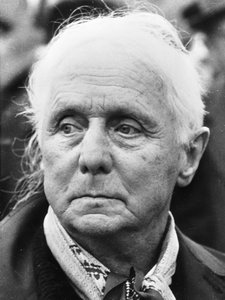
Max Ernst
1891 - 1976 , Germany
Quick Facts
- Artistic Movement Or Style: Dada, Surrealism
- Artists Or Movements Influenced By This Artist:
- Surrealism
- Dada
- Artists Who Influenced This Artist:
- Pablo Picasso
- Vincent van Gogh
- Paul Gauguin
- Giorgio de Chirico
- Date Of Birth: April 1, 1891
- Date Of Death: April 1, 1976
- Full Name: Max Ernst
- Nationality: German-American, French
- Notable Artworks:
- Ofrenda funeraria
- The Equivocal Woman
- L'Ange du foyer
- Place Of Birth: Brühl, Germany
Related Articles
Max Ernst's Masterpieces: 25 Surreal Visions for Art Lovers & Home Decor
Journey into the surreal world of Max Ernst! Explore 25 iconic paintings, from Dada to abstract expressionism. Discover the stories behind his masterpieces & find museum-quality art reproductions for your home decor at AllPaintingsStore.com.

From Imagination to Canvas: Commissioning Bespoke Fantasy Art with Traditional Oil Painting Techniques
Commission breathtaking bespoke fantasy art with skilled oil painters. Explore techniques, artist selection & preservation tips. Invest in a unique masterpiece today!
Oil on Canvas Masters: 10 Paintings That Redefined Art History |
Journey through art history with our guide to 10 legendary oil on canvas masterpieces! Explore iconic works by Van Gogh, Monet & Rembrandt. Find museum-quality reproductions and elevate your home decor at . Discover all masterpieces online.
Expressionist Painting: 10 Masterpieces That Defined a Movement | AllPaintingsStore
Explore 10 Expressionist paintings that revolutionized art! Discover Munch, Kirchner & Kandinsky's iconic works. Find museum-quality reproductions and vibrant canvas prints to elevate your home decor on AllPaintingsStore.com.

Surrealism's Visionaries: 10 Masterpieces for Your Home | AllPaintingsStore
Journey into the dreamlike world of Surrealism! Explore 10 masterpieces by Dali, Magritte & Miró that redefined art. Discover their stories & find museum-quality reproductions to elevate your home decor on AllPaintingsStore.com.