Preview
 Send
Send Share
Share
 Details
 Guide
Guide

 Download
 Similars
 X-Ray
X-Ray Diaporama
 Stats
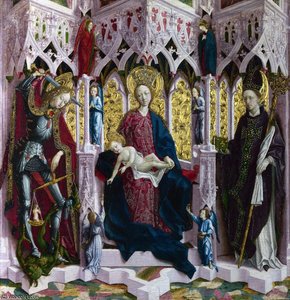
StatsAltarpiece of the Church Fathers: St Augustine Liberating a Prisoner
 Oil On Panel
- Early Renaissance
 1483
1483- Renaissance
 103.0 x 91.0 cm
 Alte Pinakothek
 Read More
Hand Made Oil Reproduction
Hand-painted oil on canvas in your size and frame, made to order by our artists. ( Switch to Print Switch to Digital Image)




P118B $10

P118H $10

P118W $10

P438Z $10

P508JH $12

P508YH $12

P805H $10

P805Z $10

P919BZ $10

P919G $10

P919XJ $10

P959ZH $10

P968JZ $12

W106C $8

W218G $10

W218JH $8

W218Y $10

W307PJ $10

W316G $10

W316PJ $8

W316Y $10

W398PJ $8

W4111J $10

W500HY $15

W500JH $15

W692G $12

W849H $8

W940BG $15

W953PJ $8




Pick from our preset sizes that match the artwork's original proportions.

You may enter your own dimensions to fit a specific frame or space. If your selected size does not match the original image's proportions, we will either crop the artwork or extend the painting with additional hand-painted elements. A digital mockup will be sent for your approval before production begins.
Please note that the on-screen preview does not reflect the actual cropping or extension. Only the mockup will accurately show the final composition.
While custom sizes are available, we recommend selecting a dimension from the predefined list to preserve the original proportions.
After order, AllPaintingsStore.com team will email client for instructions and provide a mockup preview
Worldwide Delivery () in 3/4 weeks instead of standard 5 weeks. (21 September). No compromise on quality.

Free Worldwide Express Shipping

High-Quality Linen Canvas

Full Shipping Insurance

Customs Tax Refund Guarantee

True Color Matching Guarantee

100-Day Return Policy (Defects Only)

100% Money-Back Guarantee

Bulk Discount Offer
 Glass option is only available in size under 110 CM

Altarpiece of the Church Fathers: St Augustine Liberating a Prisoner
Reproduction Medium
Reproduction Size
-


Total Price
$ 258
A Renaissance Dialogue in Red Robes
Michael Pacher’s Altarpiece of the Church Fathers: St Augustine Liberating a Prisoner is not merely a depiction of a biblical event; it is a profound meditation on enlightenment, authority, and spiritual liberation. Dating from 1483, this masterpiece captures a pivotal moment where divine wisdom confronts human bondage. The composition immediately draws the eye to the central interaction: the commanding figure robed in vibrant red, presumably St. Augustine, whose gesture—a hand placed gently yet firmly upon the shoulder of the captive—speaks volumes without uttering a single word. This touch is the conduit for knowledge, suggesting that true freedom begins not with force, but with instruction and understanding.
Mastery Bridging Eras: Style and Technique
Pacher himself stands as a fascinating artistic bridge, a Tyrolean genius who navigated the transition from the lingering grace of the Gothic style into the burgeoning clarity of the Renaissance. His training, notably influenced by the revolutionary perspective techniques encountered in Padua, imbues this altarpiece with an astonishing sense of spatial depth. Notice how the figures inhabit a believable, structured indoor space, anchored perhaps by the suggestion of a dining table below. The technical skill is breathtaking; Pacher seamlessly blends painting and sculptural qualities, giving every fold of drapery and every facial expression a tangible weight. The meticulous detail, from the texture of the robes to the subtle presence of the bird in the upper corner, speaks to an almost obsessive dedication to craft.
Symbolism of Enlightenment and Freedom
The narrative core revolves around the liberation of the prisoner. Symbolically, this scene transcends its historical setting. The naked figure represents the uninitiated soul, raw and vulnerable, awaiting guidance. St. Augustine, clad in rich red—a color often associated with divine love or martyrdom—acts as the conduit of grace. His staff is not just an accessory; it is a symbol of pastoral authority and the guiding path toward truth. The entire tableau functions as a visual sermon: that intellectual and spiritual awakening (the liberation) requires the guidance of established wisdom (the Church Fathers).
An Echo for the Modern Collector
To own a reproduction of this work is to invite a piece of High Renaissance contemplation into your own space. The emotional impact of the altarpiece is one of solemn yet hopeful instruction. It speaks to the enduring human quest for meaning and redemption. For collectors, it offers an unparalleled glimpse into Northern Italian Renaissance artistry before its full flowering in Venice or Florence. Its rich narrative complexity ensures that every viewing reveals new layers—a perfect focal point for a grand hall, library, or gallery setting where intellectual depth is cherished.
Related Artworks


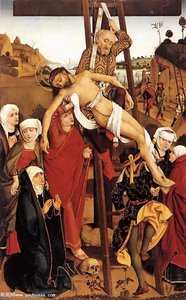


Artist Biography
A Tyrolean Bridge Between Worlds
Michael Pacher, born around 1435 in the alpine landscapes of Bolzano, stands as a pivotal figure in the transition from Gothic artistry to the burgeoning Renaissance spirit within German-speaking lands. He wasn’t merely an artist; he was a craftsman who seamlessly blended painting and sculpture, architecture and intricate detail, creating altarpieces that were less religious objects and more immersive worlds of faith and storytelling. While his early life remains shrouded in some mystery—details of his initial training are scarce—it's clear that Pacher possessed an innate talent nurtured by the artistic currents flowing through Tyrol during the mid-15th century. His journey took a decisive turn with a visit to Padua, Italy, where he encountered the revolutionary frescoes of Andrea Mantegna. This exposure proved transformative, imbuing his work with a newfound understanding of perspective and spatial composition—elements that would distinguish him from many of his contemporaries.The St. Wolfgang Altarpiece: A Masterpiece Unveiled
Pacher’s reputation rests most firmly upon the magnificent St. Wolfgang Altarpiece, created between 1471 and 1481 for the pilgrimage church in Austria. This isn't simply a painting; it is an elaborate polyptych, a multi-paneled masterpiece designed to unfold like a sacred narrative. The altarpiece’s ingenious design allows for three distinct displays: one for everyday worship, another more ornate for Sundays, and a fully expanded version reserved for special holy days. Each configuration reveals different scenes from the lives of Jesus and the Virgin Mary, culminating in the breathtaking central panel depicting the Coronation of the Virgin as Queen of Heaven—a sculpted scene radiating with divine majesty. The outer wings portray episodes from the life of Saint Wolfgang himself, patron saint of pilgrims and craftsmen. Scholars suggest his brother, Friedrich Pacher, may have contributed to painting some of the outer panels, highlighting a collaborative spirit within the workshop. What truly sets this work apart is its sheer scale, complexity, and the astonishing level of detail in both the painted elements and the intricately carved figures. It’s a testament to Pacher's ability to command multiple artistic disciplines simultaneously.Blending Disciplines: Painting, Sculpture, and Architectural Vision
Beyond the St. Wolfgang Altarpiece, Pacher demonstrated his unique synthesis of art forms in works like the Altarpiece of the Church Fathers, completed around 1483 for Neustift Monastery. Here, he masterfully blurred the boundaries between painting and sculpture, creating a unified artistic experience. The monumental figures of the Church Fathers seem to emerge from their niches, imbued with a palpable sense of presence. Pacher’s skill in manipulating light and shadow further enhances this effect, lending depth and realism to the composition. He didn't merely depict space; he *created* it within the confines of the altarpiece structure. This innovative approach significantly influenced subsequent generations of artists in Northern Europe, who sought to emulate his ability to integrate diverse artistic techniques into a cohesive whole.Legacy and Lasting Influence
By 1467, Pacher had established a thriving workshop in Bruneck, becoming a prominent figure in the Tyrolean art scene. He received commissions from various religious orders, including the Franciscans in Salzburg around 1484. Sadly, many of his works have been lost or damaged over time due to conflicts and natural disasters—a poignant reminder of the fragility of artistic heritage. Despite these losses, the surviving masterpieces stand as enduring testaments to Pacher’s exceptional talent and innovative spirit. He was a true pioneer, successfully bridging the gap between the expressive forms of Northern Gothic art and the emerging principles of Italian Renaissance painting. His legacy lies not only in the beauty and technical brilliance of his creations but also in his ability to forge a uniquely personal style that continues to captivate and inspire viewers centuries later. Pacher’s work represents a crucial moment in art history—a time when tradition and innovation converged, giving rise to new artistic possibilities.
Michael Pacher
1435 - 1498 , Italy
Quick Facts
- Artistic Movement Or Style: Renaissance & Gothic
- Artists Or Movements Influenced By This Artist: ['Northern European artists']
- Artists Who Influenced This Artist: ['Andrea Mantegna']
- Date Of Birth: c. 1435
- Date Of Death: 1498
- Full Name: Michael Pacher
- Nationality: Tyrolean
- Notable Artworks:
- St. Wolfgang Altarpiece
- Church Fathers Altarpiece
- Resurrection of Lazar
- Coronation of the Virgin
- Place Of Birth: Bolzano, Italy
Related Articles
Giotto's Masterpieces: 25 Renaissance Artworks for Your Home | AllPaintingsStore
Explore 25 breathtaking artworks by Giotto di Bondone, a Renaissance master. Discover the stories behind iconic frescoes & paintings like the Scrovegni Chapel cycle. Find museum-quality Giotto reproductions and elevate your home decor with AllPaintingsStore.com.

Illuminating Faith & Power: A Journey Through Medieval Art (c. 500 – c. 1500)
Explore the rich history of Medieval Art (c. 500 – c. 1500) with AllPaintingsStore. Discover Byzantine mosaics, Gothic cathedrals & Renaissance masterpieces. Expert insights & museum-quality reproductions.
El Greco's Masterpieces: Explore 25 Iconic Paintings & Spiritual Visions | AllPaintingsStore
Journey through El Greco's 25 most iconic paintings! Explore the spiritual depth & dramatic beauty of this Spanish Renaissance master. Discover art history, techniques & find museum-quality reproductions for your home at AllPaintingsStore.com.

Léon Augustin L'Hermitte: Capturing the Soul of French Rural Life
Discover the captivating realist paintings of Léon Augustin L'Hermitte, masterfully depicting French rural life. Explore his technique, influences & legacy – a cornerstone of 19th-century art.

Fra Angelico's Masterpieces: 25 Renaissance Paintings for Your Home | AllPaintingsStore
Explore 25 breathtaking masterpieces by Fra Angelico, a Renaissance master. Discover the stories behind his iconic frescoes, Annunciations & religious art. Find museum-quality reproductions and elevate your home decor with AllPaintingsStore.com.