

- Home

- Print on canvas
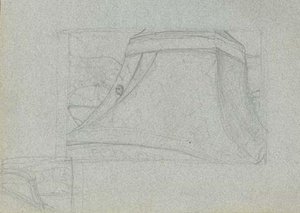
- Michel Dorigny
- Ceiling decoration

 Preview
 Send
Send Share
Share
 Details

 Download
 Similars
 X-Ray
X-Ray Diaporama
Ceiling decoration


 Read More
Giclée / Art Print
Museum-quality giclée or canvas print with fast production and flexible finish options. ( Switch to hand made Painting Switch to Image)




































Pick from our preset sizes that match the artwork's original proportions.

You may enter your own dimensions to fit a specific frame or space. If your selected size does not match the original image's proportions, we will either crop the artwork or extend the image with a mirrored or solid-fill edge. A digital mockup will be sent for your approval before production begins.
Please note that the on-screen preview does not reflect the actual cropping or extension. Only the mockup will accurately show the final composition.
While custom sizes are available, we recommend selecting a dimension from the predefined list to preserve the original proportions.
Worldwide Delivery () in 2 weeks instead of standard 4/5 weeks. (3 August)

Free Worldwide Express Shipping

High-Quality Linen Canvas

Full Shipping Insurance

Customs Tax Refund Guarantee

True Color Matching Guarantee

60-Day Return Policy (Defects Only)

100% Money-Back Guarantee

Bulk Discount Offer
 Glass option is only available in size under 110 CM

Ceiling decoration
Giclée / Art Print
Reproduction Size
-


Total Price
$ 65
Related Artworks




Artist Biography
The Quiet Mastery of Michel Dorigny
In the grand, often turbulent tapestry of the French Baroque era, where dramatic shadows and sweeping movements frequently commanded the viewer's attention, Michel Dorigny (1616–1665) carved out a unique and enduring niche. Born in Saint-Quentin, France, Dorigny emerged not as a painter of theatrical storms or violent mythologies, but as a master of tranquility. His life and work represent a profound devotion to the subtle rhythms of the natural world, capturing moments of stillness that invite the soul into deep contemplation. Through his meticulous eye, the fleeting nuances of light upon a leaf or the gentle ripple of water became subjects of eternal significance.
Dorigny’s artistic foundation was built within the prestigious halls of the Académie de peinture et de sculpture in Paris. Under the guidance of masters such as Georges Lallemand and the influential Simon Vouet, he absorbed the classical principles that would define his structural precision. His integration into the heart of the Parisian art scene was further solidified through his marriage to Vouet’s daughter, a union that placed him at the center of a vibrant intellectual and creative circle. This period of his life was marked by an immersion in humanist scholarship, which instilled in him a deep respect for the classical motifs and balanced compositions that would later grace his landscapes.
A Legacy of Detail and Light
The true essence of Dorigny’s genius lies in his ability to marry technical rigor with emotional serenity. While his repertoire was diverse—spanning portraits, genre scenes of domestic life, and mythological narratives—it is his landscape painting that remains his most profound contribution to art history. Unlike many of his contemporaries who sought the sublime through scale and drama, Dorigny found it in the minute. He possessed an almost scientific devotion to the rendering of foliage, the delicate reflections in still waters, and the weathered textures of classical architecture.
His technique was a sophisticated dance of light and shadow, heavily influenced by the masterful color palettes of Vouet. By employing intricate glazing techniques, Dorigny achieved a luminous quality that seemed to breathe life into his canvases. Each layer of paint served to build depth and luminosity, allowing light to appear as if it were filtering through actual forest canopies or shimmering across a pastoral meadow. This painstaking approach resulted in works that felt less like mere depictions and more like windows into a peaceful, idealized reality.
Influence and Historical Significance
Beyond his individual canvases, Dorigny’s impact extended to the very future of French painting. As a professor at the Academy, he played a vital role in nurturing the next generation of talent, passing down the meticulous traditions of the Baroque landscape. His influence was perhaps most intimately felt through his sons, Nicolas and Louis Dorigny, who carried his dedication to detail and classical harmony into their own celebrated careers. This lineage ensured that the quiet, observant spirit of his work would resonate well beyond his death in 1665.
Today, the works of Michel Dorigny serve as a testament to the power of restraint. In an age often defined by excess, his paintings offer a sanctuary of order and peace. He remains a pivotal figure in the development of the French landscape tradition, bridging the gap between the structured classical ideals of the early 17th century and the more naturalistic observations that would follow. To view a Dorigny landscape is to experience a moment of suspended time, where the beauty of the earth is captured in its most serene and perfected state.

Michel Dorigny
1616 - 1665 , France
Quick Facts
- Artistic Movement Or Style: Baroque
- Artists Who Influenced This Artist:
- Georges Lallemand
- Simon Vouet
- Date Of Birth: Saint-Quentin, France (1616)
- Date Of Death: 1665
- Full Name: Michel Dorigny
- Nationality: French
- Notable Artworks:
- Le Repos de la Sainte Famille
- Bacchus (Dionysus)
- L'AMERIQUE
- Place Of Birth: Saint Quentin





