


 Preview
 Send
Send Share
Share
 Details
 Guide
Guide

 Download
 Similars
 X-Ray
X-Ray Diaporama
 Stats
StatsAffliction


 Read More
Giclée / Art Print
Museum-quality giclée or canvas print with fast production and flexible finish options. ( Buy Hand Made Painting Switch to Digital Image)




P118B $10

P118H $10

P118W $10

P438Z $10

P508JH $12

P508YH $12

P805H $10

P805Z $10

P919BZ $10

P919G $10

P919XJ $10

P959ZH $10

P968JZ $12

W106C $8

W218G $10

W218JH $8

W218Y $10

W307PJ $10

W316G $10

W316PJ $8

W316Y $10

W398PJ $8

W4111J $10

W500HY $15

W500JH $15

W692G $12

W849H $8

W940BG $15

W953PJ $8




Pick from our preset sizes that match the artwork's original proportions.

Type the width and the height you need, to fit your frame or your wall. A print can only be cut, never made bigger than the picture, so a size with a different shape loses a part of the image. We send you a digital mockup to approve before we print anything. The picture shown on this page does not show the real cut — only the mockup does.
Worldwide Delivery () in 2 weeks instead of standard 4/5 weeks. (27 October)

Free Worldwide Express Shipping

High-Quality Linen Canvas

Full Shipping Insurance

Customs Tax Refund Guarantee

True Color Matching Guarantee

100-Day Return Policy (Defects Only)

100% Money-Back Guarantee

Bulk Discount Offer
 Glass option is only available in size under 110 CM

Affliction
Giclée / Art Print
Reproduction Size
-


Total Price
$ 65
A Study in Restraint and Resonance: Unpacking Paul Klee’s “Affliction”
Paul Klee's "Affliction," a deceptively simple monochrome drawing, isn’t merely a depiction of two faces; it’s an intensely felt exploration of human vulnerability and the quiet despair that can reside within even the most seemingly contained spaces. Created during a period marked by personal struggle for the artist – a time shadowed by illness and displacement – the work resonates with a profound sense of melancholy, achieved through Klee's masterful manipulation of line, form, and color (or rather, its absence). The piece immediately draws the viewer in with its starkness, inviting contemplation on themes of isolation, confinement, and the unspoken burdens we all carry. It’s a testament to Klee’s ability to distill complex emotional states into their most essential visual components.
The composition is strikingly reductive. Two faces, rendered with minimal detail – almost childlike in their simplicity – are positioned within an egg-shaped outline, suggesting both protection and restriction. This enclosure isn't comforting; it feels like a carefully constructed barrier against the outside world. The background explodes with a dense grid pattern, a recurring motif in Klee’s work that serves as more than just a decorative element. It represents the constraints of societal expectations, the rigid structures of life, or perhaps even the internal limitations we impose upon ourselves. The parallel lines, executed with delicate precision, create a visual texture that contrasts sharply with the smooth contours of the faces, highlighting their fragility and emphasizing the feeling of being trapped within this geometric framework.
Decoding the Language of Line and Form
Klee’s technique is characterized by an almost obsessive attention to line. These aren't lines meant to define realistic forms; instead, they are instruments for creating mood and texture. The grid itself is a masterclass in repetition and control, demonstrating Klee’s deep understanding of pattern and its ability to evoke specific emotional responses. The thinness of the lines contributes significantly to the overall sense of vulnerability – as if the faces themselves could be easily erased or broken. Notice how the outlines are not perfectly defined; they possess a slight wavering quality, mirroring the instability and uncertainty suggested by the title itself. The egg-shaped form, a frequent element in Klee’s work, often symbolizes beginnings, potential, or even the womb – adding another layer of complexity to the image.
Symbolism and Emotional Weight
The downward gaze of the figures is particularly poignant. It suggests a state of resignation, perhaps even despair. They are looking *down*, away from any possibility of escape or solace. The monochromatic palette – primarily shades of gray and black – reinforces this somber mood, stripping away any potential for warmth or vibrancy. While there’s no explicit narrative, the image powerfully communicates an emotional experience. It's a universal depiction of suffering, not tied to any specific event but rather representing the quiet anguish that can permeate everyday existence. Considering Klee’s own struggles with illness during this period, it’s reasonable to interpret “Affliction” as a deeply personal reflection on his own experiences.
Bringing "Affliction" Home: A AllPaintingsStore Reproduction
AllPaintingsStore is proud to offer meticulously crafted hand-painted reproductions of Paul Klee's "Affliction." We understand the profound impact this artwork has, and we’ve dedicated ourselves to capturing its essence with the utmost care. Our artists replicate Klee’s distinctive style – his delicate lines, subtle tonal variations, and characteristic use of pattern – ensuring that your reproduction is a faithful representation of the original. More than just a print, our reproductions are works of art in their own right, perfect for adding a touch of contemplative beauty to any interior space. Explore our range of sizes and canvas options to find the ideal way to bring this evocative image into your home or office. View the artwork here.
Questions & Answers
What is the overall mood of "Affliction" by Paul Klee?
The overall mood of "Affliction" by Paul Klee is dramatic. The mood describes the general atmosphere of the work.
Do the colors of "Affliction" appear strong or soft?
"Affliction" by Paul Klee shows a monochromatic color intensity.
Where can I buy a hand-painted reproduction of "Affliction" by Paul Klee?
Hand-painted copies of "Affliction" by Paul Klee are sold on this website: a hand-painted oil reproduction on linen canvas, ordered from its Hand-Painted Reproduction page.
Related Artworks


Artist Biography
A Life of Line and Lyricism
Born in Münchenbuchsee, Switzerland, on December 18, 1879, Paul Klee entered a world shaped by the rhythms of music. His father, Hans Wilhelm Klee, was a German music teacher, and his mother, Ida Marie, was a Swiss singer. This early immersion in sound provided a foundation for a visual language that often mirrored musical arrangement. While he initially pursued the violin with great talent, eventually deciding that modern music lacked the creative pull he craved, he turned his focus toward the Academy of Fine Arts in Munich. His studies there between 1898 and 1901 were marked by an early mastery of drawing, though he famously struggled with color during those first cold winters.
The transition from a draftsman to an abstract thinker was not immediate. Klee’s early years involved exploring the boundaries of Symbolism and Art Nouveau, often working in black and white or through experimental techniques like needle drawing on blackened glass. A significant shift occurred in 1914 during a visit to Tunisia. The intense light of North Africa allowed him to detach color from physical description, using it instead as an independent force. This period provided the necessary push toward abstraction, moving his work away from mere representation and toward a more personal, symbolic vocabulary.
The Bauhaus Years and Political Shadows
Klee’s career reached a period of intense theoretical and creative activity during his time at the Bauhaus. From 1920 to 1930, he joined the faculty of this influential school of design and architecture, working alongside figures like Wassily Kandinsky. It was here that much of his prolific output occurred, particularly small-scale watercolors and drawings on paper. His teaching allowed him to explore the relationship between color and form with scientific precision, a subject he documented extensively in his notebooks. These writings, which examined the mechanics of design, are now regarded as essential texts for understanding modern composition.
The stability of this era was abruptly interrupted by the rise of National Socialism. In 1933, Klee was dismissed from his position at the Academy of Fine Arts in Düsseldorf because the Nazi regime classified his work as “degenerate.” Forced to return to his native Bern, his later years were marked by a shift in tone. As political turmoil grew and his own health declined, his lines became heavier, turning into black bars, and his forms grew more generalized. The whimsicality of his earlier years gave way to a more somber, melancholic perspective, reflecting the gravity of the era.
A Lasting Visual Language
The breadth of Klee’s output is immense, totaling some 10,000 works that range from delicate sketches to larger, more structured compositions. His ability to blend influences from Cubism, Expressionism, and Surrealism resulted in a style that felt both childlike and deeply intellectual. He utilized a variety of media, including:
- Zinc-plate etchings
- Watercolor on gauze and paper
- Lithographs
- Charcoal and pencil drawings
His work remains a study in balance, where titles often provided the necessary context for his often cryptic imagery. Whether through the use of simple stick figures or complex, colorful grids, he sought to express the inner world of ideas rather than the surface of reality. He died on June 29, 1940, in Muralto, Switzerland, leaving behind a body of work that bridged the gap between the figurative and the abstract.
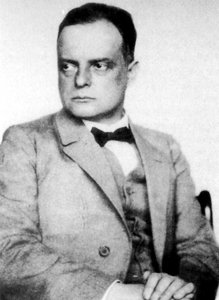
Paul Klee
1879 - 1940 , Switzerland
Quick Facts
- Artistic Movement Or Style:
- Expressionism
- Cubism
- Surrealism
- Artists Who Influenced This Artist:
- Pablo Picasso
- Georges Braque
- Robert Delaunay
- Vincent van Gogh
- Paul Cézanne
- Full Name: Paul Klee
- Nationality: German and Swiss
- Notable Artworks:
- Hammamet with Its Mosque
- Ships in the Dark
- Walpurgis Night
- The Protector
- Place Of Birth: Münchenbuchsee, Switzerland
- Date Of Birth: 1879
- Date Of Death: 1940
Related Articles

Bold Distortion: A Trend Forecast for Impactful Abstract Art in Luxury Commercial and Hotel Interiors
Elevate hospitality design with the Bold Distortion trend. APS provides professional sourcing of large-scale abstract paintings for hotel interiors. Benefit from custom sizing, bulk-order efficiency, and reliable global shipping. High-impact art for high-volume procurement.


