


 Preview
 Send
Send Share
Share
 Details
 Guide
Guide

 Download
 Similars
 X-Ray
X-Ray Diaporama
 Stats
StatsDoble

 Read More
Giclée / Art Print
Museum-quality giclée or canvas print with fast production and flexible finish options. ( Buy Hand Made Painting Switch to Digital Image)




P118B $10

P118H $10

P118W $10

P438Z $10

P508JH $12

P508YH $12

P805H $10

P805Z $10

P919BZ $10

P919G $10

P919XJ $10

P959ZH $10

P968JZ $12

W106C $8

W218G $10

W218JH $8

W218Y $10

W307PJ $10

W316G $10

W316PJ $8

W316Y $10

W398PJ $8

W4111J $10

W500HY $15

W500JH $15

W692G $12

W849H $8

W940BG $15

W953PJ $8




Pick from our preset sizes that match the artwork's original proportions.

Type the width and the height you need, to fit your frame or your wall. A print can only be cut, never made bigger than the picture, so a size with a different shape loses a part of the image. We send you a digital mockup to approve before we print anything. The picture shown on this page does not show the real cut — only the mockup does.
Worldwide Delivery () in 2 weeks instead of standard 4/5 weeks. (23 October)

Free Worldwide Express Shipping

High-Quality Linen Canvas

Full Shipping Insurance

Customs Tax Refund Guarantee

True Color Matching Guarantee

100-Day Return Policy (Defects Only)

100% Money-Back Guarantee

Bulk Discount Offer
 Glass option is only available in size under 110 CM

Doble
Giclée / Art Print
Reproduction Size
-


Total Price
$ 65
Exploring the Vibrant Resonance of Doble by Paul Klee
Paul Klee’s “Doble,” created sometime between 1937 and 1940, stands as a testament to his unwavering commitment to abstract expressionism—a style that prioritizes emotion and intuition over literal representation. This captivating artwork isn't merely a visual spectacle; it’s an invitation into Klee’s inner world, meticulously crafted with a distinctive approach that distinguishes him from many of his contemporaries. The painting’s palette explodes with hues reminiscent of a Swiss alpine meadow—bold reds mingle with delicate pinks and yellows, punctuated by earthy browns and grounding blacks—creating a harmonious blend that immediately draws the eye.A Symphony of Geometric Forms
At its core lies a central bird figure, rendered in simplified geometric shapes – circles and squares predominantly – which embodies Klee’s fascination with elemental forms as conduits for conveying feeling. Surrounding this focal point are numerous smaller birds scattered across the canvas, each positioned strategically to contribute to the overall dynamic composition. These avian motifs aren't simply decorative; they resonate with symbolic significance rooted in Klee’s personal beliefs and artistic explorations. Birds frequently represented freedom, aspiration, and spiritual transcendence—themes that permeate throughout his oeuvre. The artist skillfully employs overlapping shapes and patterns, mirroring techniques found in Islamic art and hinting at a broader engagement with global artistic traditions.Technique and Texture: Layers of Impression
Klee’s technique is characterized by layering thin washes of color over textured surfaces – often created using casein paint—resulting in an ethereal quality that captures the fleeting beauty of light and atmosphere. This method allows for subtle gradations of tone and hue, fostering a sense of depth and movement within the artwork. Unlike Impressionists who sought to depict immediate visual sensations, Klee deliberately manipulated pigment and texture to imbue his paintings with psychological resonance. The resulting surface possesses an almost palpable warmth, inviting viewers to contemplate the artist’s emotional state as he conceived this piece.Historical Context: Amidst Uncertainty
“Doble” was produced during a period of profound artistic upheaval—the Second World War cast a long shadow over Europe, influencing artists' perspectives and prompting them to grapple with themes of displacement, resilience, and existential questioning. Yet, Klee remained steadfast in his pursuit of aesthetic beauty, refusing to succumb to the pressures of ideological conformity. His unwavering dedication to abstraction served as a defiant assertion of artistic autonomy—a refusal to compromise on creative vision amidst turbulent times.Emotional Impact: A Quiet Contemplation
Ultimately, “Doble” transcends mere visual representation; it evokes a feeling of serene contemplation and understated wonder. The harmonious interplay of color and form encourages viewers to pause, observe, and allow themselves to be transported into Klee’s imaginative realm. It's a painting that speaks volumes without uttering a word—a timeless masterpiece that continues to inspire admiration for its elegance, subtlety, and profound emotional depth.Questions & Answers
How is "Doble" recommended to be printed - what size, what orientation?
For "Doble", the recommended print setup is a large size and a portrait orientation.
Which artistic current is "Doble" by Paul Klee part of?
The movement associated with "Doble" by Paul Klee is Abstract Expressionism. This classification situates the work among related artists and artworks.
Is "Doble" a famous Abstract Expressionism artwork?
"Doble" by Paul Klee is classified as recognized and belongs to the Abstract Expressionism movement.
Related Artworks


Artist Biography
A Life of Line and Lyricism
Born in Münchenbuchsee, Switzerland, on December 18, 1879, Paul Klee entered a world shaped by the rhythms of music. His father, Hans Wilhelm Klee, was a German music teacher, and his mother, Ida Marie, was a Swiss singer. This early immersion in sound provided a foundation for a visual language that often mirrored musical arrangement. While he initially pursued the violin with great talent, eventually deciding that modern music lacked the creative pull he craved, he turned his focus toward the Academy of Fine Arts in Munich. His studies there between 1898 and 1901 were marked by an early mastery of drawing, though he famously struggled with color during those first cold winters.
The transition from a draftsman to an abstract thinker was not immediate. Klee’s early years involved exploring the boundaries of Symbolism and Art Nouveau, often working in black and white or through experimental techniques like needle drawing on blackened glass. A significant shift occurred in 1914 during a visit to Tunisia. The intense light of North Africa allowed him to detach color from physical description, using it instead as an independent force. This period provided the necessary push toward abstraction, moving his work away from mere representation and toward a more personal, symbolic vocabulary.
The Bauhaus Years and Political Shadows
Klee’s career reached a period of intense theoretical and creative activity during his time at the Bauhaus. From 1920 to 1930, he joined the faculty of this influential school of design and architecture, working alongside figures like Wassily Kandinsky. It was here that much of his prolific output occurred, particularly small-scale watercolors and drawings on paper. His teaching allowed him to explore the relationship between color and form with scientific precision, a subject he documented extensively in his notebooks. These writings, which examined the mechanics of design, are now regarded as essential texts for understanding modern composition.
The stability of this era was abruptly interrupted by the rise of National Socialism. In 1933, Klee was dismissed from his position at the Academy of Fine Arts in Düsseldorf because the Nazi regime classified his work as “degenerate.” Forced to return to his native Bern, his later years were marked by a shift in tone. As political turmoil grew and his own health declined, his lines became heavier, turning into black bars, and his forms grew more generalized. The whimsicality of his earlier years gave way to a more somber, melancholic perspective, reflecting the gravity of the era.
A Lasting Visual Language
The breadth of Klee’s output is immense, totaling some 10,000 works that range from delicate sketches to larger, more structured compositions. His ability to blend influences from Cubism, Expressionism, and Surrealism resulted in a style that felt both childlike and deeply intellectual. He utilized a variety of media, including:
- Zinc-plate etchings
- Watercolor on gauze and paper
- Lithographs
- Charcoal and pencil drawings
His work remains a study in balance, where titles often provided the necessary context for his often cryptic imagery. Whether through the use of simple stick figures or complex, colorful grids, he sought to express the inner world of ideas rather than the surface of reality. He died on June 29, 1940, in Muralto, Switzerland, leaving behind a body of work that bridged the gap between the figurative and the abstract.
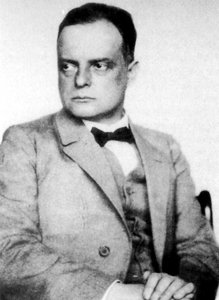
Paul Klee
1879 - 1940 , Switzerland
Quick Facts
- Artistic Movement Or Style:
- Expressionism
- Cubism
- Surrealism
- Artists Who Influenced This Artist:
- Pablo Picasso
- Georges Braque
- Robert Delaunay
- Vincent van Gogh
- Paul Cézanne
- Full Name: Paul Klee
- Nationality: German and Swiss
- Notable Artworks:
- Hammamet with Its Mosque
- Ships in the Dark
- Walpurgis Night
- The Protector
- Place Of Birth: Münchenbuchsee, Switzerland
- Date Of Birth: 1879
- Date Of Death: 1940
Related Articles

Neo-Abstract Art Trend Forecast: High-Impact Geometric Compositions for Contemporary Commercial Interiors
Elevate commercial interiors with Neo-Abstract art. Discover how high-impact geometric compositions and custom oil reproductions provide scalable, sophisticated design solutions for hotels, restaurants, and corporate spaces. Expert procurement for large-scale hospitality projects.

Bold Distortion: A Trend Forecast for Impactful Abstract Art in Luxury Commercial and Hotel Interiors
Elevate hospitality design with the Bold Distortion trend. APS provides professional sourcing of large-scale abstract paintings for hotel interiors. Benefit from custom sizing, bulk-order efficiency, and reliable global shipping. High-impact art for high-volume procurement.


