


 Preview
 Send
Send Share
Share
 Details

 Download
 Similars
 X-Ray
X-Ray Diaporama
Composition

 Read More
Hand Made Oil Reproduction
Hand-painted oil on canvas in your size and frame, made to order by our artists. ( Buy Print Buy Image)




P118B $10

P118H $10

P118W $10

P438Z $10

P508JH $12

P508YH $12

P805H $10

P805Z $10

P919BZ $10

P919G $10

P919XJ $10

P959ZH $10

P968JZ $12

W106C $8

W218G $10

W218JH $8

W218Y $10

W307PJ $10

W316G $10

W316PJ $8

W316Y $10

W398PJ $8

W4111J $10

W500HY $15

W500JH $15

W692G $12

W849H $8

W940BG $15

W953PJ $8




Pick from our preset sizes that match the artwork's original proportions.

You may enter your own dimensions to fit a specific frame or space. If your selected size does not match the original image's proportions, we will either crop the artwork or extend the painting with additional hand-painted elements. A digital mockup will be sent for your approval before production begins.
Please note that the on-screen preview does not reflect the actual cropping or extension. Only the mockup will accurately show the final composition.
While custom sizes are available, we recommend selecting a dimension from the predefined list to preserve the original proportions.
After order, AllPaintingsStore.com team will email client for instructions and provide a mockup preview
Worldwide Delivery () in 3/4 weeks instead of standard 5 weeks. (24 August). No compromise on quality.

Free Worldwide Express Shipping

High-Quality Linen Canvas

Full Shipping Insurance

Customs Tax Refund Guarantee

True Color Matching Guarantee

60-Day Return Policy (Defects Only)

100% Money-Back Guarantee

Bulk Discount Offer
 Glass option is only available in size under 110 CM

Composition
Reproduction Medium
Reproduction Size
-


Total Price
$ 258
Artwork Description
A Life Unveiled: The Journey of Piet Mondrian
Piet Mondrian’s artistic odyssey began not with grand pronouncements but with quiet observation—a diligent study of the Dutch landscape under the influence of the Hague School and Impressionism. Early canvases like *The Red Mill*, imbued with meticulous detail, showcased a young artist mastering technique while subtly grappling with questions beyond mere representation. This initial fascination with nature wasn’t merely about capturing its beauty; it was about understanding its underlying order—a quest that would ultimately propel him toward radical simplification. Experimentation with Pointillism and Fauvism offered valuable insights into color theory, yet Mondrian remained unconvinced that these styles adequately conveyed his evolving artistic sensibilities.- Early Influences: The Hague School’s emphasis on atmospheric perspective and Dutch Impressionism's exploration of light played a crucial role in shaping Mondrian’s formative years.
- Experimentation with Color & Form: He ventured into Fauvist techniques, embracing bold hues to express emotion—a departure from the prevailing academic conventions.
- The Seeds of Simplification: Even amidst these explorations, a persistent desire for distilling nature’s essence lingered within him, foreshadowing his future stylistic breakthroughs.
Composition with Red, Blue and Yellow: A Revolutionary Shift
Mondrian's artistic breakthrough arrived in 1917 with *Composition with Red, Blue and Yellow*, marking a decisive break from traditional painting. Rejecting illusionistic representation altogether, he embraced geometric abstraction—a bold assertion of visual purity rooted in the belief that art should transcend subjective experience and communicate universal truths. This seminal work exemplifies Mondrian’s signature style: a grid composed of horizontal and vertical lines interspersed with squares and rectangles filled with primary colors – red, blue, and yellow – devoid of any shading or texture.- Geometric Abstraction: Abandoning realism, Mondrian opted for a purely geometric approach—a deliberate rejection of naturalistic depiction.
- Primary Colors & Grid Structure: The painting’s core elements—horizontal and vertical lines forming a grid and squares filled with red, blue, and yellow—represent fundamental building blocks of visual harmony.
- Symbolic Significance: Mondrian viewed these geometric forms as embodying spiritual concepts—the horizontal line symbolizing stability and the vertical line representing aspiration toward transcendence.
Historical Context & Artistic Legacy
*Composition with Red, Blue and Yellow* emerged during a period of intense artistic ferment—the Expressionist movement was gaining momentum in Germany, challenging established norms and advocating for emotional intensity. However, Mondrian distinguished himself from his contemporaries by prioritizing intellectual rigor over emotive outpouring. He sought to liberate art from the constraints of sensory perception, believing that it could achieve its highest potential through rational contemplation.- Expressionism vs. Rationality: Unlike Expressionist painters who aimed to convey subjective feelings, Mondrian championed a purely rational aesthetic.
- Influence on Abstract Art Movements: His pioneering approach profoundly impacted subsequent movements—Cubism, Surrealism, and Minimalism—establishing geometric abstraction as a cornerstone of modern art.
- Enduring Appeal: Today, *Composition with Red, Blue and Yellow* continues to captivate audiences worldwide—a testament to Mondrian’s unwavering conviction that art could illuminate the deepest recesses of human consciousness.
Emotional Impact & Artistic Inspiration
Despite its austere appearance, *Composition with Red, Blue and Yellow* possesses a remarkable emotional resonance. The carefully balanced interplay of colors—red, blue, and yellow—creates a visual dynamism that transcends mere chromatic harmony. More importantly, the painting invites viewers to engage in a contemplative dialogue—to consider the underlying spiritual principles that inform Mondrian’s artistic vision. It serves as an enduring source of inspiration for artists seeking to explore the boundaries of abstraction and communicate universal truths through geometric forms.- Visual Harmony & Dynamic Balance: The painting's colors generate a captivating visual experience—a harmonious blend of hues that stimulates contemplation.
- Spiritual Reflection: Mondrian’s work encourages viewers to ponder fundamental concepts—stability, aspiration, and transcendence—reflecting his belief in art’s capacity for spiritual illumination.
Exploring Reproduction & Artistic Appreciation
A high-quality reproduction of *Composition with Red, Blue and Yellow* allows admirers to experience Mondrian's groundbreaking vision firsthand. Careful attention to detail—capturing the subtle nuances of color and texture—is paramount in conveying the painting’s emotional depth and artistic significance. Whether displayed in a contemporary interior or studied as an exemplar of modernist art history, this iconic masterpiece continues to inspire awe and provoke intellectual curiosity—a timeless testament to Mondrian's enduring legacy.Related Artworks


Artist Biography
A Life Unveiled: The Journey of Piet Mondrian
Born Pieter Cornelis Mondriaan in 1872, in the quiet Dutch town of Amersfoort, Piet Mondrian’s artistic path was not one of immediate revelation but a gradual unfolding. His early life was steeped in tradition; his uncle, Frits Mondriaan, was already an established painter, and this familial connection initially steered him towards landscape painting. These formative works, reminiscent of the Hague School and Dutch Impressionism – pieces like *The Red Mill* – reveal a young artist diligently studying nature, mastering technique, yet subtly searching for something beyond mere representation. Even then, a yearning for simplification seemed to tug at his brushstrokes. He wasn’t content simply mirroring the world; he wanted to distill its essence. This early period saw experimentation with Pointillism and Fauvism, each style offering a different lens through which to view color and form, but none fully satisfying his burgeoning artistic vision. It was a time of exploration, a necessary prelude to the radical departure that would define his legacy.The Parisian Awakening and the Birth of Neoplasticism
A pivotal moment arrived in 1912 with Mondrian’s move to Paris. The city pulsed with avant-garde energy, and he found himself immersed in the revolutionary world of Cubism. This encounter proved transformative. He began deconstructing forms, breaking down objects into their geometric components, moving away from depicting *what* he saw towards exploring *how* he saw it. But Mondrian wasn’t merely adopting a new style; he was embarking on a spiritual quest. Deeply influenced by Theosophy – a mystical philosophy emphasizing underlying universal principles – he believed art could be a vehicle for expressing these hidden truths. This belief fueled his relentless pursuit of abstraction, driving him to reduce color and form to their most fundamental elements. Around 1917, this journey culminated in the formulation of Neoplasticism, often referred to as ‘pure plastic art’. It was a radical aesthetic predicated on essential forms – straight lines, right angles – and a limited palette: primary colors (red, blue, yellow), black, white, and gray. For Mondrian, this reduction wasn’t about emptiness; it was about revealing the underlying harmony of the universe, a visual manifestation of spiritual order. He co-founded the *De Stijl* movement with Theo van Doesburg to promote these ideas, solidifying Neoplasticism as a defining force in modern art. Masterpieces like *Composition with Red, Blue and Yellow* and *Tableau no. 2 Composition no. V* stand as testaments to this period, iconic representations of his unwavering commitment to geometric purity.New York Rhythms: A Late-Life Flourishing
The outbreak of World War II forced Mondrian to flee Europe in 1940, finding refuge in the bustling metropolis of New York City. This relocation proved unexpectedly invigorating. The city’s rigid grid structure – a stark contrast to the more organic landscapes he had known – resonated with his artistic principles. His later works, most notably *Broadway Boogie Woogie* (1943), reflect this influence. While retaining the core tenets of Neoplasticism, the painting introduces a dynamic energy, a vibrant rhythm inspired by the city’s pulsating life and jazz music. The straight lines are still present, but they now dance and intersect with greater freedom, creating a sense of movement and joy. It was as if Mondrian had found a new language within his established vocabulary, a way to express the complexities of modern urban existence through the simplicity of geometric abstraction. He continued refining his style until his death in 1944, leaving behind a body of work that continues to captivate and inspire.A Lasting Legacy: Mondrian’s Enduring Influence
Piet Mondrian's impact on the art world is immeasurable. He wasn’t simply an artist; he was a visionary who fundamentally altered our understanding of abstraction and its potential for expressing universal truths. His work profoundly influenced countless artists, movements, and disciplines. Abstract Expressionism, Minimalism, and Color Field painting all owe a debt to his pioneering spirit. But his influence extends far beyond the canvas. The principles of Neoplasticism – simplicity, clarity, geometric order – have permeated architecture, design, and fashion. From furniture and textiles to building facades and graphic layouts, Mondrian’s aesthetic continues to shape our visual world. He remains an iconic figure in modern art, a symbol of the relentless pursuit of abstraction and the enduring power of artistic innovation. As design historian Stephen Bayley aptly noted, Mondrian has become a “totem for everything Modernism set out to be.” His legacy is not merely one of aesthetic beauty but of intellectual rigor, spiritual depth, and an unwavering belief in the transformative potential of art.Influences and Key Works
- Early Influences: The Hague School, Dutch Impressionism, Pointillism, Fauvism provided a foundation for his initial artistic explorations.
- Transformative Influence: Cubism in Paris was crucial to his shift towards abstraction and geometric forms.
- Philosophical Foundation: Theosophy deeply informed his belief that art could express universal spiritual principles.
- Key Works: *The Red Mill* (early naturalistic period), *Composition with Red, Blue and Yellow* (quintessential Neoplasticism), *Tableau no. 2 Composition no. V* (demonstrates the reduction to essential forms), *Broadway Boogie Woogie* (late-life dynamism influenced by New York City).
- Lasting Impact: Mondrian’s work continues to inspire artists, architects, and designers, shaping modern aesthetics across various disciplines.
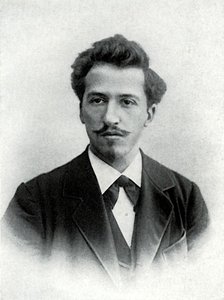
Piet Mondrian
1872 - 1944 , Netherlands
Quick Facts
- Artistic Movement Or Style: Neoplasticism, De Stijl
- Artists Or Movements Influenced By This Artist:
- Abstract Expressionism
- Minimalism
- Color Field painting
- Artists Who Influenced This Artist:
- Hague School
- Cubism
- Theosophy
- Date Of Birth: March 7, 1872
- Date Of Death: February 1, 1944
- Full Name: Piet Mondrian
- Nationality: Dutch
- Notable Artworks:
- Composition with Red, Blue...
- Tableau no. 2 Composition V
- Broadway Boogie Woogie
- Place Of Birth: Amersfoort, Netherlands
Related Articles

Neo-Abstract Art Trend Forecast: High-Impact Geometric Compositions for Contemporary Commercial Interiors
Elevate commercial interiors with Neo-Abstract art. Discover how high-impact geometric compositions and custom oil reproductions provide scalable, sophisticated design solutions for hotels, restaurants, and corporate spaces. Expert procurement for large-scale hospitality projects.


