


 Preview
 Send
Send Share
Share
 Details

 Download
 Similars
 X-Ray
X-Ray Diaporama
Monkey


 Read More
Giclée / Art Print
Museum-quality giclée or canvas print with fast production and flexible finish options. ( Buy Hand Made Painting Buy Image)




































Pick from our preset sizes that match the artwork's original proportions.

You may enter your own dimensions to fit a specific frame or space. If your selected size does not match the original image's proportions, we will either crop the artwork or extend the image with a mirrored or solid-fill edge. A digital mockup will be sent for your approval before production begins.
Please note that the on-screen preview does not reflect the actual cropping or extension. Only the mockup will accurately show the final composition.
While custom sizes are available, we recommend selecting a dimension from the predefined list to preserve the original proportions.
Worldwide Delivery () in 2 weeks instead of standard 4/5 weeks. (19 August)

Free Worldwide Express Shipping

High-Quality Linen Canvas

Full Shipping Insurance

Customs Tax Refund Guarantee

True Color Matching Guarantee

60-Day Return Policy (Defects Only)

100% Money-Back Guarantee

Bulk Discount Offer
 Glass option is only available in size under 110 CM

Monkey
Giclée / Art Print
Reproduction Size
-


Total Price
$ 65
Collectible Description
A Fragmented Evolution: The Intricate World of Monkey’s Revenge
In the realm of contemporary assemblage, few works command such a profound sense of curiosity and intellectual play as Richard John Killeen’s Monkey’s Revenge. Created in 1985, this masterpiece is not merely a static image but a living, breathing constellation of thought. Comprising seventy-nine meticulously cut-out aluminium pieces, the work functions as a modular mosaic where each fragment hangs upon its own nail, inviting the viewer to participate in an ongoing dialogue of arrangement and discovery. The piece challenges the traditional boundaries of sculpture and painting, blurring the lines between a fixed composition and an ever-evolving installation that responds to the physical space it inhabits.
The visual language of the work is deeply rooted in the concept of the encyclopaedia. Killeen, acting as both curator and creator, draws from a vast reservoir of imagery sourced from reference books, scientific texts, and historical archives. As one navigates the collage, eyes may land upon the iconic visage of Charles Darwin, an inclusion that immediately invokes the grand, sweeping narratives of biological evolution and the interconnectedness of all life. Yet, the artist purposefully avoids a singular didactic meaning. Instead, he weaves together threads of technology, medicine, anthropology, and art, creating a "virtual museum" where the viewer is compelled to act as an investigator, drawing their own idiosyncratic connections between the disparate elements of human and natural history.
Technically, the work is a triumph of precision and materiality. The use of aluminium provides a subtle, reflective quality that allows light to dance across the edges of each piece, lending a sense of depth and movement to the arrangement. This metallic medium lends a modern, industrial edge to the organic subject matter, creating a tension between the permanence of the material and the fluidity of the composition. For the discerning collector or interior designer, this artwork offers an unparalleled opportunity to introduce a dynamic focal point into a space. It is a piece that demands attention not through sheer scale alone, but through its intricate layers of meaning and its ability to transform a room into a site of contemplation.
Beyond its formal brilliance, Monkey’s Revenge resonates on an emotional level by tapping into the human desire for storytelling. The title itself suggests a playful, perhaps even subversive, take on our place in the natural order, hinting at a more colorful and unpredictable way of viewing our evolutionary journey. It is a work that celebrates the beauty of the fragment and the power of the whole. To possess a reproduction of such a significant work is to invite a sense of intellectual wonder into one's environment—a constant reminder that within the chaos of individual parts, there exists the potential for profound, unified meaning.
Related Artworks


Artist Biography
Marina Abramović: A Pioneer of Endurance and the Body’s Limits
Born in Belgrade, Yugoslavia (now Serbia) on November 30, 1946, Marina Abramović is a figure whose work has irrevocably altered the landscape of contemporary art. Her career, spanning over four decades, isn't defined by traditional mediums like painting or sculpture but rather by an intense exploration of the human body, its vulnerabilities, and its capacity for both immense suffering and profound resilience. Her journey began within the context of a politically turbulent era – her parents were Partisan fighters during World War II, and her family’s background as “Red bourgeoisie” shaped her early understanding of societal dynamics and the complexities of identity. This formative experience would later inform her artistic investigations into themes of power, control, and the boundaries between performer and audience.
Abramović's formal training in art began at the Belgrade Academy of Fine Arts in 1970 and continued at the Zagreb Academy of Fine Arts in 1972. However, she quickly rejected academic constraints, seeking a more visceral and immediate approach to artistic expression. Early influences included the work of Joseph Beuys, whose concept of “social sculpture” – art that engages with social processes and transforms public spaces – resonated deeply with Abramović’s desire to create experiences that challenged viewers and provoked critical reflection. The stark landscapes and austere forms of Yugoslav socialist realism also subtly informed her later explorations of minimalism and the reduction of form to its essential elements.
The Rise of Performance Art: Early Experiments and Ulay
Abramović’s artistic breakthrough occurred in 1973 with a series of performances known as *Rhythm*. These involved repetitive, physically demanding actions – standing for extended periods, performing synchronized movements with others – designed to push the limits of endurance. These early works were largely undocumented and often performed anonymously, laying the groundwork for her later, more consciously staged events. It was during this period that she met Ulay (Serbian Cyrillic: Улај), a choreographer and performance artist, with whom she would embark on a deeply intertwined artistic partnership spanning nearly two decades.
The relationship between Abramović and Ulay became the central focus of many of her most iconic performances. Their collaborative work, often characterized by intense physical contact, ritualistic gestures, and explorations of vulnerability, blurred the lines between performer and audience, creating a dynamic where participants were both subjected to and actively involved in the artistic process. Notable among these collaborations was *Cleaning the Mirror* (1995), a grueling performance lasting over 72 hours during which Abramović meticulously cleaned a mirror with a toothbrush, confronting her own image and the gaze of the audience. This piece, and others like it, became synonymous with the burgeoning field of endurance art, demonstrating the potential for art to elicit profound emotional responses through physical exertion.
Expanding Boundaries: Solo Performances and Institutional Engagement
As Abramović’s career progressed, she increasingly focused on solo performances that explored themes of spirituality, mortality, and the relationship between the body and the external world. *Spirit Cooking* (1996), for example, involved her consuming a meal prepared by a blind woman, symbolizing a relinquishing of control and an embrace of vulnerability. Her work became increasingly confrontational, often pushing the boundaries of physical and psychological endurance to the point of discomfort or even pain.
In 2007, Abramović established the Marina Abramović Institute (MAI), a non-profit foundation dedicated to supporting performance art and fostering dialogue around its potential. The MAI serves as a research center, archive, and platform for artists working in diverse mediums, reflecting Abramović’s commitment to expanding the definition of what constitutes “art” and promoting critical engagement with contemporary culture. Her most recent work, *The Artist Is Present* (2010), saw her sitting silently across from viewers at MoMA in New York City for eight hours a day for 83 performances, creating an intensely intimate and unsettling encounter that garnered international attention.
Legacy and Influence
Marina Abramović’s impact on the art world is undeniable. She is widely considered to be one of the pioneers of performance art, having fundamentally shifted its focus from theatrical spectacle to a more introspective and emotionally charged exploration of the human condition. Her willingness to expose her own vulnerability, to push her body to its limits, and to challenge conventional notions of artistic expression has inspired countless artists across generations. Her work continues to provoke debate, generate discussion, and demand that we reconsider our relationship with ourselves, with others, and with the world around us. Abramović’s legacy extends beyond individual performances; it represents a radical rethinking of art's potential to engage with social, political, and psychological realities.

richard john killeen
1946 - , New Zealand
Quick Facts
- Artistic Movement Or Style: Conceptual & Performance Art
- Artists Who Influenced This Artist: ['Ulay, Varnava, Serbian Patriarch],\n "Artists or movements influenced by this artist": ["Performance Art"]\n}']
- Date Of Birth: November 30, 1946
- Full Name: Marina Abramović
- Nationality: Serbian
- Notable Artworks:
- Rhythm Series
- Cleaning the Mirror
- Spirit Cooking
- Balkan Baroque
- Seven Easy Pieces
- The Artist Is Present
- Place Of Birth: Belgrade, Serbia
Related Articles

Mastering Collage Art: A Professional Guide to Texture and Layering for High-Impact Interior Design
Elevate hospitality interiors with our professional guide to collage art. Learn to leverage texture, layering, and mixed media to create high-impact, dimensional wall art for hotels and corporate spaces. Expert insights for procurement managers and designers.
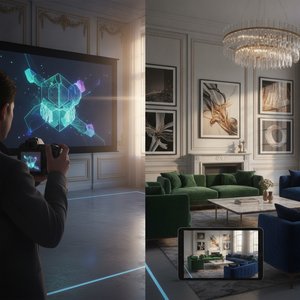
From Digital Photography to Oil Painting: A Procurement Guide for Transforming Modern Imagery into Timeless Hospitality Masterpieces
Streamline your hospitality art procurement with AllPaintingsStore.com. Transform digital photos into premium, hand-painted oil masterpieces for hotels and corporate spaces. We offer bulk ordering, custom sizing, global shipping, and reliable, museum-grade quality for professionals.


