- Home

- Oil Painting Reproduction
- Roy Lichtenstein
- Imperfect painting

 Buy print
 Send
Send Share
Share
 Details

 Download
 Similars
 X-Ray
X-Ray Diaporama
Imperfect painting
 Acrylic On Canvas
- WallArt
- Pop Art
 1986
1986 210.0 x 200.0 cm
 Read More
Hand Made Oil Reproduction
Hand-painted oil on canvas in your size and frame, made to order by our artists.




P118B $10

P118H $10

P118W $10

P438Z $10

P508JH $12

P508YH $12

P805H $10

P805Z $10

P919BZ $10

P919G $10

P919XJ $10

P959ZH $10

P968JZ $12

W106C $8

W218G $10

W218JH $8

W218Y $10

W307PJ $10

W316G $10

W316PJ $8

W316Y $10

W398PJ $8

W4111J $10

W500HY $15

W500JH $15

W692G $12

W849H $8

W940BG $15

W953PJ $8




Pick from our preset sizes that match the artwork's original proportions.

You may enter your own dimensions to fit a specific frame or space. If your selected size does not match the original image's proportions, we will either crop the artwork or extend the painting with additional hand-painted elements. A digital mockup will be sent for your approval before production begins.
Please note that the on-screen preview does not reflect the actual cropping or extension. Only the mockup will accurately show the final composition.
While custom sizes are available, we recommend selecting a dimension from the predefined list to preserve the original proportions.
After order, AllPaintingsStore.com team will email client for instructions and provide a mockup preview
Worldwide Delivery () in 3/4 weeks instead of standard 5 weeks. (16 July). No compromise on quality.

Free Worldwide Express Shipping

High-Quality Linen Canvas

Full Shipping Insurance

Customs Tax Refund Guarantee

True Color Matching Guarantee

60-Day Return Policy (Defects Only)

100% Money-Back Guarantee

Bulk Discount Offer
 Glass option is only available in size under 110 CM

Imperfect painting
Reproduction Medium
Reproduction Size
-


Total Price
-
Artwork Description
A Study in Imperfection: Deconstructing Form with Roy Lichtenstein
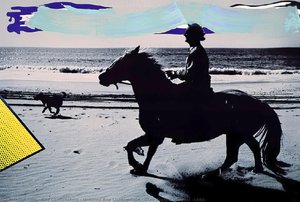
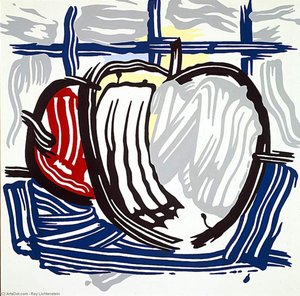
Roy Lichtenstein’s *Imperfect Painting*, created in 1986, is not an invitation to critique flaws, but rather a bold exploration of the very nature of representation and perception. Standing at an impressive 210 x 200 cm, this work isn't easily dismissed; it commands attention with its deceptively simple geometry. The canvas is dominated by interlocking triangles, a foundational shape imbued with stability yet here presented as fragmented and dynamic. A warm pink anchors the base, rising to meet yellow triangles at opposing corners, while smaller forms nestle within the larger structure, creating a visual push-and-pull that denies any sense of static completion. This isn’t about replicating reality; it's about dissecting how we *see* reality, and questioning the illusion of perfection inherent in traditional artistic representation.The Language of Pop: Ben-Day Dots and Beyond
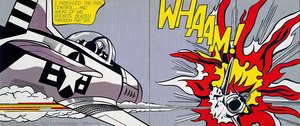
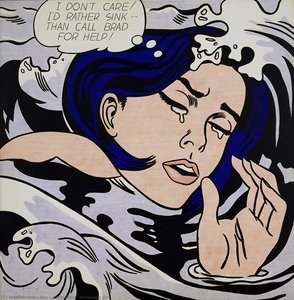
Lichtenstein, a pivotal figure in the Pop Art movement, famously translated the visual vocabulary of comic books and mass media onto the canvas. While *Imperfect Painting* doesn’t directly employ the iconic Ben-Day dots that define much of his earlier work – like *Whaam!* or *Drowning Girl* – it carries their spirit. The clean lines, flat planes of color, and deliberate lack of subtle shading are all hallmarks of his style. He wasn't merely copying these techniques; he was elevating them to the realm of fine art, forcing a dialogue between “high” and “low” culture. The choice to work with geometric abstraction in this later period represents an evolution, a distillation of his core aesthetic principles. It’s as if Lichtenstein stripped away the narrative elements of his comic-inspired pieces to focus purely on the formal qualities of image-making – color, shape, and composition. The use of Magna acrylic paints, known for their vibrant intensity and matte finish, further enhances this effect, lending a distinctly modern feel to the work.A Reflection on Artistic Process
The title itself, *Imperfect Painting*, is a provocative statement. It acknowledges the inherent subjectivity in art, the impossibility of achieving flawless execution, and perhaps even a playful self-awareness on Lichtenstein’s part. He often created works that appeared mechanically produced, yet they were meticulously hand-painted, highlighting the tension between automation and artistic skill. This piece can be seen as a meta-commentary on the creative process itself – an acknowledgement that all attempts at representation are, by their very nature, imperfect. The composition feels almost like a study, a preliminary sketch blown up to monumental scale. It’s a reminder that even in seemingly finished artworks, there's always evidence of the artist's hand, the choices made, and the inherent limitations of the medium.Lichtenstein’s Legacy: A Continuing Influence
Born in New York City in 1923, Roy Lichtenstein initially explored Abstract Expressionism before finding his unique voice within Pop Art. His work challenged conventional notions of artistic value and paved the way for future generations of artists to embrace popular culture as a legitimate source of inspiration. *Imperfect Painting*, created towards the end of his life (he passed away in 1997), demonstrates a continued commitment to experimentation and a refined mastery of his signature style. Today, Lichtenstein’s paintings are celebrated worldwide for their bold aesthetic, intellectual rigor, and enduring cultural relevance. Owning a reproduction of *Imperfect Painting* isn't just acquiring a beautiful piece of art; it's inviting a conversation about the nature of perception, the power of imagery, and the legacy of one of the 20th century’s most influential artists into your space.Related Artworks




Artist Biography
The Genesis of a Pop Visionary
Roy Fox Lichtenstein, born in the vibrant metropolis of New York City on October 27, 1923, indelibly altered the landscape of twentieth-century art. Emerging as a pivotal figure within the Pop Art movement, Lichtenstein didn’t simply reflect his era; he actively interrogated it, transforming commonplace imagery into compelling artistic statements. His upbringing in an upper-middle-class Jewish family fostered both a cultural awareness and an early artistic inclination. Childhood exposure to museums and concerts, coupled with a deep appreciation for jazz music, laid the groundwork for a creative spirit that would challenge conventional notions of fine art. Though initially drawn to realistic drawing and painting during his formative years, Lichtenstein’s formal training commenced at the Art Students League in 1939 under Reginald Marsh, followed by studies at Ohio State University – interrupted briefly by wartime service in the Army. These experiences provided a robust technical foundation that would later be brilliantly re-contextualized through the lens of mass culture and commercial aesthetics. The seeds of his signature style weren’t sown within the hallowed halls of artistic tradition but rather in the often-overlooked world of everyday imagery, particularly comic books and advertising.From Abstraction to Appropriation: A Pivotal Shift
Lichtenstein's early work demonstrated a clear engagement with Abstract Expressionism, mirroring the dominant aesthetic trends of the post-war period. However, this phase proved transitional, a stepping stone towards his revolutionary style. A crucial moment arrived during his tenure at Rutgers University where he encountered Allan Kaprow, whose influence reignited Lichtenstein’s interest in proto-pop imagery. This encounter sparked a critical shift in his artistic trajectory, leading him to question the established boundaries between “high” and “low” art. He began looking beyond the subjective expression of Abstract Expressionism towards the objective language of popular culture – specifically, comic books and advertising. The year 1961 marked a turning point with *Look Mickey*, a work that boldly appropriated characters from Disney comics, signaling the beginning of his signature style. This wasn’t mere imitation; it was an act of artistic re-evaluation, elevating commonplace imagery to the status of fine art. He didn't simply copy comic strips; he meticulously recreated them using techniques mimicking commercial printing processes, a deliberate blurring of the lines between original artwork and mass production. This appropriation wasn’t about celebrating consumerism uncritically but rather examining its pervasive influence on American society and challenging traditional artistic hierarchies.The Language of Ben-Day Dots and Bold Lines
Lichtenstein's artistic vocabulary is instantly recognizable: bold, primary colors, thick black outlines, and most famously, Ben-Day dots – a technique borrowed directly from the mechanical reproduction of comic books. These dots weren’t merely decorative; they were integral to his conceptual framework, representing the very process of mass production and challenging the traditional emphasis on the artist's hand. His paintings often enlarged details from comic strips to monumental scale, forcing viewers to confront the aesthetic qualities of an art form typically dismissed as trivial. Works like *Whaam!* (1963), *Drowning Girl* (1963), and *Oh, Jeff…I Love You, Too…But…* (1964) became iconic representations of Pop Art, capturing the anxieties and desires of a rapidly changing consumer culture. These weren’t simply depictions of comic book scenes; they were commentaries on themes of war, romance, and societal expectations, filtered through the visual language of mass media. He aimed to strip away any pretense of artistic subjectivity, presenting his work as objective reflections of American society – a mirror held up to its own manufactured reality. The deliberate flatness and lack of painterly gesture further emphasized this detachment, mimicking the impersonal nature of commercial printing.Legacy and Lasting Impact
Roy Lichtenstein’s influence extends far beyond the realm of painting. His innovative use of commercial techniques and appropriation paved the way for new generations of artists exploring themes of consumerism, media saturation, and cultural identity. The sale of *Masterpiece* in 2017 for $165 million solidified his position as one of the most commercially successful American artists of all time, but his legacy is not solely defined by monetary value. He challenged traditional notions of artistic authorship and originality, forcing a re-evaluation of what constitutes “art” itself. His work continues to inspire graphic designers, illustrators, and visual artists across various disciplines.- Major Achievements: Pioneered Pop Art style; achieved international recognition with groundbreaking exhibitions.
- Notable Works: *Whaam!*, *Drowning Girl*, *Oh, Jeff…I Love You, Too…But…*, *Masterpiece*.
- Teaching Career: Influenced aspiring artists at SUNY Oswego and Rutgers University.

Roy Lichtenstein
1923 - 1997 , United States of America
Quick Facts
- Artistic Movement Or Style: Pop Art
- Artists Or Movements Influenced By This Artist:
- Graphic designers
- Illustrators
- Artists Who Influenced This Artist:
- Reginald Marsh
- Allan Kaprow
- Date Of Birth: October 27, 1923
- Date Of Death: September 29, 1997
- Full Name: Roy Fox Lichtenstein
- Nationality: American
- Notable Artworks:
- Whaam!
- Drowning Girl
- Masterpiece
- Oh, Jeff...
- Place Of Birth: New York City, USA
Related Articles

Roy Lichtenstein's Masterpieces: 25 Iconic Pop Artworks for Your Home | AllPaintingsStore
Explore Roy Lichtenstein's 25 most iconic Pop Art masterpieces! Discover the stories behind 'Drowning Girl', 'Look Mickey' & more. Find museum-quality reproductions and elevate your home decor with AllPaintingsStore. Explore the full collection online.

Beyond the Ben-Day Dots: Roy Lichtenstein's Pop Art Revolution & Enduring Legacy
Explore Roy Lichtenstein's revolutionary Pop Art! Discover the story behind Ben-Day dots, iconic works like 'Whaam!', and investment insights for collectors. Expert analysis & high-quality reproductions at AllPaintingsStore.

Beyond Form & Color: Geometric Abstraction's Enduring Legacy in Art History
Explore the captivating world of geometric abstraction! Discover its origins, key artists like Malevich & Mondrian, and why this movement remains highly valued by art collectors today. Expert insights at AllPaintingsStore.

Beyond Form & Color: Geometric Abstraction's Evolution in 20th/21st Century Art
Explore the evolution of geometric abstraction from Cubism to contemporary art. Discover key artists like Malevich & Mondrian, investment insights, and expert collecting advice at AllPaintingsStore.

Pop Art Icons: 10 Masterpieces That Revolutionized Modern Decor |
Explore 10 defining Pop Art masterpieces – from Warhol’s iconic Marilyn to Lichtenstein's bold dots. Discover the stories behind these revolutionary artworks & find museum-quality reproductions for your home at .