


 Preview
 Send
Send Share
Share
 Details
 Guide
Guide

 Download
 Similars
 X-Ray
X-Ray Diaporama
 Stats
StatsA Roman Landscape with Figures


 Read More
Hand Made Oil Reproduction
Hand-painted oil on canvas in your size and frame, made to order by our artists. ( Switch to Print Switch to Digital Image)




P118B $10

P118H $10

P118W $10

P438Z $10

P508JH $12

P508YH $12

P805H $10

P805Z $10

P919BZ $10

P919G $10

P919XJ $10

P959ZH $10

P968JZ $12

W106C $8

W218G $10

W218JH $8

W218Y $10

W307PJ $10

W316G $10

W316PJ $8

W316Y $10

W398PJ $8

W4111J $10

W500HY $15

W500JH $15

W692G $12

W849H $8

W940BG $15

W953PJ $8




Pick from our preset sizes that match the artwork's original proportions.

You may enter your own dimensions to fit a specific frame or space. If your selected size does not match the original image's proportions, we will either crop the artwork or extend the painting with additional hand-painted elements. A digital mockup will be sent for your approval before production begins.
Please note that the on-screen preview does not reflect the actual cropping or extension. Only the mockup will accurately show the final composition.
While custom sizes are available, we recommend selecting a dimension from the predefined list to preserve the original proportions.
After order, AllPaintingsStore.com team will email client for instructions and provide a mockup preview
Worldwide Delivery () in 3/4 weeks instead of standard 5 weeks. (21 September). No compromise on quality.

Free Worldwide Express Shipping

High-Quality Linen Canvas

Full Shipping Insurance

Customs Tax Refund Guarantee

True Color Matching Guarantee

100-Day Return Policy (Defects Only)

100% Money-Back Guarantee

Bulk Discount Offer
 Glass option is only available in size under 110 CM

A Roman Landscape with Figures
Reproduction Medium
Reproduction Size
-


Total Price
$ 258
A Roman Landscape Transfigured: Gottfried Wals’s “A Roman Landscape with Figures”
Gottfried Wals's "A Roman Landscape with Figures," painted around 1630, isn’t merely a depiction of a bygone era; it’s a carefully constructed meditation on time, memory, and the enduring presence of antiquity. Born in Cologne around 1595 and tragically lost to an earthquake in Calabria just eight years later, Wals was a pivotal figure in the burgeoning Northern School of landscape painting that sought to capture the grandeur and serenity of the Roman countryside – a region he deeply admired and meticulously studied. This particular work, executed on copper with remarkable precision, offers a glimpse into his unique approach: a synthesis of meticulous observation, classical influence, and an almost palpable sense of atmosphere.
The scene unfolds within a carefully orchestrated vista dominated by two imposing, weathered towers – remnants of structures long vanished, yet powerfully asserting their historical weight. These aren’t dramatic, imposing ruins; rather, they are subtly eroded, draped in clinging vegetation, suggesting a landscape that has witnessed centuries pass. A crumbling wall, partially obscured by foliage, anchors the composition, drawing the eye towards the distant, rolling hills. Wals masterfully employs atmospheric perspective – a technique borrowed from Renaissance masters – to create a sense of depth and distance. The colors become paler and cooler as they recede into the background, while the foreground is rendered with richer, more vibrant hues, grounding the viewer in the present moment.
The Influence of Claude Lorrain and the Northern School
Wals’s work stands as a crucial bridge between the established traditions of Italian landscape painting and the emerging style of the Northern painters. He was profoundly influenced by Claude Lorrain, who had arrived in Rome just a few years prior and quickly gained renown for his idealized depictions of classical landscapes. Wals apprenticed under Lorrain briefly, absorbing the younger artist’s meticulous attention to detail and his penchant for creating harmonious compositions. However, unlike Lorrain's often overtly theatrical scenes, Wals imbues his landscape with a quieter, more contemplative mood. This is evident in the subtle lighting, the muted palette, and the understated presence of human figures – not grand heroes or dramatic events, but ordinary people engaged in everyday activities.
This approach aligns perfectly with the broader trends within the Northern School, which prioritized observation of nature over purely theoretical considerations. Wals’s work reflects a desire to capture the *feeling* of a place—the warmth of the sun on stone, the scent of wildflowers, the sense of timelessness that pervades the Roman countryside. The inclusion of figures – a man working near a pile of stones, others conversing in the distance – adds a layer of narrative complexity without disrupting the overall serenity of the scene. They are not central to the composition but rather serve as witnesses to the enduring power of the landscape.
Symbolism and Emotional Resonance
Beyond its technical brilliance, “A Roman Landscape with Figures” is rich in symbolic meaning. The weathered towers represent the passage of time and the impermanence of human endeavors. They stand as a reminder that even the most imposing structures eventually succumb to decay and are reclaimed by nature. The figures themselves can be interpreted as symbols of humanity’s connection to the past – individuals seeking solace, purpose, or simply a moment of reflection amidst the ruins.
The painting evokes a profound sense of nostalgia—a longing for a lost world and a recognition of the cyclical nature of history. Wals's masterful use of light and color creates an atmosphere of tranquility and contemplation, inviting the viewer to step into the scene and experience its timeless beauty. It’s not simply a landscape; it’s a meditation on memory, mortality, and the enduring power of art to capture the essence of a place and a time.
A Legacy in Copper: Reproduction and Appreciation
Reproductions of “A Roman Landscape with Figures” offer a remarkable opportunity to bring this evocative work into any setting. The copper panel medium lends itself beautifully to modern reproductions, retaining the subtle tonal variations and luminous quality of the original painting. Whether adorning a formal study or a more casual living space, this landscape will undoubtedly serve as a constant source of inspiration and contemplation – a testament to Gottfried Wals’s artistic vision and his profound understanding of the Roman countryside.
Related Artworks


Artist Biography
The Enigmatic Wanderer of the Baroque Landscape
In the grand, sweeping tapestry of the seventeenth century, few figures possess the haunting mystery of Gottfried Wals, known to his Italian contemporaries as Goffredo Tedesco. Born in Cologne around 1595, this German master’s life was a restless pilgrimage across the heart of Europe, a journey that mirrored the very movement and light he sought to capture on canvas. While biographical fragments remain scattered like autumn leaves—gleaned from sparse archival records and the echoes of legal complaints—his artistic legacy is one of profound atmospheric depth. Wals did not merely paint scenery; he orchestrated quiet Roman landscapes where biblical narratives breathed within the stillness of nature, creating a bridge between the meticulous traditions of the North and the dramatic, sun-drenched innovations of the Italian Baroque.
Wals’s early years in Cologne provided a foundation of technical rigor. Under the tutelage of the influential Johann Georg Muffat, he likely absorbed a sense of musicality and harmonic balance that would later define his compositions. This period instilled in him an appreciation for tonal colorism and a keen eye for the subtle textures of the natural world. However, it was his migration to Italy around 1615 that ignited his true artistic transformation. Moving through Naples and Genoa before settling in Rome, Wals found himself immersed in a landscape of intense creative friction. His time in Rome was marked by both hardship and brilliance; he served as an assistant to the notoriously volatile Agostino Tassi, an experience that saw him endure physical hardship and even brief imprisonment, yet it placed him at the very epicenter of the Roman artistic ferment.
A Symphony of Light and Shadow
The stylistic evolution of Wals is a testament to his ability to synthesize diverse influences into a singular, evocative voice. As he navigated the streets of Rome, the revolutionary shadows of Caravaggio began to permeate his work. He embraced the power of tenebrism, using stark contrasts between light and dark to imbue biblical scenes with an unflinching, spiritual realism. Yet, Wals was not a mere imitator of the Caravaggisti; he sought a more lyrical integration of figure and environment. His interest in composition and lighting often drew comparisons to Filippo Napoletano and the atmospheric mastery of Adam Elsheimer, suggesting a painter deeply concerned with the way light sculpts the physical world.
One of the most remarkable aspects of his career was his role as a mentor to future legends. Between 1620 and 1622, the great landscape master Claude Lorrain was an occasional student of Wals, suggesting that the seeds of Lorrain’s celebrated classical landscapes may have been sown in the lessons learned from the German painter's delicate handling of light. Wals’s preferred medium—often small-format works painted on copper or circular compositions—allowed for a jewel-like precision. In these intimate spaces, he could meticulously render the grandeur of the Roman countryside, turning a small piece of metal into a window onto an eternal, pastoral world.
Legacy and the Final Tremor
Despite the scarcity of his surviving oeuvre—with only about twenty-five works definitively attributed to him—the historical significance of Goffredo Wals remains undiminished. He stood as a pivotal figure in the burgeoning Northern School of landscape painting, a movement that sought to capture the sublime serenity of antiquity through a lens of profound emotional resonance. His ability to weave sacred history into the fabric of the natural landscape offered a meditative experience for the viewer, turning landscapes into sites of spiritual contemplation.
The tragic end of his life serves as a poignant coda to his restless journey. It is believed that Wals perished in 1638, likely during or shortly after the devastating earthquake that struck Calabria. This sudden loss silenced a voice that was still actively shaping the landscape traditions of Europe. Today, when we look upon his works, such as his evocative Landscape with Christ and Saint John the Baptist, we see more than just historical artifacts; we encounter the enduring spirit of an artist who found beauty in the interplay of shadow and light, and who left behind a quiet, luminous imprint on the history of Baroque art.

goffredo wals (goffredo tedesco)
1595 - 1638 , Germany
Quick Facts
- Artistic Movement Or Style: Italian Baroque
- Artists Or Movements Influenced By This Artist: ['']
- Artists Who Influenced This Artist: ['']
- Date Of Birth: c. 1595
- Date Of Death: 1638
- Full Name: Gottfried Wals
- Nationality: German
- Notable Artworks:
- Roman Landscapes
- Biblical Narratives
- Place Of Birth: Cologne, Germany
Related Articles

Baroque Classicism: The Grandeur of Order and Drama in 17th-Century Art History
Explore the profound elegance of Baroque Classicism. Discover how 17th-century masters synthesized dramatic emotion with classical order through the lens of the Counter-Reformation and the works of legends like Carlo Maratta and Andrea Sacchi.
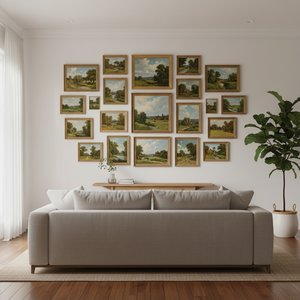
John Constable's Masterpieces: Explore 25 Iconic Landscapes for Your Home
Journey through John Constable's 25 most celebrated landscapes. Explore Romanticism, Dedham Vale & his masterful use of light in iconic paintings like 'Hay Wain'. Find museum-quality art reproductions and elevate your home decor on AllPaintingsStore.com.

Evocations of Place: A Historical Journey Through Landscape Art
Explore the rich history of landscape art with AllPaintingsStore. Discover renowned artists, movements like Impressionism & Romanticism, and expert guidance for collecting timeless pieces. Find your perfect serene escape today!

Romantic Landscapes: 10 Masterpieces for Your Home | AllPaintingsStore
Journey through 10 Romantic landscape masterpieces by Friedrich, Turner & Cole. Explore emotional art, sublime nature scenes & iconic 19th-century paintings. Find museum-quality reproductions for your home at AllPaintingsStore.com – discover the full collection online!

Claude Lorrain: Master of Light & Landscape in the Golden Age
Explore the luminous landscapes of Claude Lorrain, a Baroque master renowned for his masterful use of light & atmosphere. Discover his life, techniques, key works & enduring influence on art history.


