Preview
 Send
Send Share
Share
 Details
 Guide
Guide

 Download
 Similars
 X-Ray
X-Ray Diaporama
 Stats
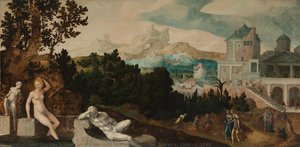
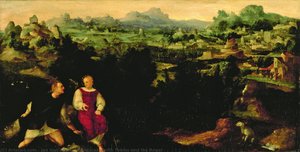
StatsLandscape with Bathsheba, Jan van Scorel, c. 1540 - c. 1545
 Renaissance
 1545
1545 100.0 x 204.0 cm
 Read More
Hand Made Oil Reproduction
Hand-painted oil on canvas in your size and frame, made to order by our artists. ( Switch to Print Switch to Digital Image)




































Pick from our preset sizes that match the artwork's original proportions.

You may enter your own dimensions to fit a specific frame or space. If your selected size does not match the original image's proportions, we will either crop the artwork or extend the painting with additional hand-painted elements. A digital mockup will be sent for your approval before production begins.
Please note that the on-screen preview does not reflect the actual cropping or extension. Only the mockup will accurately show the final composition.
While custom sizes are available, we recommend selecting a dimension from the predefined list to preserve the original proportions.
After order, AllPaintingsStore.com team will email client for instructions and provide a mockup preview
Worldwide Delivery () in 3/4 weeks instead of standard 5 weeks. (21 September). No compromise on quality.

Free Worldwide Express Shipping

High-Quality Linen Canvas

Full Shipping Insurance

Customs Tax Refund Guarantee

True Color Matching Guarantee

100-Day Return Policy (Defects Only)

100% Money-Back Guarantee

Bulk Discount Offer
 Glass option is only available in size under 110 CM

Landscape with Bathsheba, Jan van Scorel, c. 1540 - c. 1545
Reproduction Medium
Reproduction Size
-


Total Price
$ 283
Related Artworks





Artist Biography
early life and training
jan van scorel, a prominent dutch painter, was born in schoorl, netherlands, in 1495. his early life and training are not well-documented, but it is believed that he studied under various masters, including pieter gerritsz in haarlem, jacob cornelisz in amsterdam, or jan gossaert in utrecht.career and influences
van scorel's travels took him to italy, where he absorbed the italian style of painting, becoming one of the early painters of the romanist style. his work was influenced by giorgione, and he also collaborated with maarten van heemskerck. van scorel's experiences in jerusalem are depicted in many of his later works, showcasing his unique blend of dutch and italian styles.notable works and legacy
some of van scorel's notable works include:- sippenaltar (1520), completed in the village of obervellach
- portraits, altarpieces, and landscapes, many of which were destroyed during the reformation iconoclasm
- collaborations with maarten van heemskerck and michelangelo
artistic style and significance
key aspects of van scorel's style:- blending of italian and dutch influences
- use of romanist styles in netherlandish painting
- collaborations with prominent artists of the time
further reading and resources
for more information on jan van scorel and his works, visit: note: the provided links are relevant to the topic and from the specified website (AllPaintingsStore.com) and wikipedia. the article is formatted using the requested html tags, and the biography is written in english with a style suitable for an art expert academic writer.
Jan van Scorel
1495 - 1562 , Netherlands
Quick Facts
- Artistic Movement Or Style: Romanist, Renaissance
- Artists Or Movements Influenced By This Artist:
- Maarten van Heemskerck
- Italian Renaissance
- Artists Who Influenced This Artist:
- Pieter Gerritsz
- Jacob Cornelisz
- Jan Gossaert
- Giorgione
- Date Of Birth: 1495-08-01
- Date Of Death: 1562-12-06
- Full Name: Jan van Scorel
- Nationality: Dutch
- Notable Artworks:
- Sippenaltar
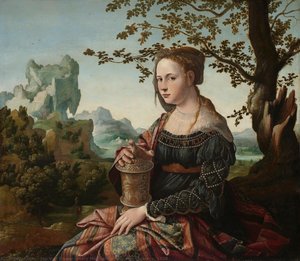
- Mary Magdalene (Scorel)
- Place Of Birth: Schoorl, Netherlands
Related Articles
Rembrandt's Masterpieces: Explore 25 Iconic Paintings & Prints | AllPaintingsStore
Journey through Rembrandt van Rijn's 25 most iconic paintings & etchings. Explore Dutch Golden Age masterpieces, dramatic chiaroscuro, and timeless portraits. Find museum-quality art reproductions to elevate your home decor on AllPaintingsStore.com.

Romantic Landscapes: 10 Masterpieces for Your Home | AllPaintingsStore
Journey through 10 Romantic landscape masterpieces by Friedrich, Turner & Cole. Explore emotional art, sublime nature scenes & iconic 19th-century paintings. Find museum-quality reproductions for your home at AllPaintingsStore.com – discover the full collection online!

Jan van Goyen: Master of Dutch Landscape & Atmospheric Perspective
Discover Jan van Goyen, the master of Dutch landscape painting. Explore his subtle technique, atmospheric realism & lasting influence on art history. Learn about this 17th-century pioneer at AllPaintingsStore.

Cornelis van Poelenburch: Bridging Mannerism & the Dutch Baroque Landscape
Discover Cornelis van Poelenburch, a pivotal Dutch Baroque landscape painter bridging Mannerism & Italianate styles. Explore his life, key works, and lasting influence on 17th-century art with AllPaintingsStore.

Early Netherlandish Masters: 10 Paintings That Revolutionized Art & Decor
Journey into the world of Early Netherlandish painting! Explore 10 masterpieces by Jan van Eyck, Rogier van der Weyden & more. Discover stunning detail, symbolism & Renaissance art for your home decor. Find museum-quality reproductions on AllPaintingsStore.com