Money-Back Guarantee · 30 days Free Worldwide Delivery
449,332artworks 30,637artists 4,753museums 32languages
Currency
Language
Atelier · Est. 2015 · Paris, France
AllPaintingsStore
allpaintingsstore.com
Account Wishlist Cart
PreviewPreview AR previewAR preview Switch to Print Switch to PrintSwitch to Image Switch to Image SendSend
DetailsDetails Add to favorites Add to favorites DownloadDownload SimilarsSimilars X-RayX-Ray DiaporamaDiaporama

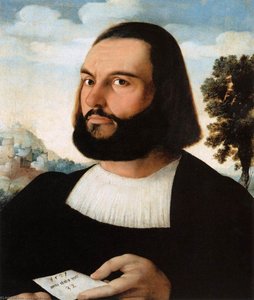
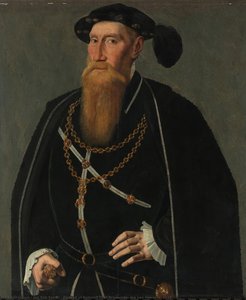
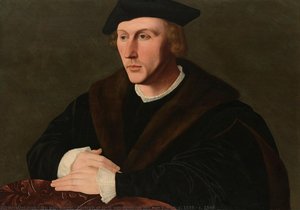
Portrait of Joris van Egmond, Jan van Scorel, c. 1535 - c. 1540

  • Creation date1540
  • Dimensions57.0 x 81.0 cm

Explore Jan van Scorel's unique blend of Dutch & Italian Renaissance art! Discover his Romanist style, collaborations, & iconic works like 'Sippenaltar'. #arthistory #renaissance

Hand Made Oil Reproduction

Hand-painted oil on canvas in your size and frame, made to order by our artists. (Switch to Print Switch to PrintSwitch to Image Switch to Image)

Standard
custom
CM
INCH

Pick from our preset sizes that match the artwork's original proportions.

width
height

You may enter your own dimensions to fit a specific frame or space. If your selected size does not match the original image's proportions, we will either crop the artwork or extend the painting with additional hand-painted elements. A digital mockup will be sent for your approval before production begins.
Please note that the on-screen preview does not reflect the actual cropping or extension. Only the mockup will accurately show the final composition.
While custom sizes are available, we recommend selecting a dimension from the predefined list to preserve the original proportions.

Examples of what can be changed: Replace face with customer photo; Add pet (e.g., replace cat with dog); Include hidden message in background; Change background landscape or elements.
After order, AllPaintingsStore.com team will email client for instructions and provide a mockup preview

Worldwide Delivery () in 3/4 weeks instead of standard 5 weeks. (6 August). No compromise on quality.

why_choose_icon
Free Worldwide Express Shipping
why_choose_icon
High-Quality Linen Canvas
why_choose_icon
Full Shipping Insurance
why_choose_icon
Customs Tax Refund Guarantee
why_choose_icon
True Color Matching Guarantee
why_choose_icon
60-Day Return Policy (Defects Only)
why_choose_icon
100% Money-Back Guarantee
why_choose_icon
Bulk Discount Offer

Total Price

$ 258

reproduction

Portrait of Joris van Egmond, Jan van Scorel, c. 1535 - c. 1540

Reproduction Medium

Reproduction Size

-

Total Price

$ 258

Artwork Description

The sitter in this unusual oblong painting can be identified by the inscription on the frame as Joris van Egmond, Bishop of Utrecht from 1534 to 1559. He wears a black tabbaard gown lined with brown fur over a black doublet and a white shirt with a ruffled collar and cuffs, and has a black baret on his head.9 He is portrayed life-sized, turned slightly into three-quarter view against an undifferentiated green background. Joris rests his hands on the rounded form of a dark red, patterned cushion which can be seen in the lower left corner. In contrast to other portraits by Scorel in which the sitter makes eye contact with the beholder, Joris appears here distant and contemplative. His aristocratic appearance and formal pose are enhanced by the format, which emphasises the width of the shoulders and the expansive, silky surfaces of the costume. Joris van Egmond, the son of Magdalena van Werdenborgh and Jan I, Count of Egmond (for their portraits, see SK-A-1547, SK-A-1548), was a member of a family that was successively raised in political importance by the Habsburgs in the late 15th and 16th centuries. Joris had met the emperor, Charles V, when he was a student at Louvain in 1520; and Charles later sponsored Joris for church posts, securing for him first a canonry in Liège (1525) and, after some negotiations lasting from 1525 to 1532, the office of commendatory abbot of St Amand. In 1534, Charles V nominated Joris Bishop of Utrecht, and his consecration took place the following year. Joris was considered a wise church administrator in Utrecht, and was admired for his piety and learning.10 He was a generous patron of the arts with gifts of stained glass (in Utrecht, Haarlem, Gouda and The Hague), paintings, and additions to the bishop’s residence at Wijk bij Duurstede, which Charles V granted Joris in 1545.11 Although no one has doubted the attribution of this portrait to Scorel, there are various possibilities for its date. Some have assumed Scorel and Joris van Egmond were already in contact by c. 1530-31 and that the Rijksmuseum portrait dates from this period. Hoogewerff was the first to note this possible connection, basing his observation on a 1531 poem dedicated to Joris which praises an image of Christ by Scorel that the Egmond family owned.12 Another possibility for the date is c. 1533, when Scorel is known to have visited the court in Mechelen and presumably met the important cleric, Jean II Carondelet, whom Scorel depicted in a portrait that is remarkably similar in size and composition.13 With its green background and near “scalping” of Joris van Egmond’s head, the format of the painting is similar to Scorel’s portraits of Utrecht Jerusalem pilgrims. The greater space on each side of Joris’s figure, however, more closely parallels the spacing in the group portrait in the Utrecht series that is dated c. 1535.14 Although Scorel’s portrait layouts are routinely contour in type, the underdrawing of Joris’s head (fig. a) is similar to those portraits in the series of Jerusalem pilgrims that date from c. 1535 to c. 1541.15 It is most likely, then, that the Rijksmuseum painting depicts Joris van Egmond after he assumed the office of Bishop of Utrecht in 1534, or somewhat later, as is also implied by the dendrochronology. At that time Joris would have been in his 30s, and his lean face shows no signs of age. The overall style of the portrait with its strong illumination, opaque, flat painting in the flesh areas, and sense of pattern comes close to tendencies in Scorel’s later work around 1540. Moreover, in the underdrawing of the Rijksmuseum painting, Joris wears a ring - possibly a bishop’s ring.16 Although the artist often used an oblong format in his works, his adoption of it for a portrait is exceptional. There are only a few precedents. Several of Lucas van Leyden’s portrait drawings of the early 1520s use a wide, horizontal format, as do the portrait drawings in Dürer’s sketchbook made during his journey to the Netherlands in 1520-21.17 Friedländer made the interesting suggestion that these examples by Lucas and Scorel recalled the portrait busts by the German sculptor Conrad Meit,18 whose works would have been known at the court in Mechelen. With its strong horizontal presentation and more schematised portrayal of the sitter, the Portrait of Joris van Egmond represents Scorel’s venture into the realm of official portraiture. M. Faries, 2010 Literature updated, 2016

Artist Biography

early life and training

jan van scorel, a prominent dutch painter, was born in schoorl, netherlands, in 1495. his early life and training are not well-documented, but it is believed that he studied under various masters, including pieter gerritsz in haarlem, jacob cornelisz in amsterdam, or jan gossaert in utrecht.

career and influences

van scorel's travels took him to italy, where he absorbed the italian style of painting, becoming one of the early painters of the romanist style. his work was influenced by giorgione, and he also collaborated with maarten van heemskerck. van scorel's experiences in jerusalem are depicted in many of his later works, showcasing his unique blend of dutch and italian styles.

notable works and legacy

some of van scorel's notable works include:
  • sippenaltar (1520), completed in the village of obervellach
  • portraits, altarpieces, and landscapes, many of which were destroyed during the reformation iconoclasm
  • collaborations with maarten van heemskerck and michelangelo
van scorel's legacy is marked by his significant contributions to the dutch renaissance, introducing italian elements into netherlandish painting. his work can be seen in various museums, including the van gogh museum (netherlands), which also features an extensive collection of van gogh's works.

artistic style and significance

key aspects of van scorel's style:
  • blending of italian and dutch influences
  • use of romanist styles in netherlandish painting
  • collaborations with prominent artists of the time
van scorel's work is a testament to the cultural exchange and artistic innovation of the renaissance period. his legacy continues to inspire art enthusiasts and scholars alike.

further reading and resources

for more information on jan van scorel and his works, visit: note: the provided links are relevant to the topic and from the specified website (AllPaintingsStore.com) and wikipedia. the article is formatted using the requested html tags, and the biography is written in english with a style suitable for an art expert academic writer.
Jan van Scorel

Jan van Scorel

1495 - 1562 , Netherlands

Quick Facts

  • Artistic Movement Or Style: Romanist, Renaissance
  • Artists Or Movements Influenced By This Artist:
    • Maarten van Heemskerck
    • Italian Renaissance
  • Artists Who Influenced This Artist:
    • Pieter Gerritsz
    • Jacob Cornelisz
    • Jan Gossaert
    • Giorgione
  • Date Of Birth: 1495-08-01
  • Date Of Death: 1562-12-06
  • Full Name: Jan van Scorel
  • Nationality: Dutch
  • Notable Artworks:
    • Sippenaltar
    • Mary Magdalene (Scorel)
  • Place Of Birth: Schoorl, Netherlands
Explore artworks organized by themes, styles, and characteristics.