- Home

- Oil Painting Reproduction
- Willem de Kooning
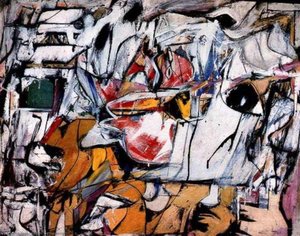
- Suburb in havana

 Buy print
 Send
Send Share
Share
 Details

 Download
 Similars
 X-Ray
X-Ray Diaporama
Suburb in havana


 Read More
Hand Made Oil Reproduction
Hand-painted oil on canvas in your size and frame, made to order by our artists.




P118B $10

P118H $10

P118W $10

P438Z $10

P508JH $12

P508YH $12

P805H $10

P805Z $10

P919BZ $10

P919G $10

P919XJ $10

P959ZH $10

P968JZ $12

W106C $8

W218G $10

W218JH $8

W218Y $10

W307PJ $10

W316G $10

W316PJ $8

W316Y $10

W398PJ $8

W4111J $10

W500HY $15

W500JH $15

W692G $12

W849H $8

W940BG $15

W953PJ $8




Pick from our preset sizes that match the artwork's original proportions.

You may enter your own dimensions to fit a specific frame or space. If your selected size does not match the original image's proportions, we will either crop the artwork or extend the painting with additional hand-painted elements. A digital mockup will be sent for your approval before production begins.
Please note that the on-screen preview does not reflect the actual cropping or extension. Only the mockup will accurately show the final composition.
While custom sizes are available, we recommend selecting a dimension from the predefined list to preserve the original proportions.
After order, AllPaintingsStore.com team will email client for instructions and provide a mockup preview
Worldwide Delivery () in 3/4 weeks instead of standard 5 weeks. (16 July). No compromise on quality.

Free Worldwide Express Shipping

High-Quality Linen Canvas

Full Shipping Insurance

Customs Tax Refund Guarantee

True Color Matching Guarantee

60-Day Return Policy (Defects Only)

100% Money-Back Guarantee

Bulk Discount Offer
 Glass option is only available in size under 110 CM

Suburb in havana
Reproduction Medium
Reproduction Size
-


Total Price
-
Artwork Description
Suburb in Havana: A Bold Statement of Color and Texture
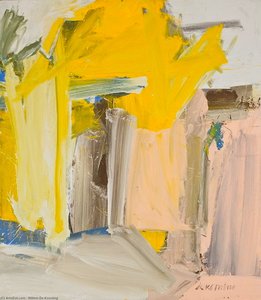
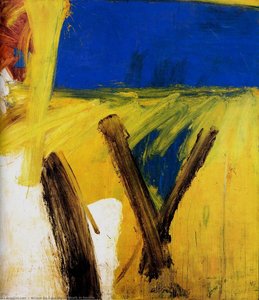
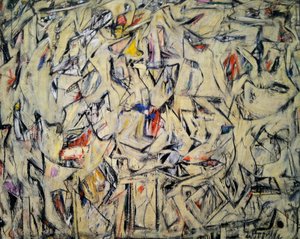
Willem de Kooning’s ‘Suburb in Havana’, painted in 1958, stands as an undeniable emblem of Abstract Expressionism—a movement that fundamentally challenged the conventions of representational art and prioritized artistic process over polished aesthetic outcomes. Born in Rotterdam in 1904, De Kooning embarked on a lifelong exploration of visual language, rejecting academic traditions to forge his own distinctive path toward expressive abstraction. His formative years were marked by familial upheaval, fostering within him an inherent restlessness that would fuel his adventurous spirit and propel him towards the vibrant crucible of New York City.The Essence of Gestural Abstraction
At its core, Abstract Expressionism sought to convey emotion directly through pigment and brushstroke—a radical departure from depicting the external world accurately. De Kooning epitomized this ethos, employing a technique known as gestural abstraction. Unlike Impressionists who aimed to capture fleeting moments of light and color, De Kooning wrestled with his canvas, layering paint in energetic swirls and dashes that communicated raw feeling rather than precise observation. The resulting image isn’t concerned with replicating Havana's landscape; instead, it invites contemplation on the very act of perceiving beauty itself.A Symphony of Color and Texture
The painting’s palette is dominated by yellows—representing warmth, optimism, and perhaps even a hint of unease—interwoven with subtle blues that suggest depth and tranquility. These hues aren't blended smoothly; they collide and merge on the surface, creating a palpable sense of dynamism. Scattered across the canvas are sticks or branches, meticulously rendered in darker tones, adding textural complexity and grounding the luminous yellows. This deliberate juxtaposition of color and form underscores De Kooning’s commitment to conveying emotion through visual materiality—a cornerstone of Abstract Expressionist philosophy.Context Within the Movement
De Kooning's work resonates powerfully with other luminaries of the New York School, including Robert Motherwell and Barnett Newman. Like Motherwell’s ‘Composition’, which utilizes bold colors and geometric forms to evoke profound psychological states, De Kooning’s painting engages viewers on an emotional level. Similarly, Newman’s Color Field paintings—such as '3. Third Station'—explored the transformative potential of color itself, mirroring De Kooning’s focus on conveying feeling through pure pigment.A Legacy of Bold Vision
‘Suburb in Havana’ isn’t merely a depiction of a place; it’s an assertion of artistic freedom and a testament to Willem de Kooning’s enduring influence on the trajectory of modern art. Its vibrant colors, textured surface, and expressive brushstrokes continue to inspire artists and collectors alike—a captivating reminder that true beauty resides not in imitation but in authentic emotional resonance. For those seeking to experience this iconic artwork firsthand, reproductions from AllPaintingsStore.com offer exceptional quality and artistic integrity.Related Artworks





Artist Biography
A Life Forged in Abstraction
Willem de Kooning, a name synonymous with the raw energy and emotional depth of Abstract Expressionism, was born in Rotterdam, Netherlands, in 1904. His early life was marked by a familial split – his parents divorced when he was young – which perhaps instilled within him a sense of restless searching that would permeate his artistic journey. Leaving formal schooling at twelve, de Kooning apprenticed with a commercial art firm, laying the groundwork for his technical skill while simultaneously fueling a desire to break free from conventional constraints. Evening classes at the Academie van Beeldende Kunsten en Technische Wetenschappen in Rotterdam provided further foundational training, but it was a yearning for something more – a bolder, more expressive language – that ultimately propelled him towards America in 1926. His arrival wasn’t straightforward; he famously stowed away on a ship, embodying the spirit of an outsider seeking new horizons. New York City became his adopted home, and its vibrant, often gritty energy profoundly shaped his evolving style. He navigated various jobs – house painter, carpenter – all while relentlessly pursuing his artistic vision, absorbing the city’s pulse into his work.From Urban Scenes to Abstract Fury
De Kooning's early paintings reflected his immediate surroundings: urban landscapes and portraits that captured the dynamism of New York life. However, these were merely stepping stones towards a more profound exploration of form and emotion. A pivotal moment came with his connection to Arshile Gorky, whose influence proved transformative. Gorky encouraged de Kooning’s experimentation with abstraction, fostering a willingness to dismantle traditional representation in pursuit of something deeper. The 1930s saw de Kooning engage with social realism and mural projects through the Works Progress Administration (WPA), a period that honed his skills but also highlighted the limitations of purely representational art. He found himself drawn towards the work of Stuart Davis and John Graham, artists who were pushing boundaries in their own right. This confluence of influences gradually steered him away from literal depiction and toward an increasingly abstract vocabulary. It wasn’t a sudden shift, but rather a slow burn – a deliberate dismantling of established norms fueled by intellectual curiosity and a relentless pursuit of artistic truth.The Woman Series: A Landmark Achievement
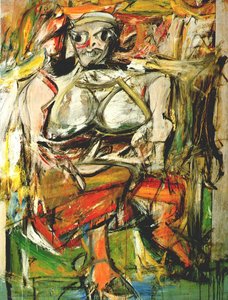
Following World War II, de Kooning emerged as a central figure in the burgeoning Abstract Expressionist movement. This period marked a turning point, culminating in his iconic “Woman” series (1950-1953). These paintings – including the monumental *Woman I* – are not merely depictions of female figures; they are visceral explorations of femininity, sexuality, and the complexities of human emotion. Characterized by aggressive brushstrokes, fragmented forms, and a jarring juxtaposition of colors, the “Woman” series challenged conventional notions of beauty and representation. They were controversial, even shocking to some, but their power lay precisely in their refusal to conform. De Kooning wasn’t interested in creating idealized images; he sought to capture the raw, untamed essence of his subjects. Beyond the "Woman" series, works like *The Glazier* and *Excavation* further demonstrated his dynamic approach to painting, showcasing a masterful command of texture, color, and composition. He didn't shy away from chaos or ambiguity; instead, he embraced them as integral components of his artistic language.Evolving Landscapes and Enduring Legacy
In the 1960s, de Kooning’s style underwent another significant evolution. While abstraction remained central to his work, landscape elements began to play a more prominent role, often rendered with a brighter palette and a looser, more fluid brushstroke. He continued to experiment relentlessly throughout his life, exploring different techniques and materials, never content to rest on his laurels. His later works demonstrate a remarkable ability to reinvent himself while remaining true to his core artistic principles. Willem de Kooning’s historical significance is undeniable. He helped establish New York City as a global center for art, challenging the dominance of European traditions and paving the way for future generations of artists. His work continues to inspire awe and provoke debate, reminding us of the power of abstraction to convey profound emotional truths. De Kooning passed away in 1997, leaving behind a vast and influential body of work that stands as a testament to his unwavering commitment to artistic innovation and his enduring legacy as one of the most important American artists of the 20th century. His impact resonates still.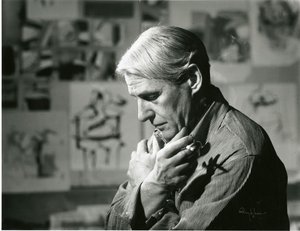
Willem de Kooning
1904 - 1997 , Netherlands
Quick Facts
- Artistic Movement Or Style: Abstract Expressionism
- Artists Or Movements Influenced By This Artist: New York School
- Artists Who Influenced This Artist:
- Arshile Gorky
- Stuart Davis
- John Graham
- Date Of Birth: April 24, 1904
- Date Of Death: March 19, 1997
- Full Name: Willem de Kooning
- Nationality: Dutch-American
- Notable Artworks:
- Woman I
- Marilyn Monroe
- Reclining Man (JFK)
- Excavation
- Place Of Birth: Rotterdam, Netherlands
Related Articles

Gene Davis: Chromatic Explorations of Color Field Painting & the Washington Color School
Explore the vibrant world of Gene Davis and the Washington Color School. Discover his iconic stripe paintings, innovative techniques, and lasting impact on American abstract art. A deep dive for collectors & enthusiasts.
Beatrice Parsons: A Study in Abstract Expressionism & the Poetics of Color Field Painting
Explore the captivating world of Beatrice Parsons, a pioneering British abstract expressionist. Discover her journey from garden watercolors to evocative color field paintings and learn about her place within art history.

Willem van de Velde the Elder: Master of Maritime Painting & Chronicler of the Dutch Golden Age
Discover the captivating maritime paintings of Willem van de Velde the Elder, a master chronicler of the Dutch Golden Age. Explore his unparalleled realism and lasting influence on naval art history.

Paul Jenkins: Abstraction, Color Field Painting & the Pursuit of Lyrical Expression
Explore the captivating world of Paul Jenkins, a pioneer of abstract expressionism & color field painting. Discover his unique ‘Phenomena’ series and investment potential for art collectors. Expert insights at AllPaintingsStore.

Pierre Puvis de Chavannes: Symbolism, Mural Painting, and the Pursuit of Ideal Beauty
Explore the life & work of Pierre Puvis de Chavannes, a pivotal Symbolist painter renowned for his monumental murals. Discover his aesthetic principles, key artworks like 'Hope,' and lasting influence on modern art. A deep dive into 19th-century French painting.