

Acrylic On Canvas.

§ 1Catalogue data


§ 2Abstract
Collectible Description
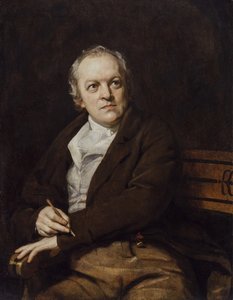
William Blake’s captivating watercolor portrait of a man in a wig and suit offers an intriguing glimpse into the Romantic era's intellectual spirit. This unique artwork showcases Blake’s visionary style, perfect for adding a touch of timeless elegance to your space. Discover this masterpiece today.
 Read More
Artist Biography
Explore William Blake's visionary art & poetry (1757-1827). A Romantic icon known for mystical themes, illuminated printing, & works like 'The Tyger'. Discover his legacy!
§ 3Commentary
William Cowper: A Portrait of Romantic Vision
This arresting watercolor portrait, attributed to the visionary William Blake, offers a compelling glimpse into the intellectual currents of late 18th-century England. The subject, a gentleman with meticulously styled curly hair, a prominent wig, and a carefully cultivated beard and mustache, embodies the burgeoning Enlightenment ideals of reason and observation while simultaneously hinting at the burgeoning spiritual anxieties that would define the Romantic movement. His direct gaze engages the viewer, creating an immediate connection – a silent dialogue across time between artist and observer.
- Subject & Appearance: The man depicted is not merely a portrait; he’s a carefully constructed symbol of learned society. The suit and tie denote status and profession, suggesting a scholar or perhaps a gentleman of the arts – a figure comfortable in the world of ideas. Blake's rendering emphasizes his features with an almost unsettling realism, highlighting both strength and vulnerability.
- Technique & Materials: Executed in watercolor, the painting showcases Blake’s mastery of delicate washes and layered textures. The medium lends itself beautifully to capturing subtle gradations of light and shadow, contributing to the overall sense of depth and atmosphere. The artist's use of a checkered background adds an unexpected layer of complexity, potentially representing the structured world of academia or perhaps hinting at the underlying chaos within the subject’s mind.
William Blake: Contextualizing the Vision
Born in London in 1757, William Blake was a profoundly individualistic artist and poet operating at the cusp of significant societal change. His early life, marked by an intensely imaginative spirit, foreshadowed his later explorations of mythology, religion, and the human psyche. Blake’s apprenticeship with James Basire provided him with foundational skills in engraving – a technique he would subsequently revolutionize through his innovative use of color and texture. This mastery allowed him to create intricate illuminated manuscripts and prints that blended artistic expression with spiritual conviction. The painting reflects this unique synthesis, blending technical skill with deeply held beliefs.
- Romantic Roots: Blake’s work anticipates many of the key themes of the Romantic movement – a focus on emotion, intuition, and the power of the imagination. His rejection of purely rational thought aligns perfectly with the burgeoning emphasis on subjective experience that would characterize this era.
- Symbolic Potential: The checkered background itself could be interpreted as a symbol of order versus chaos, or perhaps as a representation of the intellectual pursuits that occupied Blake’s life. Further research into Blake's other works reveals recurring motifs and symbols that enrich our understanding of this portrait’s deeper meaning.
Symbolism and Emotional Impact
Beyond its formal qualities, “William Cowper” resonates with a powerful emotional intensity. The subject’s direct gaze compels the viewer to confront questions about knowledge, identity, and the nature of reality. Blake's use of watercolor creates an ethereal quality, suggesting that the portrait is not merely a representation of a man but a window into his soul. The subtle details – the texture of the wig, the expression in his eyes – invite contemplation and evoke a sense of timelessness.
- Intrigue & Mystery: The painting’s ambiguity adds to its allure. Who *is* William Cowper? What are his thoughts and feelings? Blake deliberately leaves these questions unanswered, inviting the viewer to project their own interpretations onto the image.
- A Legacy of Vision: As a work by William Blake, this portrait stands as a testament to his extraordinary artistic vision – a vision that continues to captivate and inspire audiences today.
Perfect for Your Collection & Interior Design
This meticulously crafted hand-painted reproduction captures the essence of William Blake’s genius, offering an exceptional piece for art collectors, interior designers, or anyone seeking to infuse their space with a touch of Romantic drama and intellectual depth. Available in various sizes, this artwork is a timeless addition to any collection, guaranteed to spark conversation and evoke contemplation.
Questions & Answers
Is there a slideshow for "William Cowper" by William Blake?
The diaporama of "William Cowper" can be watched on the artwork's Diaporama page.
What is the recommended print size for "William Cowper" by William Blake?
The recommended print size for "William Cowper" by William Blake is large.
Is "William Cowper" more bright or more dark overall?
"William Cowper" is bright overall, and its luminance is gentle luminance.


 Switch to Print


 For artworks or reproductions larger than 105 cm (approximately 41 inches) on any side, the frame will be shipped as a kit, disassembled. This method ensures safe delivery and prevents damage during transport.


