- Home

- Oil Painting Reproduction
- william h. johnson
- Kerteminde Landscape

 Buy print
 Send
Send Share
Share
 Details

 Download
 Similars
 X-Ray
X-Ray Diaporama
Kerteminde Landscape
 Watercolor
- WallArt
- Modernism
 1932
1932- Modern
 47.0 x 59.0 cm
 Read More
Hand Made Oil Reproduction
Hand-painted oil on canvas in your size and frame, made to order by our artists.




P118B $10

P118H $10

P118W $10

P438Z $10

P508JH $12

P508YH $12

P805H $10

P805Z $10

P919BZ $10

P919G $10

P919XJ $10

P959ZH $10

P968JZ $12

W106C $8

W218G $10

W218JH $8

W218Y $10

W307PJ $10

W316G $10

W316PJ $8

W316Y $10

W398PJ $8

W4111J $10

W500HY $15

W500JH $15

W692G $12

W849H $8

W940BG $15

W953PJ $8




Pick from our preset sizes that match the artwork's original proportions.

You may enter your own dimensions to fit a specific frame or space. If your selected size does not match the original image's proportions, we will either crop the artwork or extend the painting with additional hand-painted elements. A digital mockup will be sent for your approval before production begins.
Please note that the on-screen preview does not reflect the actual cropping or extension. Only the mockup will accurately show the final composition.
While custom sizes are available, we recommend selecting a dimension from the predefined list to preserve the original proportions.
After order, AllPaintingsStore.com team will email client for instructions and provide a mockup preview
Worldwide Delivery () in 3/4 weeks instead of standard 5 weeks. (16 July). No compromise on quality.

Free Worldwide Express Shipping

High-Quality Linen Canvas

Full Shipping Insurance

Customs Tax Refund Guarantee

True Color Matching Guarantee

60-Day Return Policy (Defects Only)

100% Money-Back Guarantee

Bulk Discount Offer
 Glass option is only available in size under 110 CM

Kerteminde Landscape
Reproduction Medium
Reproduction Size
-


Total Price
-
Artwork Description
A Visionary Landscape: The Expressive Spirit of Kerteminde
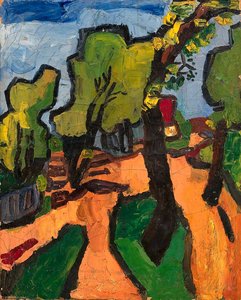
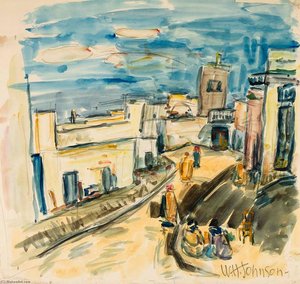
In the delicate dance of watercolor and light, Kerteminde Landscape emerges as a breathtaking testament to the expressive power of early 20th-century modernism. Created in 1932 by the masterful William H. Johnson, this piece transcends mere topographical representation to offer a soulful encounter with the earth itself. The artwork captures a hilly terrain where a solitary windmill stands as a silent sentinel over a winding path, inviting the viewer to wander through a world rendered not in strict realism, but in vibrant, rhythmic energy. It is a composition that breathes, utilizing bold, gestural brushstrokes that suggest a landscape in constant, quiet motion.
The technique employed here is nothing short of poetic. Utilizing the fluid nature of watercolor, Johnson masterfully employs wet-on-wet washes to build layers of color that create an atmospheric, almost dreamlike haze. The hills are not rigid structures but undulating masses of pigment, where the boundaries between land and sky feel beautifully blurred. This approach creates a sense of depth through subtle variations in saturation; as elements recede into the distance, they soften into lighter, more ethereal tones, pulling the eye deeper into the heart of this rural scene. The result is a texture that feels both organic and intentional, perfect for those who appreciate the tactile beauty of fine art.
A Tapestry of Modernism and Emotion
While the subject matter—a quiet, pastoral scene—might suggest tranquility, the execution is charged with the dynamism of the Fauvist movement. Johnson’s use of a vibrant color palette and flattened perspective prioritizes emotional resonance over spatial accuracy. There is a certain beautiful chaos in the linework; the paths and contours are loose and fluid, defining forms through feeling rather than rigid geometry. This stylistic choice allows the painting to function as a window into a subjective experience, where the landscape becomes a mirror for the human spirit.
For the discerning collector or interior designer, this piece offers a profound sense of character and historical weight. The windmill, a symbol of tradition and the enduring rhythm of rural life, stands in quiet contrast to the modern, almost abstract way the terrain is rendered. It evokes themes of journey and exploration through its winding paths, making it an evocative centerpiece for any space seeking to inspire contemplation. Whether placed in a contemporary gallery setting or a classic study, Kerteminde Landscape brings with it the legacy of the Harlem Renaissance artist’s unique ability to blend folk-inspired simplicity with sophisticated modernist abstraction.
Related Artworks





Artist Biography
William H. Johnson: A Voice of Resilience and Vision
William Henry Johnson (1901–1970) stands as a cornerstone of American art history, particularly within the vibrant tapestry of the Harlem Renaissance. Born in Florence, South Carolina, his artistic journey began amidst the complexities of Jim Crow America, shaping his worldview and profoundly informing his distinctive visual language—a blend of modernist abstraction and deeply rooted folk traditions that continues to resonate today. Johnson’s formative years instilled a profound connection to African American culture and spirituality. He absorbed influences from gospel music, storytelling traditions passed down through generations, and the iconography of Yoruba religion, elements which would become integral to his artistic process. This grounding in oral tradition translated into canvases brimming with symbolic imagery—spirits, animals, and geometric patterns—that conveyed narratives of struggle, perseverance, and spiritual transcendence. His artistic development unfolded across continents, from Europe to Mexico, where he honed his skills experimenting with various mediums including oil paint, watercolor, and collage. He embraced techniques like impasto – applying thick layers of pigment – to imbue his paintings with palpable texture and emotional intensity. This approach mirrored the expressive fervor characteristic of Expressionism, yet Johnson maintained a singular aesthetic rooted in his personal heritage. Johnson’s oeuvre is marked by an astonishing diversity of subjects—portraits capturing the dignity and resilience of African American individuals, landscapes depicting the beauty of rural South Carolina, and fantastical visions exploring themes of mythology and spirituality. Notable works include “The Black Christ” (1938), a monumental canvas infused with Yoruba symbolism that powerfully communicates faith and compassion; "The Great Spirit" (1964), which embodies Johnson’s exploration of shamanic imagery and spiritual quest; and “Black Boy” (1937), a poignant depiction of youthful innocence confronting adversity. Beyond his artistic achievements, William H. Johnson's legacy extends to his role as an educator and mentor, fostering the talents of younger artists who embraced similar stylistic explorations. His influence can be seen in subsequent generations of Black American painters who sought to articulate experiences of identity and cultural heritage through innovative visual vocabularies. Today, Johnson’s paintings are housed in prestigious museums worldwide—including the Smithsonian American Art Museum and Hampton University Museum—testament to their enduring artistic merit and historical significance as emblems of the Harlem Renaissance's commitment to portraying Black life with honesty and dignity.
william h. johnson
1901 - 1970 , United States of America
Quick Facts
- Artistic Movement Or Style: Harlem Renaissance; Expressionism
- Artists Or Movements Influenced By This Artist: ['Expressionism']
- Artists Who Influenced This Artist: ['John Wollaston']
- Date Of Birth: 1901
- Full Name: William Henry Johnson
- Nationality: American
- Notable Artworks:
- Sir William Johnson Presenting Medals...
- William Johnson Fox
- Place Of Birth: Florence, United States of America
Related Articles

Cultivating Visions: A Historical Journey Through Rural Landscapes in Art
Explore the rich history of rural landscape painting with AllPaintingsStore. Discover Impressionist masterpieces, key artists & movements. Find your perfect serene artwork and bring nature's beauty home.

Evoking Arcadia: A Historical & Aesthetic Exploration of Rural Landscape Art
Explore the rich history of pastoral landscape art, from classical Arcadia to Impressionism & beyond. Discover key artists, movements, and how to collect serene rural scenes for your home. Expert insights at AllPaintingsStore.

Concrete Visions: Exploring the Urban Landscape in Painting – From Realism to Contemporary Art
Explore the evolution of cityscape painting from Realism to contemporary art with AllPaintingsStore. Discover key artists & invest in timeless urban visions. Expert guidance, museum-quality reproductions.

Evocations of Rural Life: A Historical Journey Through Landscape Painting
Explore the rich history of rural life in painting! Discover Impressionist masterpieces, Italian Macchiaioli scenes & the enduring appeal of pastoral landscapes. Find your perfect artwork at AllPaintingsStore.

William H. Johnson: A Life Painted in Bold Strokes – Race, Identity & Modernism
Explore the powerful life & art of William H. Johnson – a pivotal American painter who captured African American experiences with bold expressionism and folk art style. Discover his legacy at AllPaintingsStore.