- Home

- Oil Painting Reproduction
- william h. johnson
- Lincoln at Gettysburg III

 Buy print
 Send
Send Share
Share
 Details

 Download
 Similars
 X-Ray
X-Ray Diaporama
Lincoln at Gettysburg III
 Oil On Canvas
- WallArt
- Naive/Primitive Art
 1942
1942- Modern
 44.0 x 41.0 cm
 Read More
Hand Made Oil Reproduction
Hand-painted oil on canvas in your size and frame, made to order by our artists.




P118B $10

P118H $10

P118W $10

P438Z $10

P508JH $12

P508YH $12

P805H $10

P805Z $10

P919BZ $10

P919G $10

P919XJ $10

P959ZH $10

P968JZ $12

W106C $8

W218G $10

W218JH $8

W218Y $10

W307PJ $10

W316G $10

W316PJ $8

W316Y $10

W398PJ $8

W4111J $10

W500HY $15

W500JH $15

W692G $12

W849H $8

W940BG $15

W953PJ $8




Pick from our preset sizes that match the artwork's original proportions.

You may enter your own dimensions to fit a specific frame or space. If your selected size does not match the original image's proportions, we will either crop the artwork or extend the painting with additional hand-painted elements. A digital mockup will be sent for your approval before production begins.
Please note that the on-screen preview does not reflect the actual cropping or extension. Only the mockup will accurately show the final composition.
While custom sizes are available, we recommend selecting a dimension from the predefined list to preserve the original proportions.
After order, AllPaintingsStore.com team will email client for instructions and provide a mockup preview
Worldwide Delivery () in 3/4 weeks instead of standard 5 weeks. (16 July). No compromise on quality.

Free Worldwide Express Shipping

High-Quality Linen Canvas

Full Shipping Insurance

Customs Tax Refund Guarantee

True Color Matching Guarantee

60-Day Return Policy (Defects Only)

100% Money-Back Guarantee

Bulk Discount Offer
 Glass option is only available in size under 110 CM

Lincoln at Gettysburg III
Reproduction Medium
Reproduction Size
-


Total Price
-
Artwork Description
A Theatrical Vision of History
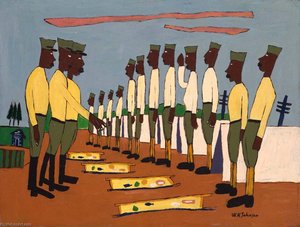
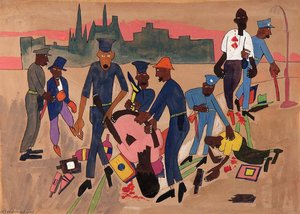
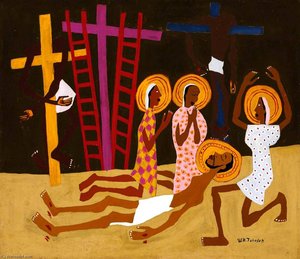
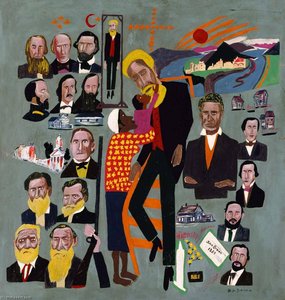
In the evocative masterpiece Lincoln at Gettysburg III, the legendary American artist William H. Johnson invites viewers into a world where history is not merely recorded, but reimagined through a lens of profound, primitive beauty. Created in 1942, this work transcends traditional portraiture to present a stylized, almost theatrical tableau that captures the gravity of a pivotal moment in the American consciousness. The composition is intentionally crowded and asymmetrical, pulling the observer into a dense arrangement of figures that feel both monumental and intimate. At its heart lies a central figure—evoking the presence of Abraham Lincoln—surrounded by a diverse assembly of individuals in formal attire and military uniforms. This staging creates an atmosphere of staged drama, as if we are witnessing a sacred performance of memory rather than a literal historical reenactment.
The aesthetic power of this piece lies in its masterful use of the Naive or Primitive art style. Johnson eschews the complexities of realistic perspective in favor of a flattened, two-dimensional space that emphasizes the symbolic weight of each figure. Thick, black outlines define the characters with bold, geometric precision, reminiscent of the rhythmic energy found in the works of Henri Rousseau. The color palette is a striking symphony of primary and earthy tones; vibrant yellows, deep blues, and rich reds dance against a backdrop of browns, creating a visual rhythm that is both captivating and unsettling. This deliberate distortion of space forces the eye to focus on the expressive forms and the raw emotional resonance of the subjects rather than the illusion of depth.
Beyond its striking visual surface, the painting is steeped in a rich layer of symbolism and cultural texture. The presence of crosses and specific uniform details alludes to themes of faith, authority, and the heavy burden of leadership during a time of national fracture. Johnson, a pivotal figure of the Harlem Renaissance, masterfully weaves his connection to African American spiritual traditions and folk iconography into this historical scene. The visible brushstrokes and the tactile quality of the oil on canvas lend an immediacy to the work, suggesting an unrefined, honest approach to storytelling. For the collector or interior designer, this piece offers more than just decoration; it provides a profound focal point that commands attention through its unique blend of modernist abstraction and deeply rooted historical narrative.
To possess a reproduction of Lincoln at Gettysburg III is to bring a piece of American resilience into one's space. The artwork’s ability to evoke a sense of unease, curiosity, and reverence makes it an ideal centerpiece for those seeking art that stimulates intellectual conversation and emotional depth. Whether placed in a curated gallery setting or as a bold statement in a contemporary living space, Johnson’s vision remains an enduring testament to the power of simplified form and expressive color to communicate the complexities of the human spirit.


Artist Biography
William H. Johnson: A Voice of Resilience and Vision
William Henry Johnson (1901–1970) stands as a cornerstone of American art history, particularly within the vibrant tapestry of the Harlem Renaissance. Born in Florence, South Carolina, his artistic journey began amidst the complexities of Jim Crow America, shaping his worldview and profoundly informing his distinctive visual language—a blend of modernist abstraction and deeply rooted folk traditions that continues to resonate today. Johnson’s formative years instilled a profound connection to African American culture and spirituality. He absorbed influences from gospel music, storytelling traditions passed down through generations, and the iconography of Yoruba religion, elements which would become integral to his artistic process. This grounding in oral tradition translated into canvases brimming with symbolic imagery—spirits, animals, and geometric patterns—that conveyed narratives of struggle, perseverance, and spiritual transcendence. His artistic development unfolded across continents, from Europe to Mexico, where he honed his skills experimenting with various mediums including oil paint, watercolor, and collage. He embraced techniques like impasto – applying thick layers of pigment – to imbue his paintings with palpable texture and emotional intensity. This approach mirrored the expressive fervor characteristic of Expressionism, yet Johnson maintained a singular aesthetic rooted in his personal heritage. Johnson’s oeuvre is marked by an astonishing diversity of subjects—portraits capturing the dignity and resilience of African American individuals, landscapes depicting the beauty of rural South Carolina, and fantastical visions exploring themes of mythology and spirituality. Notable works include “The Black Christ” (1938), a monumental canvas infused with Yoruba symbolism that powerfully communicates faith and compassion; "The Great Spirit" (1964), which embodies Johnson’s exploration of shamanic imagery and spiritual quest; and “Black Boy” (1937), a poignant depiction of youthful innocence confronting adversity. Beyond his artistic achievements, William H. Johnson's legacy extends to his role as an educator and mentor, fostering the talents of younger artists who embraced similar stylistic explorations. His influence can be seen in subsequent generations of Black American painters who sought to articulate experiences of identity and cultural heritage through innovative visual vocabularies. Today, Johnson’s paintings are housed in prestigious museums worldwide—including the Smithsonian American Art Museum and Hampton University Museum—testament to their enduring artistic merit and historical significance as emblems of the Harlem Renaissance's commitment to portraying Black life with honesty and dignity.
william h. johnson
1901 - 1970 , United States of America
Quick Facts
- Artistic Movement Or Style: Harlem Renaissance; Expressionism
- Artists Or Movements Influenced By This Artist: ['Expressionism']
- Artists Who Influenced This Artist: ['John Wollaston']
- Date Of Birth: 1901
- Full Name: William Henry Johnson
- Nationality: American
- Notable Artworks:
- Sir William Johnson Presenting Medals...
- William Johnson Fox
- Place Of Birth: Florence, United States of America
Related Articles

The Enduring Power of Paint: A Journey Through Art History & Technique
Explore the rich history of painting! Discover master techniques from Renaissance to Modern art. Find museum-quality reproductions & expert advice at AllPaintingsStore.

William H. Johnson: A Life Painted in Bold Strokes – Race, Identity & Modernism
Explore the powerful life & art of William H. Johnson – a pivotal American painter who captured African American experiences with bold expressionism and folk art style. Discover his legacy at AllPaintingsStore.

F.A.Q.: Painting Styles - Tailoring Art to Elite Collectors' Visions
Transform cherished photos into museum-quality oil paintings with . Expert artists & bespoke art commissions for discerning collectors. Create a lasting legacy.

The Untamed Vision: Exploring Naïve Art & Primitivism's Rejection of Convention
Explore the revolutionary world of Naïve Art & Primitivism! Discover how artists challenged academic traditions with raw emotion & unique styles. Learn about Picasso, Rousseau & more at AllPaintingsStore.
Navigating Symbolism & Style: A Comprehensive Exploration of Boats in Art History
Explore the rich history of boats in art! From ancient symbolism to Impressionist masterpieces & modern visions, discover renowned artists & collecting tips at AllPaintingsStore.