- Home

- Oil Painting Reproduction
- william h. johnson
- Street in Cassis II

 Buy print
 Send
Send Share
Share
 Details

 Download
 Similars
 X-Ray
X-Ray Diaporama
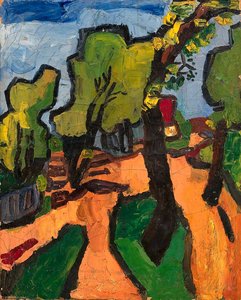
Street in Cassis II
 Oil On Canvas
- WallArt
 1929
1929- Modern
 68.0 x 55.0 cm
 Read More
Hand Made Oil Reproduction
Hand-painted oil on canvas in your size and frame, made to order by our artists.




P118B $10

P118H $10

P118W $10

P438Z $10

P508JH $12

P508YH $12

P805H $10

P805Z $10

P919BZ $10

P919G $10

P919XJ $10

P959ZH $10

P968JZ $12

W106C $8

W218G $10

W218JH $8

W218Y $10

W307PJ $10

W316G $10

W316PJ $8

W316Y $10

W398PJ $8

W4111J $10

W500HY $15

W500JH $15

W692G $12

W849H $8

W940BG $15

W953PJ $8




Pick from our preset sizes that match the artwork's original proportions.

You may enter your own dimensions to fit a specific frame or space. If your selected size does not match the original image's proportions, we will either crop the artwork or extend the painting with additional hand-painted elements. A digital mockup will be sent for your approval before production begins.
Please note that the on-screen preview does not reflect the actual cropping or extension. Only the mockup will accurately show the final composition.
While custom sizes are available, we recommend selecting a dimension from the predefined list to preserve the original proportions.
After order, AllPaintingsStore.com team will email client for instructions and provide a mockup preview
Worldwide Delivery () in 3/4 weeks instead of standard 5 weeks. (16 July). No compromise on quality.

Free Worldwide Express Shipping

High-Quality Linen Canvas

Full Shipping Insurance

Customs Tax Refund Guarantee

True Color Matching Guarantee

60-Day Return Policy (Defects Only)

100% Money-Back Guarantee

Bulk Discount Offer
 Glass option is only available in size under 110 CM

Street in Cassis II
Reproduction Medium
Reproduction Size
-


Total Price
-
Artwork Description
A Vibrant Pulse in Cassis
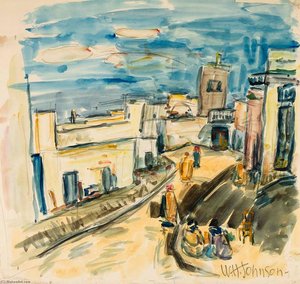
In the sun-drenched streets of southern France, William H. Johnson captures a moment of pure, unadulterated vitality in his 1929 masterpiece, Street in Cassis II. This painting is far more than a mere topographical record of a French village; it is a rhythmic celebration of life itself. As the viewer’s eye wanders through the narrow, winding alleys, they are met with a bustling choreography of daily existence. From the solitary figure pedaling a bicycle to the quiet companionship of a dog wandering the sidewalk, Johnson populates this canvas with a sense of purpose and motion. The architecture, a charming tapestry of old-world charm and evolving structures, provides a textured backdrop that anchors the scene in the timeless essence of Cassis.
The artist’s technique serves as the heartbeat of the composition. Utilizing a vivid palette that mirrors the Mediterranean light, Johnson employs a style that bridges the gap between modernist abstraction and a soulful, folk-inspired clarity. The brushwork is energetic, contributing to a dynamic atmosphere where every stroke feels intentional, driving the viewer deeper into the labyrinthine streets. There is a profound sense of movement captured in the way the figures interact with their environment, creating a composition that feels less like a static image and more like a living, breathing organism.
The Intersection of Culture and Light
To understand Street in Cassis II, one must consider the unique perspective of William H. Johnson. While his later works became iconic pillars of the Harlem Renaissance, this period of his exploration reveals an artist deeply engaged with the universal language of light and community. The painting transcends its French setting through its use of symbolic rhythm; the geometric interplay of the buildings and the scattered placement of people evoke a sense of cosmic order within the chaos of urban life. For the collector or interior designer, this piece offers a sophisticated balance of color and structure, making it an ideal focal point for spaces that require both warmth and intellectual depth.
The emotional impact of the work lies in its ability to evoke nostalgia and joy simultaneously. It invites the observer to step out of their own reality and into a world where every corner holds a new discovery. Whether placed in a contemporary gallery setting or a classic, curated home, this reproduction brings with it the spirit of 1920s European charm and the resilient, visionary soul of one of America's most significant artists. It is an invitation to celebrate the beauty found in the mundane, rendered with a mastery that turns a simple street scene into an eternal dance of light and life.
Related Artworks


Artist Biography
William H. Johnson: A Voice of Resilience and Vision
William Henry Johnson (1901–1970) stands as a cornerstone of American art history, particularly within the vibrant tapestry of the Harlem Renaissance. Born in Florence, South Carolina, his artistic journey began amidst the complexities of Jim Crow America, shaping his worldview and profoundly informing his distinctive visual language—a blend of modernist abstraction and deeply rooted folk traditions that continues to resonate today. Johnson’s formative years instilled a profound connection to African American culture and spirituality. He absorbed influences from gospel music, storytelling traditions passed down through generations, and the iconography of Yoruba religion, elements which would become integral to his artistic process. This grounding in oral tradition translated into canvases brimming with symbolic imagery—spirits, animals, and geometric patterns—that conveyed narratives of struggle, perseverance, and spiritual transcendence. His artistic development unfolded across continents, from Europe to Mexico, where he honed his skills experimenting with various mediums including oil paint, watercolor, and collage. He embraced techniques like impasto – applying thick layers of pigment – to imbue his paintings with palpable texture and emotional intensity. This approach mirrored the expressive fervor characteristic of Expressionism, yet Johnson maintained a singular aesthetic rooted in his personal heritage. Johnson’s oeuvre is marked by an astonishing diversity of subjects—portraits capturing the dignity and resilience of African American individuals, landscapes depicting the beauty of rural South Carolina, and fantastical visions exploring themes of mythology and spirituality. Notable works include “The Black Christ” (1938), a monumental canvas infused with Yoruba symbolism that powerfully communicates faith and compassion; "The Great Spirit" (1964), which embodies Johnson’s exploration of shamanic imagery and spiritual quest; and “Black Boy” (1937), a poignant depiction of youthful innocence confronting adversity. Beyond his artistic achievements, William H. Johnson's legacy extends to his role as an educator and mentor, fostering the talents of younger artists who embraced similar stylistic explorations. His influence can be seen in subsequent generations of Black American painters who sought to articulate experiences of identity and cultural heritage through innovative visual vocabularies. Today, Johnson’s paintings are housed in prestigious museums worldwide—including the Smithsonian American Art Museum and Hampton University Museum—testament to their enduring artistic merit and historical significance as emblems of the Harlem Renaissance's commitment to portraying Black life with honesty and dignity.
william h. johnson
1901 - 1970 , United States of America
Quick Facts
- Artistic Movement Or Style: Harlem Renaissance; Expressionism
- Artists Or Movements Influenced By This Artist: ['Expressionism']
- Artists Who Influenced This Artist: ['John Wollaston']
- Date Of Birth: 1901
- Full Name: William Henry Johnson
- Nationality: American
- Notable Artworks:
- Sir William Johnson Presenting Medals...
- William Johnson Fox
- Place Of Birth: Florence, United States of America
Related Articles

Hokusai's Masterpieces: 25 Iconic Prints & Paintings for Art Lovers | AllPaintingsStore
Journey through Katsushika Hokusai’s 25 most iconic artworks, including *The Great Wave*. Explore the ukiyo-e master's history, style & timeless Japanese woodblock prints. Find museum-quality reproductions for your home at AllPaintingsStore.com.

Echoes of Urban Life: A Visual Exploration of Street Scenes in Art History
Explore the captivating world of realism in art history! Discover iconic street scenes & genre paintings from masters like Courbet & Brown. Expert analysis & museum-quality reproductions at AllPaintingsStore.

Monet's Masterpieces: 25 Iconic Artworks to Transform Your Home
Journey through 25 iconic Claude Monet masterpieces! Explore Impressionism’s beauty, from Water Lilies to Rouen Cathedral. Discover stunning art reproductions & curated decor ideas – explore the full collection online at AllPaintingsStore.com.

Scenes of Daily Life: A Comprehensive Exploration of Genre Painting Through History
Explore the rich history of genre painting! Discover Dutch Masters & European artists who captured everyday life with stunning realism. Learn about symbolism, techniques & lasting influence.