A Voyage Through Time: The Soul of Korea’s Maritime Legacy In the vibrant, salt-kissed atmosphere of Busan , where the modern pulse of South Korea meets the eternal rhythm of the tides, stands the National Maritime Museum of Korea . This is not merel...
Before the ocean became a subject for quiet contemplation, it functioned as a ledger of commerce and conquest. The history of maritime art did not begin with an aesthetic pursuit but with a functional necessity to document the tangible realities of trade and naval strength. In the 17th-century Dutch Golden Age, the ship portrait emerged as a vital genre, serving the needs of a burgeoning mercantile class that required precise records of their vessels. Artists such as Ludolf Backhuysen acted more as chronic and chronicler than poet, capturing the structural integrity of hulls and the strategic positioning of naval maneuvers with a precision that prioritized accuracy over atmosphere.
This impulse to document is preserved in institutions like the National Maritime Museum of Korea in Busan. Within its halls, the focus remains on the physical reality of seafaring, where artifacts such as the half-sized replica of a Joseon Missional Ship and intricate navigational instruments speak to an age where understanding the sea was a matter of survival and diplomacy. These objects, much like the early maritime paintings, bridge the gap between the terrestrial and the oceanic through their sheer technical presence. The sea, in this era, was a space to be mapped, measured, and recorded.
From Vessel to Vista: The Transition from Ship Portraiture to Atmospheric Landscapes
Explore Louis Ginnett’s ‘Seascape,’ a dynamic oil painting of a rugged coastline & turbulent waves. Realistic brushwork captures nature's power. Victorian England art.
As the centuries progressed, the maritime gaze underwent a departure from the rigid documentation of rigging and timber toward the environment itself. The focus shifted from the vessel as an isolated object to the water as a living medium. This transition saw the emergence of the seascape as a distinct term, first recorded around 1790, modeled after the established concept of landscape. No longer was the goal merely to catalog a ship's dimensions; instead, artists began to explore the relationship between the sea and the sky, recognizing that the weather and light were essential components of the composition.
This shift is evident in the works of Realist painters like Louis Ginnett, whose Seascape captures the rugged coastline and turbulent waves with a focus on the raw power of nature. While the structural elements of the coast remain clear, the emphasis has moved toward the energy of the water. This evolution mirrors the broader movement in Western art where the subject matter expanded from specific, identifiable objects to the broader, more fluid sensations of the natural world. The sea was no as much a backdrop for commerce as it became a protagonist in its own right.
Spiritual Currents: Ancient East Asian Traditions and Western Romanticism
While Western landscape painting struggled for status within the academic hierarchy until the 19th century, East Asian traditions had long recognized the spiritual dimensions of the natural world. The Chinese shan shui, or mountain-water, tradition established a precedent for the "pure" landscape, where the primary subject was not a specific location but a spiritual essence. These ink paintings often featured misty vistas and waterfalls, utilizing the void to suggest the infinite. In this tradition, the landscape was a vessel for Daoist philosophy, emphasizing a harmony between the human spirit and the cosmos.
This ancient recognition of the spiritual element in nature finds a distant echo in the Western Romantic movement. It was during this period that Western artists began to explicitly embrace the sublime—the sense of awe and terror inspired by the vastness of the natural world. Where the Chinese literati used imaginary views to explore philosophical truths, the Romantics used the sea to confront the overwhelming power of the unknown. Both traditions, though separated by geography and technique, sought to move beyond mere topography to find a deeper resonance within the landscape.
Mapping the Ephemeral: Cartographic Precision versus Impressionist Light
Discover Daubigny’s "Seascape" (1867): A dramatic oil painting of a stormy ocean & sky in an impressionistic style. Explore this evocative artwork's beauty and historical significance.
The tension between the desire for precision and the urge to capture the fleeting is perhaps most visible in the contrast between cartography and Impressionism. The Hamgyeong-do Coastal Map, held in Korea, represents a triumph of cartographic precision, offering a window into the strategic importance of specific coastlines through meticulous detail. Such works are grounded in the reality of place, providing a reliable guide to the physical world. They represent the sea as a known, navigable entity.
In stark contrast, the Impressionist movement sought to abandon these rigid boundaries. Artists like Claude Monet and Charles-François Daubigny moved away from the cataloging of features to prioritize the transient effects of light and atmosphere. In works such as Daubigny’s Seascape, the focus is on the way light interacts with a stormy ocean, dissolving hard edges into a series of sensory impressions. The goal was no longer to map the coast, but to record the precise sensation of a single moment before the light shifted forever. This movement transformed the canvas from a record of fact into a medium for perception.
The Weight of Water: Technical Evolution from Realism to Textured Impasto
The Soulful Resonance of Color: The Life and Art of Wayne Bennett To understand the visual language of Wayne Bennett , one must first listen to the rhythm of the blues. Born in Memphis, Tennessee, on December 13, 1932, Bennett’s early life was define...
The technical execution of maritime art has evolved alongside its conceptual shifts, moving from smooth, descriptive surfaces to highly tactile, expressive textures. Early maritime works required a level of detail that could communicate the texture of wood and the transparency of water through fine, controlled brushwork. This precision is essential for the topographical view, where the accuracy of buildings and landmarks is paramount.
However, later movements embraced the physical weight of the medium to mirror the energy of the ocean. The use of heavy impasto, as seen in the works of artists like Wayne Bennett or the textured approach in Alfred Bricher’s Seascape, Sketch, allows the painting to catch light in unpredictable ways. This physical depth creates a surface that feels alive with movement, much like the cresting waves of the sea itself. Whether through the realistic brushwork of Louis Ginnett or the broken, luminous palette of the Impressionists, the evolution of technique has always been driven by a desire to better communicate the profound and ever-changing nature of the sea.
For those looking to bring these historical perspectives into contemporary spaces, AllPaintingsStore.com offers an extensive catalog of hand-painted reproductions and museum-quality prints. From large-scale murals for hospitality projects to custom commissions that transform personal photos into classical oil paintings, we provide reliable, high-volume solutions for professionals and collectors alike.
Louis Boulanger (1806-1867) was a French Romantic painter & lithographer. Known for portraits of Balzac, illustrations of Victor Hugo's works, and dramatic scenes. Explore his classical training & …
Explore Ludolf Backhuysen’s stunning maritime paintings! Master of realism & stormy seas, his Dutch Golden Age works depict ships, battles & coastal life.
Elevate your hospitality or corporate interiors with the timeless beauty of Dutch Golden Age landscapes. Our expert guide explores iconic works by masters like Van Goyen and Swanevelt, perfect for professional designers seeking high-quality, hand-painted oil reproductions.
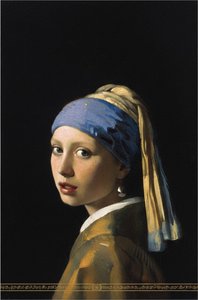
Step into the Dutch Golden Age with our curated guide to 25 iconic masterpieces from the Mauritshuis. From Vermeer’s luminous light to Rembrandt’s drama, explore the stories behind these timeless works and find museum-quality art inspiration. Discover all masterpieces on AllPaintingsStore.com.
Step into the luminous world of Johannes Vermeer. Explore 25 iconic Dutch Golden Age masterpieces, from light-drenched interiors to timeless portraits. Find inspiration for museum-quality art reproductions and elegant decor. Discover all masterpieces on AllPaintingsStore.com.
Explore the profound impact of the Dutch Golden Age on art history. Discover how global trade fueled a revolution of realism, from intimate genre scenes to epic maritime landscapes, and learn how these timeless masterpieces continue to inspire modern interior design and fine art collections.
Journey into the Dutch Golden Age! Explore 10 iconic paintings by Rembrandt, Vermeer & Hals. Discover the stories behind these Baroque masterpieces and find museum-quality art reproductions to elevate your home decor on .


 National Maritime Museum of Korea
 Seascape
 Seascape
 Wayne Bennett