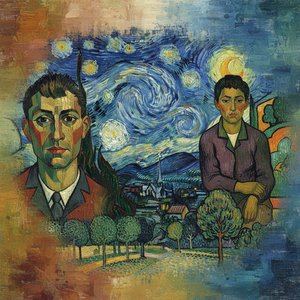
How do impressionism and post-impressionism differ from each other?
Impressionism focuses on capturing the immediate, fleeting sensation of light and movement in nature. Post-Impressionism emerged as a reaction against this naturalism, moving away from objective light depiction to emphasize abstract qualities, symbolic content, and the artist's internal emotional state or structural form.
Impressionism was a 19th-century movement prominent during the 1870s and 1880s. It originated with a group of Paris-based artists who sought to recreate the sensation in the eye rather than delineating fine details. This style served as a precursor to later movements like Fauvism and Cubism.
Post-Impressionism developed roughly between 1886 and 1905. It is a predominantly French movement that expanded the boundaries of art through several sub-styles, including:
- Neo-Impressionism
- Symbolism
- Cloisonnism
- Synthetism
- Les Nabis
What are the primary stylistic differences between Impressionism and Post-Impressionism?
Impressionism uses loose, visible brushstrokes and open compositions to capture movement and atmosphere. Post-Impressionism employs a much wider range of techniques, focusing on structure, emotion, and symbolism rather than just the accurate depiction of a scene's naturalistic appearance.
Technically, Impressionists often applied opaque paint to light-colored grounds and avoided thin glazes. They focused on the play of light and the reflection of colors between objects. Many artists even worked in the evening to capture effets de soir.
Post-Impressionists moved toward more deliberate or expressive applications. For example:
- Paul Cézanne used color modulation and exploratory brushstrokes to build structure.
- Vincent van Gogh used swirling impasto and vibrant colors to convey his state of mind.
- Georges Seurat utilized precise dots in a style known as Pointillism.
How did the use of light and color change between these two movements?
Impressionism prioritizes the perception of natural light and its changing qualities over time. Post-Impressionism departs from this naturalistic approach, using color more expressively and symbolically to convey feelings, ideas, or the underlying structure of the subject.
Impressionists were obsessed with how light interacts with the environment. They sought to capture the immediate visual experience of a landscape or street scene. This approach offered a subjective alternative to photography by focusing on the subjectivity of the image.
Post-Impressionists used color to communicate the inner world. Instead of just reflecting the light hitting an object, they used bold, often non-naturalistic palettes. This shift allowed artists to move from depicting what they saw to depicting how they felt about what they saw.
Which key artists define each movement?
 Camille Pissarro
Explore Camille Pissarro's art: Impressionist & Neo-Impressionist landscapes and scenes of daily life. A pivotal figure influencing Van Gogh, Cézanne & more.
Impressionism was driven by a group of Paris-based artists who revolutionized the 19th-century art scene. Post-Impressionism emerged as these artists expanded upon those foundations, moving toward more structured or symbolic expressions.
The transition between these eras is marked by the evolution of specific techniques and philosophies. Key figures include:
- Paul Cézanne: Often called the father of Post-Impressionism, known for his work Interior with Two Women and a Child.
- Vincent van Gogh: Famous for his emotive brushwork, seen in works like Starry Night (Orsay) at the Musée d'Orsay.
- Georges Seurat: A leader in Neo-Impressionism and Pointillism.
- Paul Gauguin: A central figure in the Post-Impressionist movement.
Even some Impressionists, like Camille Pissarro, experimented with these newer ideas, investigating Pointillism between the mid-1880s and early 1890s.
Frequently asked questions
When did Post-Impressionism develop?
Post-Impressionism developed between 1886 and 1905.
Who is the father of Post-Impressionism?
Paul Cézanne is known as the father of Post-Impressionism.
Who developed the technique of Pointillism?
Georges Seurat developed the technique of Pointillism.
What is a Post-Impressionist work by Vincent van Gogh?
Starry Night (Orsay) is a Post-Impressionist work by Vincent van Gogh.
Learn more
- 1853 – 1890Vincent Willem Van Gogh Artist PageExplore high-quality oil reproductions of Van Gogh's iconic post-impressionist works.
- 1859 – 1891Georges Seurat Artist PageOrder professional reproductions of Seurat's distinctive pointillist masterpieces.
- 1839 – 1906Paul Cézanne Artist PageBrowse our catalog of Cézanne's structural post-impressionist oil paintings.