The Florentine Origins & Early Apprenticeship of Benvenuto Cellini
Mannerism is a style in European art that emerged in the later years of the Italian High Renaissance around 1520, spreading by about 1530 and lasting until about the end of the 16th century in Italy, when the Baroque style largely replaced it. Northe...
Benvenuto Cellini, a name synonymous with the audacious spirit of the High Renaissance, was born into a Florence brimming with artistic ferment in 1500. His lineage – Giovanni Cellini, a musician and instrument maker, and Maria Lisabetta Granacci – foreshadowed a life steeped in creativity, though not without its inherent tensions. While his father initially steered him towards music, the young Benvenuto possessed an undeniable inclination toward the tangible, the malleable world of metal. This nascent passion led to an apprenticeship with Antonio di Sandro, known as Marcone, a goldsmith whose workshop served as Cellini’s initial crucible. Florence at this time was a republic still pulsating with the energy of the Medici, yet also fraught with political instability and simmering rivalries – a backdrop that would profoundly shape Cellini's character and career. His early years were marked not only by technical training but also by youthful exuberance bordering on recklessness; banishments to Siena and Bologna followed swiftly, experiences that honed his skills while simultaneously instilling a sense of self-reliance and a willingness to navigate the treacherous currents of Renaissance society.
Cellini’s Roman Years: Patronage, Bravery, and Artistic Innovation
 Francis I, King of France
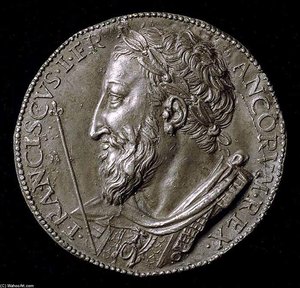
Admire Benvenuto Cellini’s iconic 'Francis I' – a stunning Renaissance bronze portrait showcasing exquisite detail & classical elegance. A timeless masterpiece for art collectors.
Rome, in the 1520s, beckoned as a magnet for ambitious artists. Cellini's arrival coincided with a period of papal grandeur under Clement VII, a potentate eager to leave an indelible mark on the city through monumental art. It was here that Cellini truly began to flourish, securing commissions for silver caskets, candlesticks, and medallions – works that quickly garnered him recognition for their exquisite detail and refined craftsmanship. However, his Roman sojourn wasn’t solely defined by artistic triumphs. The Sack of Rome in 1527 proved a pivotal moment, transforming Cellini into something of a local hero. Accounts from his autobiography detail acts of remarkable bravery, including the alleged shooting of Philibert of Châlon, Prince of Orange, though these narratives are often imbued with self-aggrandizement. This period cemented his reputation as a man of action, capable of defending both his art and his honor – qualities highly valued in the volatile Roman court. His skill extended beyond goldsmithing; he became proficient in casting bronze, laying the groundwork for his future masterpieces.
Perseus with the Head of Medusa: A Renaissance Masterpiece Examined
 Perseus
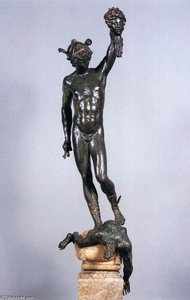
Admire Benvenuto Cellini’s ‘Perseus,’ a dramatic bronze sculpture from 1540 depicting the mythological hero's triumph. Explore its intricate details & Renaissance artistry.
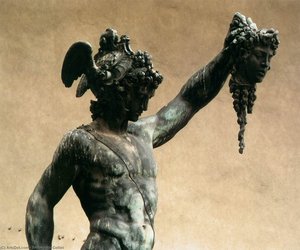
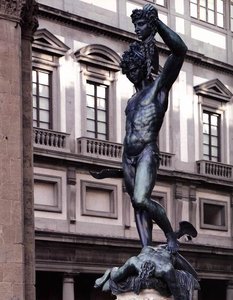
Commissioned by Cosimo I de’ Medici, Duke of Florence, Perseus with the Head of Medusa, completed in 1540, stands as Cellini's most celebrated sculpture. More than a mere depiction of mythological triumph, it embodies the complex aesthetic ideals of Mannerism. The bronze figure is not simply heroic; it’s imbued with a dynamic tension, a sense of coiled energy barely contained. The anatomical precision, honed through years of study and practice, is evident in every muscle and sinew. But it's the psychological intensity that truly sets this work apart – Perseus’s gaze, both triumphant and haunted, reflects the brutal act he has just committed. The meticulous detailing extends to Medusa’s severed head, a chillingly realistic representation of horror. The sculpture’s base, adorned with allegorical figures, further enhances its symbolic weight, representing the virtues of Cosimo I's reign. It is a testament to Cellini’s mastery of bronze casting – a technique he considered his greatest achievement – and remains an iconic symbol of Florentine power.
Beyond Sculpture: Cellini as Goldsmith, Designer, and Courtier
 Benvenuto Cellini
Benvenuto Cellini (1500-1571): Master goldsmith & sculptor of the Mannerist era, famed for 'Perseus' & the exquisite Cellini Salt Cellar. Explore his art & life!
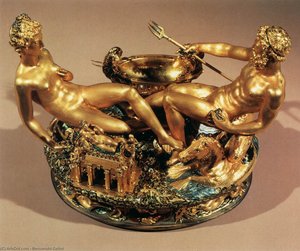
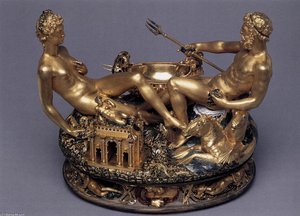
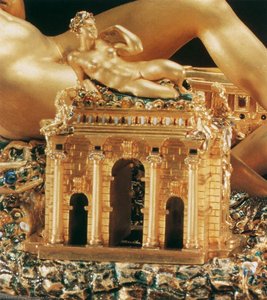
While Perseus often dominates discussions of Cellini's oeuvre, it’s crucial to recognize the breadth of his artistic talents. He was not merely a sculptor but a versatile goldsmith, designer, and even an architect. The Cellini Salt Cellar, created for King Francis I of France, exemplifies his unparalleled skill in precious metalwork. This elaborate piece, depicting Vulcan, Neptune, and Ceres, is a miniature world unto itself, showcasing intricate details and allegorical symbolism. His designs extended to weaponry – swords, daggers, and firearms – often embellished with elaborate ornamentation. Cellini’s success also hinged on his ability to navigate the complex social landscape of Renaissance courts. He cultivated relationships with powerful patrons, offering not only artistic expertise but also a captivating personality and a willingness to engage in political intrigue. His time at Fontainebleau under Francis I, though marked by occasional conflicts, allowed him to showcase his talents on an international stage.
The Autobiography: A Window into the Mind of a Renaissance Artist & His Times
Cellini’s Autobiography, begun in 1558 while imprisoned, is arguably as significant as his artistic creations. It offers a uniquely candid and often boastful account of his life, providing invaluable insights into the daily realities of a Renaissance artist. The work is characterized by its unflinching honesty – Cellini readily admits to acts of violence, jealousy, and ambition. It’s a vibrant tapestry of anecdotes, revealing not only his artistic processes but also his personal beliefs, rivalries, and mystical experiences. While often criticized for its self-promotion, the Autobiography remains an essential document for understanding the Renaissance mindset – the emphasis on individual achievement, the importance of patronage, and the constant struggle for recognition. It’s a testament to Cellini's literary skill as well as his artistic prowess.
Cellini’s Legacy: Mannerism, Artistic Influence, and Enduring Appeal
Benvenuto Cellini stands as a pivotal figure in the transition from High Renaissance classicism to the more dynamic and emotionally charged style of Mannerism. His emphasis on elegance, virtuosity, and psychological intensity profoundly influenced subsequent generations of artists. While his direct pupils were few, his techniques and aesthetic principles resonated throughout Europe. The impact of Perseus, in particular, can be seen in numerous sculptures that followed, inspiring artists to explore new forms of dynamism and expressiveness. Today, Cellini’s works continue to captivate audiences with their technical brilliance and emotional depth. His legacy extends beyond the realm of art history; he remains a symbol of Renaissance individualism – a man who dared to forge his own path, driven by ambition, talent, and an unwavering belief in his own genius. For collectors, acquiring a work attributed to Cellini—or even a piece inspired by his style—represents not merely ownership of an exquisite object but a connection to the audacious spirit of one of history’s most remarkable artists. AllPaintingsStore.com offers discerning patrons access to high-quality reproductions and expert guidance in navigating the world of Renaissance art, ensuring that the legacy of Cellini continues to inspire for generations to come.