- Home

- Oil Painting Reproduction
- Benvenuto Cellini
- Francis I, King of France

 Buy print
 Send
Send Share
Share
 Details

 Download
 Similars
 X-Ray
X-Ray Diaporama
Francis I, King of France


 Read More
Hand Made Oil Reproduction
Hand-painted oil on canvas in your size and frame, made to order by our artists.




P118B $10

P118H $10

P118W $10

P438Z $10

P508JH $12

P508YH $12

P805H $10

P805Z $10

P919BZ $10

P919G $10

P919XJ $10

P959ZH $10

P968JZ $12

W106C $8

W218G $10

W218JH $8

W218Y $10

W307PJ $10

W316G $10

W316PJ $8

W316Y $10

W398PJ $8

W4111J $10

W500HY $15

W500JH $15

W692G $12

W849H $8

W940BG $15

W953PJ $8




Pick from our preset sizes that match the artwork's original proportions.

You may enter your own dimensions to fit a specific frame or space. If your selected size does not match the original image's proportions, we will either crop the artwork or extend the painting with additional hand-painted elements. A digital mockup will be sent for your approval before production begins.
Please note that the on-screen preview does not reflect the actual cropping or extension. Only the mockup will accurately show the final composition.
While custom sizes are available, we recommend selecting a dimension from the predefined list to preserve the original proportions.
After order, AllPaintingsStore.com team will email client for instructions and provide a mockup preview
Worldwide Delivery () in 3/4 weeks instead of standard 5 weeks. (16 July). No compromise on quality.

Free Worldwide Express Shipping

High-Quality Linen Canvas

Full Shipping Insurance

Customs Tax Refund Guarantee

True Color Matching Guarantee

60-Day Return Policy (Defects Only)

100% Money-Back Guarantee

Bulk Discount Offer
 Glass option is only available in size under 110 CM

Francis I, King of France
Reproduction Medium
Reproduction Size
-


Total Price
-
Artwork Description
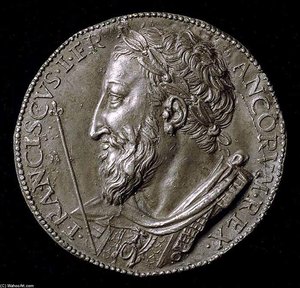
A Regal Portrait Embodied in Bronze: Benvenuto Cellini’s Francis I
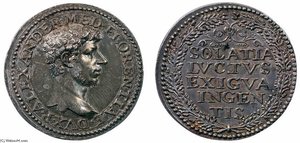
The image captures the commanding presence of Francis I, King of France, rendered with breathtaking precision by Benvenuto Cellini – a sculptor who epitomized the Mannerist style. This bronze portrait transcends mere representation; it's an embodiment of Renaissance grandeur and intellectual ambition, meticulously crafted to honor the monarch’s legacy. The medal itself serves as a testament to Cellini’s skill and artistic vision.Detailed Examination: Composition & Technique
The focal point is undoubtedly the bust of Francis I presented in profile, showcasing remarkable anatomical accuracy—a hallmark of Cellini's approach. His gaze directs upwards, conveying seriousness and contemplation, while the laurel wreath atop his head symbolizes victory and imperial authority. Held firmly in his left hand is a staff or scepter – a potent emblem of royal power and divine sanction. The sculptor skillfully employs chiaroscuro, manipulating light and shadow to sculpt a three-dimensional effect that brings the figure vividly to life. The bronze casting process guarantees a smooth, polished surface, subtly highlighting textural variations that reveal Cellini’s meticulous attention to detail—individual strands of hair, wrinkles etched into his skin, and the folds of his garment are rendered with astonishing realism.Historical Context & Symbolism
Created in 1537 during Francis I's reign, this portrait reflects the artistic fervor of the Renaissance period, specifically its fascination with classical ideals. Cellini’s work draws inspiration from Roman sculptures, prioritizing idealized beauty and conveying dignity through posture and expression. The laurel wreath isn’t merely decorative; it represents Francis I’s triumph over rivals and his affiliation with the imperial tradition—a deliberate allusion to Rome's past glory. Furthermore, the inclusion of a horseman galloping to the right symbolizes military prowess and ambition – qualities crucial for securing France’s position on the European stage during Cellini’s time.Beyond Representation: Emotional Impact & Artistic Legacy
More than just an image of a king, this bronze sculpture speaks to themes of leadership, intellect, and artistic excellence. Cellini's masterful technique elevates it beyond mere likeness, transforming it into a timeless masterpiece that continues to inspire admiration centuries later. The dark background serves to accentuate the sculptural form, emphasizing its solidity and permanence—a visual reminder of Cellini’s enduring contribution to Renaissance art. Consider commissioning a high-quality reproduction to bring this iconic portrait into your home or studio – an investment in beauty and artistic heritage.Related Artworks




Artist Biography
Benvenuto Cellini: A Renaissance Polymath
- Born: Florence, Italy (November 1, 1500)
- Died: February 13, 1571
Benvenuto Cellini was a remarkable figure of the Italian Renaissance, renowned as an accomplished goldsmith, sculptor, draftsman, soldier, musician, and writer. His multifaceted talents and flamboyant personality are vividly captured in his celebrated autobiography, considered a significant literary work alongside his artistic achievements. He embodies the spirit of Mannerism, a period following the High Renaissance characterized by dramatic flair and stylistic complexity.
Early Life and Artistic Training
Born into a family with musical inclinations – his father was a musician and instrument maker – Cellini initially showed promise in music. However, at fifteen, he passionately pursued a career as a goldsmith, convincing his reluctant father to apprentice him to Antonio di Sandro (known as Marcone). This marked the beginning of his formal artistic training. His early years were not without incident; at sixteen, he became embroiled in an affray with companions, leading to banishment from Florence and a period working in Siena under goldsmith Fracastoro.
Major Artistic Works and Style
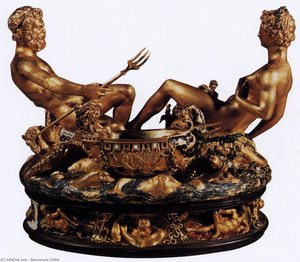
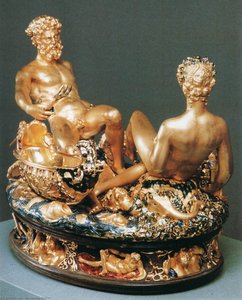
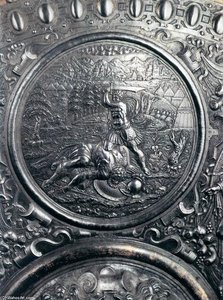
- Salt Cellar: This elaborate silver masterpiece, commissioned by King Francis I of France, is arguably his most famous work. It showcases intricate detail and dynamic figures, now housed at the Kunsthistorisches Museum in Vienna.
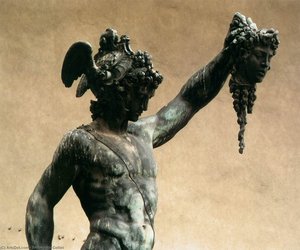
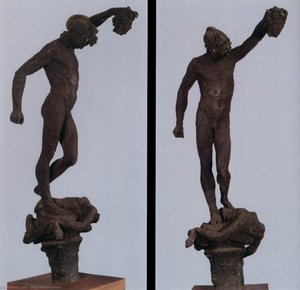
- Perseus with the Head of Medusa: A bronze sculpture depicting Perseus triumphantly holding the severed head of Medusa, this piece exemplifies Cellini’s mastery of form and dramatic composition. It stands as a testament to his skill in capturing movement and emotion in metal.
- Gold Medallion of Leda and the Swan: Created for Gonfaloniere Gabriello Cesarino, this medallion demonstrates Cellini's ability to blend classical mythology with exquisite craftsmanship.
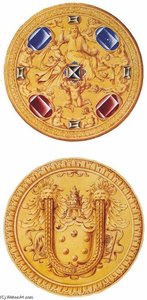
- Project for a Seal: A drawing held at the British Museum, showcasing his design skills.
Cellini’s style is characterized by its dynamism, realism, and attention to detail. He drew inspiration from classical antiquity and Michelangelo's powerful figures, but infused his work with a distinctly Mannerist sensibility – elongated forms, exaggerated poses, and a sense of theatricality.
Life Beyond Art: Soldier, Musician, and Autobiographer
Cellini’s life extended far beyond the workshop. He served as a soldier during sieges, claiming to have played a crucial role in defending Rome against imperial forces. He was also an accomplished musician, playing the cornett and flute at papal court. However, it is his autobiography that truly sets him apart.
- The Life of Benvenuto Cellini: This candid and often boastful account provides invaluable insights into Renaissance art, culture, and society. It’s a compelling narrative filled with anecdotes about patrons, rivals, and personal adventures, offering a unique perspective on the era.
His autobiography is not merely a recounting of events; it's a carefully constructed self-portrait designed to showcase his talents and justify his actions. While sometimes unreliable due to Cellini’s own biases, it remains an essential primary source for understanding Renaissance life.
Legacy and Historical Significance
Benvenuto Cellini died in Florence in 1571, leaving behind a legacy as one of the most important artists of Mannerism. His technical skill, artistic innovation, and captivating autobiography continue to inspire artists and art enthusiasts alike. He represents the quintessential Renaissance ideal – a polymath skilled in multiple disciplines, driven by ambition, and unafraid to express his individuality. His works are celebrated for their beauty, craftsmanship, and dramatic power, solidifying his place as a pivotal figure in Western art history.

Benvenuto Cellini
1500 - 1571 , Italy
Quick Facts
- Artistic Movement Or Style: Mannerism
- Artists Who Influenced This Artist: ['Michelangelo']
- Date Of Birth: November 1, 1500
- Date Of Death: February 13, 1571
- Full Name: Benvenuto Cellini
- Nationality: Italian
- Notable Artworks:
- Perseus with the Head of Medusa
- Cellini Salt Cellar
- Place Of Birth: Florence, Italy
Related Articles

The Flourishing of Humanism: A Comprehensive Exploration of the Italian Renaissance Art Movement
Explore the Italian Renaissance! Discover humanist ideals, iconic masterpieces by Leonardo, Michelangelo & Raphael, and lasting artistic innovations. A comprehensive guide for art enthusiasts.

The Digital Portrait Renaissance: Transforming Personal Photography into Timeless Oil Paintings Through Artistic Reproduction
Transform your cherished photos into timeless oil paintings with AllPaintingsStore's expert artists. Museum-quality reproductions & custom portraits, crafted to last a lifetime. Discover the art of personal legacy.
Renaissance Humanism's Greatest Art: 10 Masterpieces for Your Home
Explore 10 Renaissance Humanism masterpieces by Leonardo da Vinci, Michelangelo & Raphael. Discover the stories behind these iconic paintings & sculptures and bring timeless art into your home with museum-quality reproductions from AllPaintingsStore.com. Explore the full collection online!

Titian: Innovation, Technique & the Venetian Renaissance Portrait Tradition
Explore the revolutionary techniques & enduring legacy of Titian, the master of Venetian Renaissance portraiture. Discover insights for collectors & appreciate his impact on art history.

From Renaissance Memes to Viral Portraits: The Rise of Customized Classical Paintings in the Age of Instagram
Discover the captivating world of customized classical paintings! Explore how memes sparked a renaissance & learn to commission your own personalized portrait. Expert art consultation & museum-quality reproductions at AllPaintingsStore.