- Home

- Oil Painting Reproduction
- Benvenuto Cellini
- Medal of Alessandro de' Medici

 Buy print
 Send
Send Share
Share
 Details

 Download
 Similars
 X-Ray
X-Ray Diaporama
Medal of Alessandro de' Medici
 Acrylic On Canvas
- WallArt
- Renaissance
 1530
1530 3.0 x 3.0 cm
 Museo Nazionale del Bargello
 Read More
Hand Made Oil Reproduction
Hand-painted oil on canvas in your size and frame, made to order by our artists.




P118B $10

P118H $10

P118W $10

P438Z $10

P508JH $12

P508YH $12

P805H $10

P805Z $10

P919BZ $10

P919G $10

P919XJ $10

P959ZH $10

P968JZ $12

W106C $8

W218G $10

W218JH $8

W218Y $10

W307PJ $10

W316G $10

W316PJ $8

W316Y $10

W398PJ $8

W4111J $10

W500HY $15

W500JH $15

W692G $12

W849H $8

W940BG $15

W953PJ $8




Pick from our preset sizes that match the artwork's original proportions.

You may enter your own dimensions to fit a specific frame or space. If your selected size does not match the original image's proportions, we will either crop the artwork or extend the painting with additional hand-painted elements. A digital mockup will be sent for your approval before production begins.
Please note that the on-screen preview does not reflect the actual cropping or extension. Only the mockup will accurately show the final composition.
While custom sizes are available, we recommend selecting a dimension from the predefined list to preserve the original proportions.
After order, AllPaintingsStore.com team will email client for instructions and provide a mockup preview
Worldwide Delivery () in 3/4 weeks instead of standard 5 weeks. (16 July). No compromise on quality.

Free Worldwide Express Shipping

High-Quality Linen Canvas

Full Shipping Insurance

Customs Tax Refund Guarantee

True Color Matching Guarantee

60-Day Return Policy (Defects Only)

100% Money-Back Guarantee

Bulk Discount Offer
 Glass option is only available in size under 110 CM

Medal of Alessandro de' Medici
Reproduction Medium
Reproduction Size
-


Total Price
-
Artwork Description
The Gilded Echoes of Power: Benvenuto Cellini's ‘Medal of Alessandro de’ Medici’
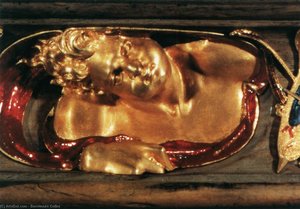
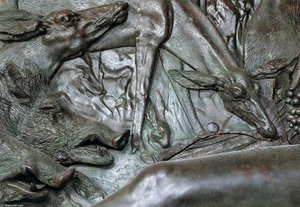
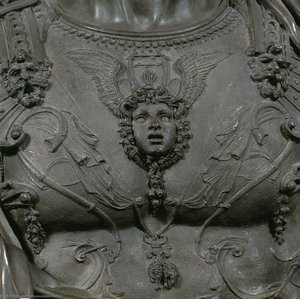
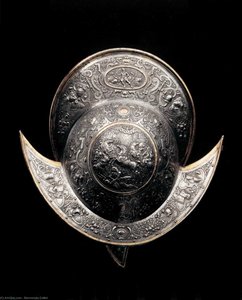
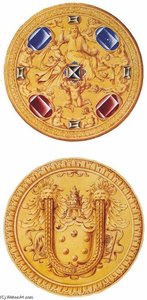
Benvenuto Cellini’s “Medal of Alessandro de’ Medici,” a small yet profoundly resonant bronze piece from 1530, isn’t merely a commemorative coin; it’s a meticulously crafted microcosm of Renaissance ambition, artistic prowess, and the complex politics of Florence. Holding this miniature sculpture is akin to grasping a fragment of history – a tangible link to a turbulent era defined by Medici power struggles, republican ideals, and the flamboyant genius of one of its most celebrated artists. The medal's diminutive size belies its immense significance; it’s a testament to Cellini’s unparalleled skill in capturing both the outward appearance of authority and the subtle nuances of human character within a remarkably constrained format.
The bronze itself, darkened with age and bearing the patina of countless years, speaks volumes. It whispers tales of workshops filled with the clang of hammers and the scent of molten gold, of meticulous polishing and painstaking detail. The surface isn’t smooth; it's deliberately textured, a deliberate rejection of idealized perfection in favor of an honest representation of craftsmanship – a hallmark of Cellini’s style. The choice of bronze, durable and capable of capturing intricate details, reflects the Medici family’s commitment to lasting legacy and their desire for symbols that would endure through generations.
A Portrait of Power: Symbolism and Historical Context
The obverse of the medal presents a striking portrait of Alessandro de’ Medici, the young Duke of Florence. He is depicted in profile, his gaze direct and commanding – an image designed to project strength, authority, and a sense of divine right. The Latin inscriptions surrounding the bust are crucial; they invoke classical virtues like “Solatia” (peace), “Luctvus” (victory), “Exigva” (demand), and “Ingenios” (ingenuity) – qualities essential for a ruler to embody. These aren’t simply decorative phrases; they represent the core tenets of Medici governance, emphasizing stability, military success, and intellectual leadership.
The reverse side offers a more intricate visual narrative. A complex floral design unfolds, interwoven with further Latin text – “Sol,” “Luna,” “Stella” (Sun, Moon, Star) – suggesting the divine origins of Medici rule. The inclusion of these celestial symbols reinforces the idea that Alessandro’s authority stemmed from a higher power, legitimizing his position within the Florentine political landscape. The medal wasn't just a reward for service; it was a declaration of legitimacy, a visual assertion of the Medici dynasty’s claim to the throne.
Cellini’s Masterful Technique: Gold, Enamel, and the Art of Illusion
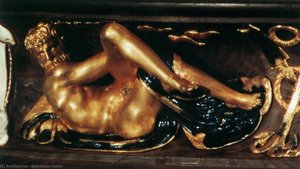
While cast in bronze, the “Medal of Alessandro de’ Medici” is far more than a simple metalwork. Cellini employed a revolutionary technique – layering thin sheets of gold over the bronze to create an illusion of solid gold. This ‘gilded’ effect was achieved through meticulous hammering and polishing, transforming the base metal into something that shimmered with opulent brilliance. The use of vitreous enamel further enhanced this illusion, adding vibrant colors and intricate details to the floral designs.
Cellini's skill isn't merely technical; it’s profoundly expressive. He understood how light interacts with surface textures, creating a sense of depth and movement within the small confines of the medal. The raised areas catch the light, while the recessed areas create shadows, adding to the three-dimensional effect. This masterful manipulation of light and shadow is what elevates the “Medal of Alessandro de’ Medici” from a mere commemorative object to a captivating work of art.
A Legacy in Miniature: Reproduction and Appreciation
Today, reproductions of this extraordinary medal offer collectors and enthusiasts alike the opportunity to experience Cellini's genius firsthand. AllPaintingsStore.com meticulously recreates the original’s intricate details, capturing the subtle nuances of texture, color, and light. When viewing a high-quality reproduction, one can still appreciate the sheer artistry involved in its creation – a testament to Cellini’s unparalleled skill and his enduring legacy as one of the Renaissance's greatest masters.
Related Artworks





Artist Biography
Benvenuto Cellini: A Renaissance Polymath
- Born: Florence, Italy (November 1, 1500)
- Died: February 13, 1571
Benvenuto Cellini was a remarkable figure of the Italian Renaissance, renowned as an accomplished goldsmith, sculptor, draftsman, soldier, musician, and writer. His multifaceted talents and flamboyant personality are vividly captured in his celebrated autobiography, considered a significant literary work alongside his artistic achievements. He embodies the spirit of Mannerism, a period following the High Renaissance characterized by dramatic flair and stylistic complexity.
Early Life and Artistic Training
Born into a family with musical inclinations – his father was a musician and instrument maker – Cellini initially showed promise in music. However, at fifteen, he passionately pursued a career as a goldsmith, convincing his reluctant father to apprentice him to Antonio di Sandro (known as Marcone). This marked the beginning of his formal artistic training. His early years were not without incident; at sixteen, he became embroiled in an affray with companions, leading to banishment from Florence and a period working in Siena under goldsmith Fracastoro.
Major Artistic Works and Style
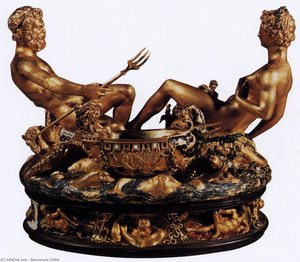
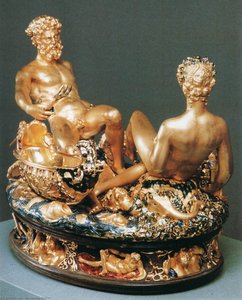
- Salt Cellar: This elaborate silver masterpiece, commissioned by King Francis I of France, is arguably his most famous work. It showcases intricate detail and dynamic figures, now housed at the Kunsthistorisches Museum in Vienna.
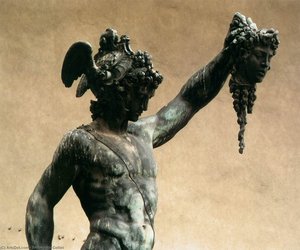
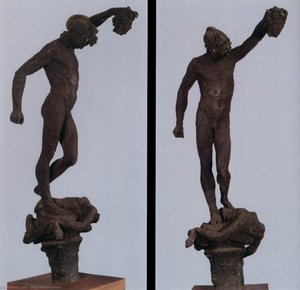
- Perseus with the Head of Medusa: A bronze sculpture depicting Perseus triumphantly holding the severed head of Medusa, this piece exemplifies Cellini’s mastery of form and dramatic composition. It stands as a testament to his skill in capturing movement and emotion in metal.
- Gold Medallion of Leda and the Swan: Created for Gonfaloniere Gabriello Cesarino, this medallion demonstrates Cellini's ability to blend classical mythology with exquisite craftsmanship.
- Project for a Seal: A drawing held at the British Museum, showcasing his design skills.
Cellini’s style is characterized by its dynamism, realism, and attention to detail. He drew inspiration from classical antiquity and Michelangelo's powerful figures, but infused his work with a distinctly Mannerist sensibility – elongated forms, exaggerated poses, and a sense of theatricality.
Life Beyond Art: Soldier, Musician, and Autobiographer
Cellini’s life extended far beyond the workshop. He served as a soldier during sieges, claiming to have played a crucial role in defending Rome against imperial forces. He was also an accomplished musician, playing the cornett and flute at papal court. However, it is his autobiography that truly sets him apart.
- The Life of Benvenuto Cellini: This candid and often boastful account provides invaluable insights into Renaissance art, culture, and society. It’s a compelling narrative filled with anecdotes about patrons, rivals, and personal adventures, offering a unique perspective on the era.
His autobiography is not merely a recounting of events; it's a carefully constructed self-portrait designed to showcase his talents and justify his actions. While sometimes unreliable due to Cellini’s own biases, it remains an essential primary source for understanding Renaissance life.
Legacy and Historical Significance
Benvenuto Cellini died in Florence in 1571, leaving behind a legacy as one of the most important artists of Mannerism. His technical skill, artistic innovation, and captivating autobiography continue to inspire artists and art enthusiasts alike. He represents the quintessential Renaissance ideal – a polymath skilled in multiple disciplines, driven by ambition, and unafraid to express his individuality. His works are celebrated for their beauty, craftsmanship, and dramatic power, solidifying his place as a pivotal figure in Western art history.

Benvenuto Cellini
1500 - 1571 , Italy
Quick Facts
- Artistic Movement Or Style: Mannerism
- Artists Who Influenced This Artist: ['Michelangelo']
- Date Of Birth: November 1, 1500
- Date Of Death: February 13, 1571
- Full Name: Benvenuto Cellini
- Nationality: Italian
- Notable Artworks:
- Perseus with the Head of Medusa
- Cellini Salt Cellar
- Place Of Birth: Florence, Italy
Related Articles
Benvenuto Cellini: Renaissance Goldsmith, Sculptor & Master of Self-Fashioning
Explore the life & art of Benvenuto Cellini, Renaissance goldsmith & sculptor. Discover his iconic 'Perseus,' masterful techniques, and enduring legacy – a collector's essential guide.

The Renaissance Reimagined: Art, Humanism & Cultural Transformation (14th–16th Centuries)
Explore the Renaissance! Discover key artists like Leonardo & Michelangelo, the rise of Humanism, and groundbreaking techniques such as chiaroscuro. A comprehensive guide for art enthusiasts.

The Enduring Legacy of Bronze Sculpture: History, Techniques & Contemporary Interpretations
Explore the rich history & enduring appeal of bronze sculpture. Learn about casting techniques, iconic artists, collecting tips, & contemporary interpretations. Expert insights for discerning art collectors.
Early Renaissance Masters: 10 Paintings That Changed Art History |
Journey through the Early Renaissance! Explore 10 iconic paintings by Botticelli, Leonardo da Vinci & Michelangelo. Discover their stories, techniques & lasting impact. Find museum-quality art reproductions and elevate your home decor with .
Uffizi's 25 Masterpieces: Renaissance Art & Timeless Decor Inspiration
Journey through the Uffizi Gallery's 25 most iconic Renaissance artworks! Explore Botticelli, Leonardo da Vinci & Michelangelo’s masterpieces. Find museum-quality art reproductions and curated decor ideas to bring timeless Italian beauty into your home. Discover all masterpieces on AllPaintingsStore.com