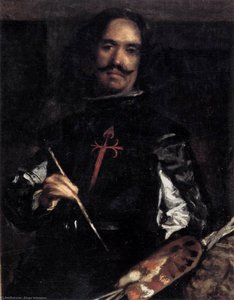

The Rise of Velázquez: Seville Origins & Early Influences
Diego Rodríguez de Silva y Velázquez, born in Seville in 1599, emerged from a city brimming with artistic energy and religious fervor. While the exact details of his early training remain somewhat elusive, it is known he apprenticed under Francisco Pacheco, a respected artist and humanist scholar. This formative period wasn’t merely about mastering brushstrokes; it was an immersion into the intellectual currents of the time – classical literature, philosophy, and the burgeoning scientific understanding of perspective. Seville itself played a crucial role, its vibrant street life and dramatic polychrome sculptures leaving an indelible mark on the young artist's eye. Early works like Old Woman Frying Eggs (1618) demonstrate a startling realism for their time, a willingness to depict everyday scenes with unflinching honesty – a quality that would become a hallmark of his style. These early *bodegones*, or kitchen scenes, weren’t simply still lifes; they were studies in light and texture, foreshadowing the complex compositions to come. The influence of Caravaggio, though indirect—likely through copies circulating in Seville—is also discernible in this period, particularly in the dramatic use of tenebrism, a technique employing strong contrasts between light and dark.
A Court Painter's Life: Philip IV, Patronage & The Evolution of Style
In 1623, Velázquez journeyed to Madrid, seeking opportunity at the court of King Philip IV. This marked a pivotal shift in his career, transforming him from a promising provincial artist into the official portraitist of one of Europe’s most powerful monarchs. The patronage of Philip IV was not merely financial; it afforded Velázquez access to an exclusive world – the intimate lives of the royal family and the complex political machinations of the Spanish court. His initial commissions focused on portraits, meticulously capturing the likenesses of courtiers and officials. However, Velázquez wasn’t content with mere representation. He sought to convey not just *what* his subjects looked like, but also *who* they were – their character, status, and inner lives. Over time, his style evolved, moving away from the rigid formality of earlier court portraiture towards a more relaxed and naturalistic approach. He became increasingly interested in depicting the psychological nuances of his sitters, employing subtle gestures and expressions to reveal their personalities. This period also saw him experimenting with composition and perspective, laying the groundwork for his later masterpieces.
Las Meninas Decoded: Innovation in Composition and Perspective
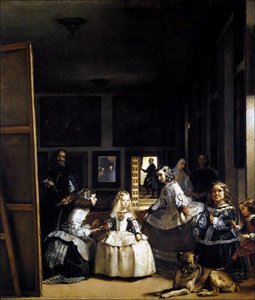
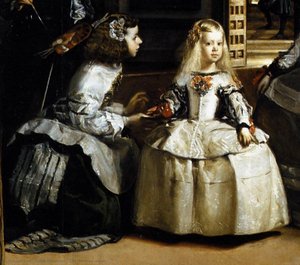
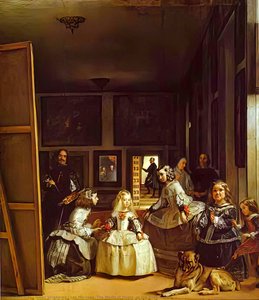
Las Meninas (1656) stands as perhaps the most analyzed painting in art history—and rightfully so. It’s not simply a portrait of Infanta Margarita; it's a complex meditation on representation, perception, and the role of the artist. The scene unfolds within Velázquez’s studio at the Alcázar Palace, depicting the Infanta surrounded by her maids of honor (the *meninas*), dwarfs, and other attendants. Philip IV and Queen Mariana are reflected in a mirror at the back of the room, suggesting they are posing for Velázquez himself—who is depicted painting the very scene we are witnessing. This self-portrait within a portrait creates a dizzying interplay of perspectives, blurring the boundaries between reality and illusion. The innovative composition, with its dynamic arrangement of figures and masterful use of light and shadow, draws the viewer into the space, making them feel as though they are present in the studio alongside the royal family. The painting challenges traditional notions of portraiture, elevating the status of the artist and questioning the nature of seeing itself.
Beyond Portraiture: Velázquez’s Genre Scenes & Religious Works
While celebrated for his portraits, Velázquez's artistic range extended far beyond the confines of courtly representation. His genre scenes, such as The Lunch (c. 1650), offer intimate glimpses into everyday life—depicting humble tavern keepers and their patrons with a dignity rarely afforded to commoners in art of that era. These works demonstrate his remarkable ability to capture the fleeting moments of human interaction, imbuing even the most mundane scenes with a sense of psychological depth. His religious paintings, though fewer in number, are equally compelling—characterized by a quiet intensity and profound spirituality. Works like La dama del abanico (c. 1638) showcase his mastery of texture and light, creating an atmosphere of contemplative beauty. These lesser-known works reveal a multifaceted artist deeply engaged with the world around him, capable of capturing both the grandeur of royal life and the simple dignity of ordinary people.
Velázquez’s Enduring Legacy: Impact on Realism & Modern Art
The impact of Diego Velázquez on subsequent generations of artists is immeasurable. His revolutionary approach to portraiture—his emphasis on realism, psychological depth, and innovative composition—profoundly influenced the development of Western art. In the 19th century, artists like Gustave Courbet and Édouard Manet drew inspiration from his unflinching honesty and rejection of academic conventions. Perhaps most notably, Velázquez’s work captivated Pablo Picasso, who created a series of variations on Las Meninas in 1957, demonstrating the painting's enduring power to inspire artistic experimentation. His influence extends beyond painting as well; Francis Bacon, known for his emotionally charged portraits, also acknowledged a debt to Velázquez’s ability to capture the complexities of the human condition. His legacy continues to resonate today, reminding us of the transformative power of art and the importance of seeing—truly *seeing*—the world around us.
Collecting Velázquez Today: Provenance, Value & Investment Potential
Acquiring a work by Diego Velázquez is an exceedingly rare opportunity. The vast majority of his paintings remain in royal collections, particularly at the Museo del Prado in Madrid. Works that do appear on the market command astronomical prices—often exceeding tens of millions of dollars. Provenance, or the documented history of ownership, is paramount when considering a Velázquez acquisition. A clear and unbroken chain of ownership adds significantly to a painting’s value and authenticity. Beyond monetary investment, owning a Velázquez represents an opportunity to connect with one of the greatest artists in history—to possess a tangible piece of the Spanish Golden Age. The enduring appeal of his work ensures its continued appreciation as a cultural treasure, making it not only a sound financial investment but also a source of profound aesthetic pleasure. For those seeking to engage with Velázquez’s artistry without acquiring an original, high-quality reproductions—available through AllPaintingsStore.com—offer a compelling alternative, allowing collectors to experience the beauty and innovation of his work firsthand.