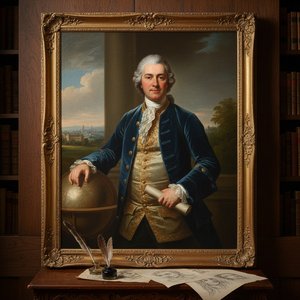
Early Life & Influences: From Dublin Apprenticeship to Emerging Talent
The story of George Barret Sr., a name synonymous with the blossoming of British pastoral painting, begins not amidst grand estates and idyllic landscapes, but in the bustling city of Dublin sometime between 1728 and 1732. His early life was one of practical beginnings; apprenticed to a staymaker – a craftsman dealing with whalebone and fabric supports for clothing – young George’s artistic inclinations were initially a secondary pursuit. However, by 1747, the pull towards visual expression proved too strong, leading him to Robert West’s academy, sponsored by the Dublin Society. This marked his formal entry into the world of art, where he honed foundational drawing skills under West's tutelage and later with James Mannin. These early years were crucial, instilling a discipline and technical understanding that would later underpin his distinctive style. While details remain somewhat scarce regarding this formative period, it’s clear that Barret possessed an innate talent, quickly progressing beyond the basics and demonstrating a keen eye for observation – a quality that would define his mature work.
The Dublin of Barret's youth was undergoing significant cultural shifts, with increasing interest in landscape as a subject worthy of artistic attention. Though not yet dominant, this nascent appreciation provided fertile ground for a young artist eager to capture the beauty of the Irish countryside. His early works, though less well-documented than his later London paintings, likely reflect these influences – a focus on local scenes and a developing understanding of light and atmosphere. It was during this time that he also began teaching drawing at the Academy, suggesting an early recognition of his abilities by his peers and mentors.
The Shift to London & Establishing a Pastoral Style
In 1762, Barret made the pivotal decision to relocate to London, a move that would irrevocably shape his career. The city was then a vibrant hub for artistic activity, but also fiercely competitive. Unlike many artists who specialized in portraiture or historical scenes, Barret chose to focus on landscape – a genre still considered somewhat secondary by established art circles. He quickly began exhibiting at the Society of Artists of Great Britain, steadily gaining recognition for his unique approach. His paintings weren’t simply depictions of scenery; they were imbued with a sense of tranquility and idealized beauty that resonated with a growing audience.
Barret's style during this period can be characterized as distinctly pastoral – evoking the idyllic simplicity of rural life, often featuring figures harmoniously integrated into the landscape. This wasn’t merely about picturesque views; it was about creating an emotional response in the viewer, transporting them to a world of peace and serenity. He masterfully employed soft lighting, atmospheric perspective, and carefully composed scenes to achieve this effect. His early London works established him as a leading artist specializing in English views, setting the stage for his later successes.
Patronage, the Royal Academy & Barret’s Artistic Circle
Success in 18th-century London hinged on securing influential patronage, and Barret proved adept at cultivating relationships with wealthy collectors. Figures like Lord Powerscourt and William Cavendish-Bentinck, 3rd Duke of Portland, became important supporters, commissioning works that allowed him to further refine his style and expand his reach. These commissions weren’t simply financial transactions; they were collaborations – opportunities for Barret to showcase his talent and contribute to the aesthetic tastes of the elite.
A defining moment in Barret's career came in 1768 with the founding of the Royal Academy. Along with other leading artists, he broke away from the Society of Artists to establish a more prestigious institution dedicated to promoting British art. This was a bold move that signaled a shift in power dynamics within the art world and cemented Barret’s position as a key figure in shaping artistic standards. He exhibited regularly at the Royal Academy until 1782, further solidifying his reputation and attracting new patrons. His circle of acquaintances included prominent intellectuals and artists, fostering an environment of creative exchange and innovation.
A Traveling Artist: Commissions and the English Landscape
While Barret established a strong presence in London, he was far from confined to the city studio. He embarked on extensive travels throughout England – the Lake District, the Isle of Wight, Wales, and Scotland – undertaking commissions for his patrons and seeking inspiration from diverse landscapes. These journeys were not merely about fulfilling orders; they were opportunities to immerse himself in the natural world, studying light, atmosphere, and composition firsthand.
His paintings often depict specific locations, meticulously rendered with a keen attention to detail. However, Barret wasn’t simply a topographical painter. He imbued his landscapes with an emotional quality, transforming real-world scenes into idealized visions of beauty. While some oil paintings attributed to him depict Italian scenes like Tivoli, it is widely believed these were likely the work of his son, George Barret Jr., demonstrating the family's continued artistic legacy. His travels allowed him to capture the unique character of different regions, contributing to a growing appreciation for the English countryside.
Barret's Legacy & Influence on British Romanticism
Landscape painting, also known as landscape art, is the depiction in painting of natural scenery such as mountains, valleys, rivers, trees, and forests, especially where the main subject is a wide view—with its elements arranged into a coherent compo...
George Barret Sr.’s impact on British art extends far beyond his own prolific output. He is widely regarded as a pivotal figure in the development of British landscape painting and a precursor to the Romantic movement. His emphasis on emotional response, atmospheric perspective, and idealized beauty paved the way for artists like J.M.W. Turner and John Constable, who would later revolutionize the genre.
His influence can be seen in their shared focus on capturing the sublime power of nature and evoking a sense of awe in the viewer. Although Barret faced financial difficulties towards the end of his life – described as “feckless” with money despite earning considerable wealth – his artistic contributions were recognized by his peers. The Royal Academy granted his widow a pension after his death in 1784, a testament to his enduring legacy. Today, his paintings are highly sought after by collectors and museums alike, representing a golden age of British landscape art.
Collecting George Barret Sr.: A Guide for Enthusiasts
For those seeking to acquire works by George Barret Sr., understanding the market is key. His oil paintings command significant prices, ranging from €25,000 to over €200,000 depending on size, subject matter, and provenance. Burton Constable Seen from the Lake (1777), for example, exemplifies his serene pastoral style and is a highly desirable piece.
Smaller watercolors and drawings are more accessible options for emerging collectors. Look for works that showcase his characteristic soft lighting, atmospheric perspective, and carefully composed scenes. Auction houses regularly offer Barret’s paintings, providing opportunities to acquire pieces at competitive prices. AllPaintingsStore.com offers high-quality reproductions of his masterpieces, allowing enthusiasts to enjoy his art without the expense of an original. When considering a purchase, research provenance thoroughly and consult with art experts to ensure authenticity. Ultimately, collecting George Barret Sr.’s work is about more than just acquiring beautiful paintings; it’s about connecting with a pivotal moment in British art history and embracing the enduring power of landscape painting.