



Early Life & Artistic Beginnings: A Self-Taught Vision
 Wikipedia: George Elbert Burr
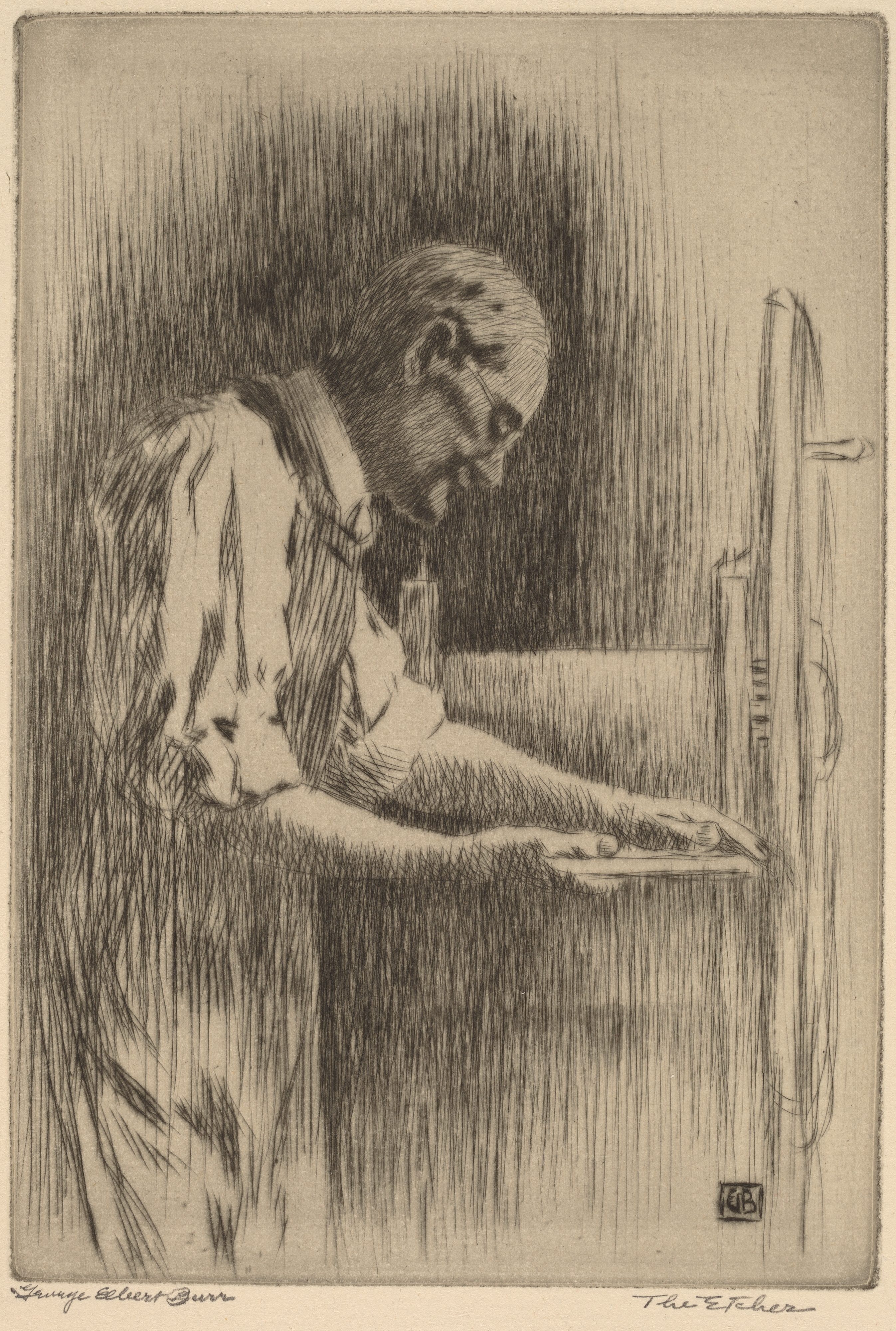
George Elbert Burr (April 14, 1859 – November 17, 1939 ) was an American printmaker and painter best known for his etchings and drypoints of the desert and mountain regions of the American West. == Life == Burr was born in Munroe Falls, Ohio, and ...
George Elbert Burr’s story is one of quiet dedication, a blossoming artistic talent nurtured not within the hallowed halls of formal academies but through self-directed study and an innate sensitivity to the natural world. Born in 1859 in Munroe Falls, Ohio, his early life offered little indication of the profound impact he would have on American printmaking and landscape painting. A move to Cameron, Missouri, at the age of ten, where his father established a hardware store, might seem an unlikely genesis for an artist celebrated for ethereal scenes of desert light and mountain majesty. Yet, it was within this practical environment – and crucially, with the encouragement of his mother who provided early tutoring – that Burr’s artistic inclinations first took root. A brief foray into the Chicago Academy of Design in 1878 proved ultimately unfulfilling; he returned home just months later, recognizing that his true education lay not in prescribed methods but in direct observation and personal exploration.
This self-reliance became a defining characteristic of Burr’s career. He balanced his responsibilities at the family store with an unwavering commitment to art, finding early success illustrating for prominent publications like Harper's, Scribner’s Magazine, and Frank Leslie’s Weekly. These commissions provided valuable experience but didn’t fully satisfy his artistic yearning. A pivotal moment arrived in 1892 with a four-year project documenting Heber R. Bishop’s extensive collection of jade antiquities for the Metropolitan Museum of Art. This meticulous work, involving over a thousand etchings, honed Burr's technical skills and provided financial stability, allowing him to embark on journeys that would shape his artistic vision.
The Rise of Tonalism: Burr's Embrace of Atmosphere and Mood
Tonalism was an artistic style that emerged in the 1880s when American artists began to paint landscape forms with an overall tone of colored atmosphere or mist. Between 1880 and 1915, dark, neutral hues such as gray, brown or blue, often dominated c...
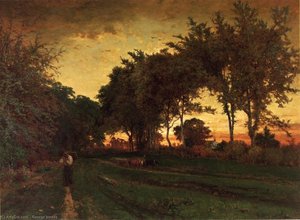
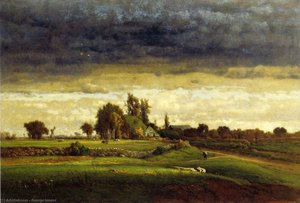
Burr’s art emerged during a period of significant change in American painting – the rise of Tonalism. Rejecting the meticulous realism of earlier styles, Tonalist artists sought to capture not merely *what* they saw but *how* they felt about what they saw. They prioritized atmosphere, mood, and subtle harmonies of color over precise detail. Think of James McNeill Whistler’s “Nocturnes,” veiled in mist and suggestion; this was the aesthetic climate that resonated deeply with Burr. He wasn't interested in photographic accuracy but in evoking a sense of place, a feeling of solitude, and the sublime beauty inherent in the natural world.
Burr’s work perfectly embodies these principles. His landscapes are characterized by soft focus, muted palettes dominated by grays, browns, and blues, and an emphasis on light and shadow. He wasn't simply depicting mountains or deserts; he was conveying their emotional resonance – the stillness of a twilight canyon, the vastness of the open plains, the quiet dignity of ancient trees. This shift towards subjective experience marked a departure from traditional landscape painting and established Burr as a key figure in the American Tonalist movement.
Mastering the Medium: Etching, Drypoint, and Watercolor Techniques
Landscape painting, also known as landscape art, is the depiction in painting of natural scenery such as mountains, valleys, rivers, trees, and forests, especially where the main subject is a wide view—with its elements arranged into a coherent compo...
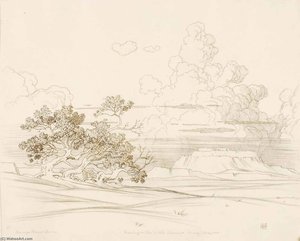
While proficient in watercolor, it was through etching and drypoint that George Elbert Burr truly distinguished himself. Etching, a technique involving incising lines into a metal plate with acid to create an image, allowed for incredible detail and nuance. Drypoint, a variation where the plate is scratched directly with a needle, produced a softer, more velvety line – ideal for capturing atmospheric effects. Burr’s mastery of these techniques was exceptional; he could render the delicate textures of foliage, the ruggedness of rock formations, and the subtle gradations of light with remarkable precision.
His process wasn't merely technical; it was deeply intuitive. He often worked directly from nature, creating sketches that served as the foundation for his prints. Watercolor played a crucial role as well, providing studies of color and composition that informed his later etchings. The interplay between these mediums – the immediacy of watercolor and the refined detail of etching – allowed Burr to achieve a unique visual language. He wasn’t afraid to experiment with different papers and inking techniques, constantly seeking ways to enhance the expressive power of his work.
American West as Muse: Colorado, Arizona, and Beyond
The landscapes of the American West became Burr’s enduring muse. Following his European travels – a period that broadened his artistic horizons but didn't fully capture his imagination – he sought inspiration closer to home. A move to Denver in 1907, prompted by health concerns, proved transformative. The majestic Rocky Mountains provided an inexhaustible source of subject matter, and Burr dedicated himself to capturing their grandeur. He established a studio with panoramic views, immersing himself in the landscape that would define his artistic career.
Later, settling in Phoenix, Arizona, in 1924, he turned his attention to the Sonoran and Mojave deserts. These arid landscapes – starkly different from the lush mountains of Colorado – offered a new palette of colors and textures. He captured the subtle shifts of light across sand dunes, the dramatic silhouettes of cacti against fiery sunsets, and the quiet resilience of desert flora. Burr’s ability to find beauty in seemingly barren environments speaks to his profound connection with nature and his talent for revealing hidden harmonies.
Burr’s Legacy & Influence on Landscape Art
George Elbert Burr left an indelible mark on American landscape painting, solidifying his position as a leading figure of the Tonalist movement. His prints are held in prestigious collections worldwide, including the Smithsonian American Art Museum, the British Museum, and the Metropolitan Museum of Art – testament to their enduring artistic merit. He wasn’t merely documenting landscapes; he was interpreting them through a deeply personal lens, conveying not just visual impressions but emotional experiences.
Burr's influence extends beyond his immediate contemporaries. His emphasis on atmosphere, mood, and subtle color harmonies continues to inspire artists today. He demonstrated the power of printmaking as a fine art medium, elevating etching and drypoint to new levels of expressive potential. His work reminds us that true beauty lies not in meticulous detail but in the ability to capture the essence of a place – its light, its stillness, its emotional resonance.
Collecting George Elbert Burr: Value, Authenticity, and Appreciation
For collectors, acquiring a George Elbert Burr print or watercolor is an investment not just in art but in a piece of American history. Prices vary depending on size, condition, and rarity, with watercolors generally commanding higher values than etchings. However, even early prints can be quite valuable, particularly those in excellent condition and from limited editions.
Authenticity is paramount. Look for signed prints with clear impressions and minimal foxing (brown spots caused by oxidation). Consulting with a reputable art dealer or appraiser is highly recommended. Beyond monetary value, the true reward of collecting Burr’s work lies in appreciating his unique artistic vision – his ability to capture the sublime beauty of the American West and evoke a sense of peace and tranquility. His landscapes offer a timeless escape, inviting viewers to connect with nature on a deeply emotional level.





