- Home

- Oil Painting Reproduction
- george innes
- Evening Landscape
 Buy print
 Send
Send Share
Share
 Details

 Download
 Similars
 X-Ray
X-Ray Diaporama
Evening Landscape


 Read More
Hand Made Oil Reproduction
Hand-painted oil on canvas in your size and frame, made to order by our artists.




































Pick from our preset sizes that match the artwork's original proportions.

You may enter your own dimensions to fit a specific frame or space. If your selected size does not match the original image's proportions, we will either crop the artwork or extend the painting with additional hand-painted elements. A digital mockup will be sent for your approval before production begins.
Please note that the on-screen preview does not reflect the actual cropping or extension. Only the mockup will accurately show the final composition.
While custom sizes are available, we recommend selecting a dimension from the predefined list to preserve the original proportions.
After order, AllPaintingsStore.com team will email client for instructions and provide a mockup preview
Worldwide Delivery () in 3/4 weeks instead of standard 5 weeks. (16 July). No compromise on quality.

Free Worldwide Express Shipping

High-Quality Linen Canvas

Full Shipping Insurance

Customs Tax Refund Guarantee

True Color Matching Guarantee

60-Day Return Policy (Defects Only)

100% Money-Back Guarantee

Bulk Discount Offer
 Glass option is only available in size under 110 CM

Evening Landscape
Reproduction Medium
Reproduction Size
-


Total Price
-
Artwork Description
Overview of "Evening Landscape"
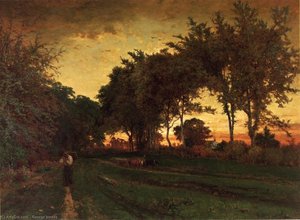
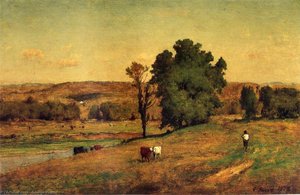
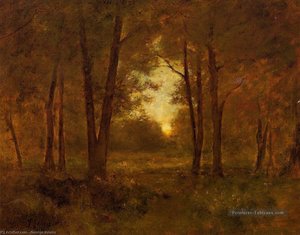
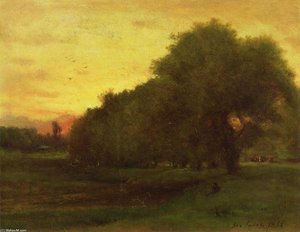
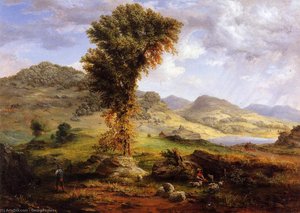
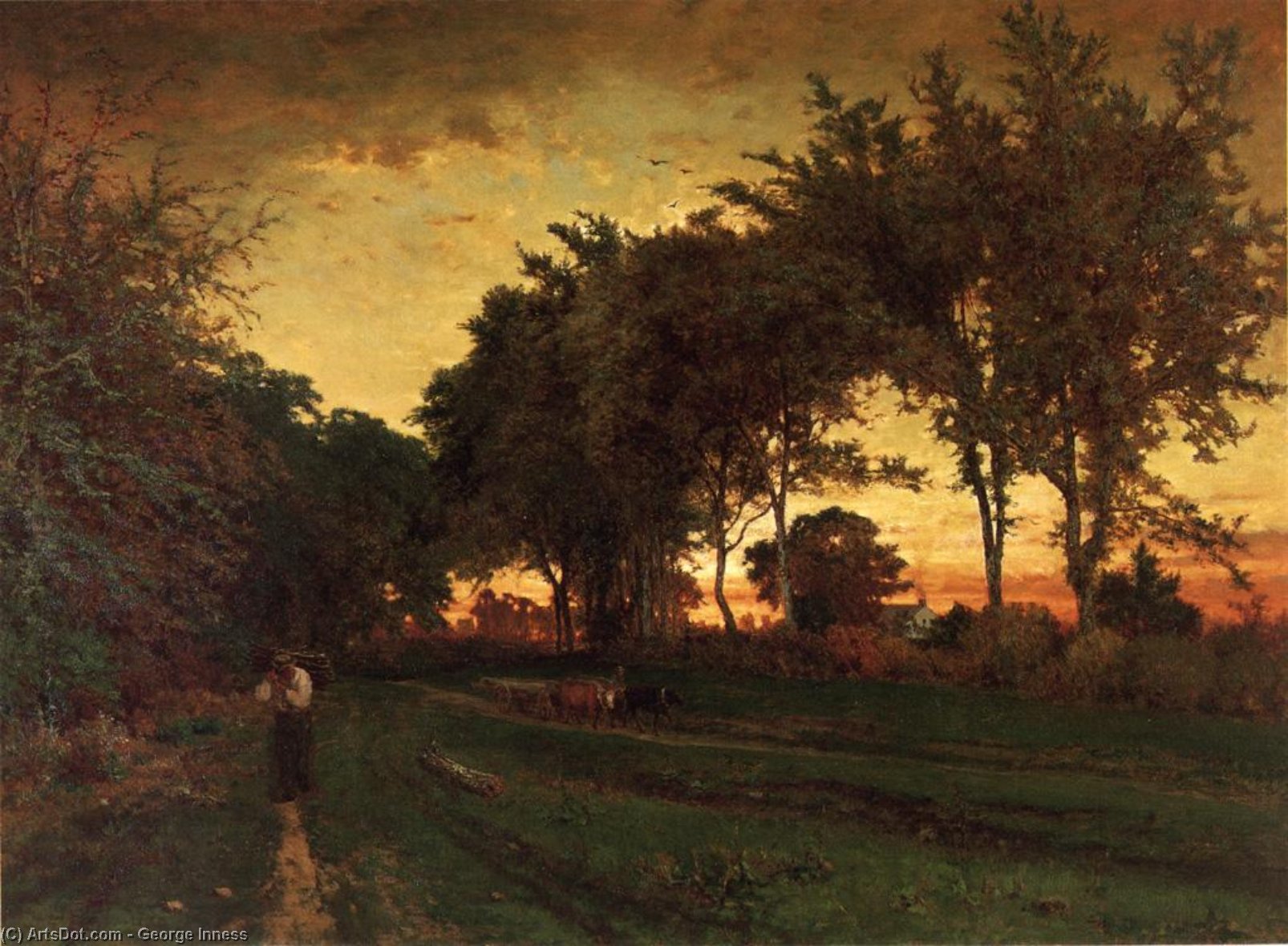
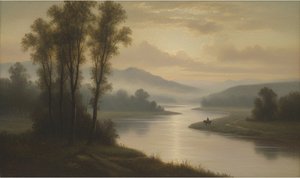
The painting "Evening Landscape" is a captivating landscape scene depicting a man walking his dog in the foreground, bathed in the warm glow of a setting sun. Created by the esteemed American landscape painter George Inness in 1863, this oil on canvas masterpiece currently resides at the Washington State University Museum of Art in the United States. The artwork exemplifies a serene atmosphere and showcases Inness's mastery of light and color to evoke a sense of tranquility and connection with nature.Artistic Style and Influences
George Inness was renowned for his ability to capture the essence of nature and portray the effects of light upon it—a quality strikingly evident in "Evening Landscape." His artistic style was significantly influenced by the French Barbizon school, a movement known for its emphasis on naturalism and capturing atmospheric effects. This influence is shared with other prominent artists such as Edward Mitchell Bannister, a key figure in the American Barbizon school. You can learn more about Edward Mitchell Bannister on Wikipedia.Symbolism and Emotional Impact
"Evening Landscape" is rich in symbolism. The setting sun represents the end of a day, symbolizing transition, reflection, and peace. The solitary figure walking with his dog suggests companionship, contemplation, and a connection to the natural world. The warm color palette—dominated by oranges, reds, and browns—evokes feelings of warmth, comfort, and nostalgia. The painting's overall effect is one of profound serenity and invites viewers to pause and appreciate the beauty of the moment. It speaks to the timeless appeal of rural landscapes and the restorative power of nature.Similar Works and Artistic Connections
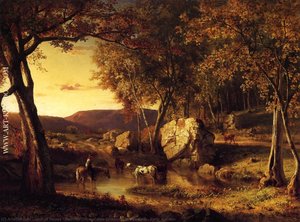
If you admire the style and atmosphere of "Evening Landscape," consider exploring other works by George Inness, such as "Hastings (also known as Evening Landscape)" available on AllPaintingsStore.com. For those interested in similar artistic approaches, the work of Wilhelm Riedel, particularly his oil on canvas painting "Evening landscape with a hunter," offers a comparable aesthetic and emotional resonance. You can find more information about Wilhelm Riedel on AllPaintingsStore.com.Reproductions and Availability
Handmade oil paintings reproductions of "Evening Landscape" are available on AllPaintingsStore.com, offering an opportunity to own a piece of art history and bring the beauty of this iconic landscape into your home or collection.Related Artworks




Artist Biography
George Inness (1825–1894): The Quiet Observer of Nature’s Soul
George Inness, born in Newburgh, New York, in 1825, stands as a pivotal figure in American Impressionism—a movement that sought to capture fleeting moments of beauty and emotion through luminous color palettes and loose brushstrokes. Unlike the grand narratives championed by the Hudson River School, Inness’s artistic vision prioritized introspection and spiritual contemplation, reflecting his profound engagement with philosophical ideas. This dedication resulted in landscapes imbued with a palpable serenity, portraying rural scenes and animal life with remarkable sensitivity to light and atmosphere. His legacy continues to inspire artists today who strive for similar expressive depth.- Early Life & Education: Inness’s formative years were marked by exposure to Transcendentalist thinkers like Ralph Waldo Emerson and Henry David Thoreau, whose emphasis on intuition and connection with the natural world profoundly shaped his artistic sensibilities. He pursued formal training at Yale University before embarking on a self-directed study of art in Paris during the mid-1850s—a crucial period for absorbing Impressionistic techniques.
- Parisian Influences & Artistic Development: In Paris, Inness immersed himself in the burgeoning Impressionist movement, studying under Gustave Courbet and Jean-François Millet. These encounters solidified his commitment to capturing immediate visual sensations rather than meticulously recreating reality. He experimented with plein air painting—working outdoors directly from nature—developing a distinctive style characterized by subtle gradations of color and textured brushwork.
- Notable Landscapes & Paintings: Inness’s oeuvre comprises numerous iconic landscapes that exemplify the movement's aesthetic principles. Works such as “The Dark Side of Twilight” (1869) and “Winter Landscape” (1873) are celebrated for their masterful depiction of atmospheric conditions—particularly mist and snow—and their ability to evoke a sense of profound stillness. His portraits, too, reveal an artist’s keen observation of human psychology.
- Symbolism & Spiritual Vision: Beyond mere visual representation, Inness's paintings convey deeper symbolic meanings rooted in his philosophical convictions. Recurring motifs—such as trees and animals—represent resilience, harmony, and the interconnectedness of all living things. His canvases are not simply landscapes; they are meditations on the sublime beauty of nature and its capacity to inspire spiritual awareness.
- Legacy & Historical Significance: George Inness’s contribution to American art is undeniable. He championed a humanist aesthetic that prioritized emotional resonance over technical virtuosity—a stance that distinguished him from his contemporaries and cemented his place as one of the foremost Impressionist painters of his time. His influence extends beyond painting, inspiring subsequent generations of artists to explore themes of contemplation and connection with the natural world.

george innes
1825 - 1894 , United States of America
Quick Facts
- Artistic Movement Or Style: American Impressionism
- Artists Or Movements Influenced By This Artist: ['Impressionism']
- Artists Who Influenced This Artist: ['Hudson River School']
- Date Of Birth: 1825
- Full Name: George Inness
- Nationality: American
- Notable Artworks:
- The Black Swan
- A Bit of Roman Aqueduct
- Summer Days
- Place Of Birth: Newburgh, New York, United States
Related Articles

Ernest Lawson: A Pioneer of American Impressionism & His Vision of the Rural Landscape
Explore the life & art of Ernest Lawson, a pivotal figure in American Impressionism. Discover his evocative landscapes, influences, and lasting legacy with AllPaintingsStore.

Grant Wood & American Regionalism: Identity, Myth & the Rural Landscape
Explore the world of Grant Wood & American Regionalism with AllPaintingsStore. Discover the symbolism behind 'American Gothic', recurring themes, and the movement's lasting impact on art history. High-quality reproductions available.
George Elbert Burr: A Pioneer of American Tonalism & Evocative Landscape Painting
Explore the captivating landscapes of George Elbert Burr, a pioneer of American Tonalism. Discover his masterful etchings, drypoints & watercolors – and learn about collecting this influential artist's work.

Miner Kilbourne Kellogg: A Study in American Tonalism & Atmospheric Landscape
Explore the captivating world of Miner Kilbourne Kellogg, a pivotal figure in American Tonalism. Discover his atmospheric landscapes, Orientalist influences, and legacy as an art historian & collector. Learn more at AllPaintingsStore.

Franz Bischoff: Bridging Tonalism & Impressionism in California Landscape Painting
Explore the captivating art of Franz Bischoff, a pivotal figure bridging Tonalism & California Impressionism. Discover his stunning landscapes, floral works, and lasting legacy with AllPaintingsStore.