- Home

- Oil Painting Reproduction
- george innes
- Summer Days, Cattle Drinking Late Summer, Early Autumn

 Buy print
 Send
Send Share
Share
 Details

 Download
 Similars
 X-Ray
X-Ray Diaporama
Summer Days, Cattle Drinking Late Summer, Early Autumn


 Read More
Hand Made Oil Reproduction
Hand-painted oil on canvas in your size and frame, made to order by our artists.




P118B $10

P118H $10

P118W $10

P438Z $10

P508JH $12

P508YH $12

P805H $10

P805Z $10

P919BZ $10

P919G $10

P919XJ $10

P959ZH $10

P968JZ $12

W106C $8

W218G $10

W218JH $8

W218Y $10

W307PJ $10

W316G $10

W316PJ $8

W316Y $10

W398PJ $8

W4111J $10

W500HY $15

W500JH $15

W692G $12

W849H $8

W940BG $15

W953PJ $8




Pick from our preset sizes that match the artwork's original proportions.

You may enter your own dimensions to fit a specific frame or space. If your selected size does not match the original image's proportions, we will either crop the artwork or extend the painting with additional hand-painted elements. A digital mockup will be sent for your approval before production begins.
Please note that the on-screen preview does not reflect the actual cropping or extension. Only the mockup will accurately show the final composition.
While custom sizes are available, we recommend selecting a dimension from the predefined list to preserve the original proportions.
After order, AllPaintingsStore.com team will email client for instructions and provide a mockup preview
Worldwide Delivery () in 3/4 weeks instead of standard 5 weeks. (16 July). No compromise on quality.

Free Worldwide Express Shipping

High-Quality Linen Canvas

Full Shipping Insurance

Customs Tax Refund Guarantee

True Color Matching Guarantee

60-Day Return Policy (Defects Only)

100% Money-Back Guarantee

Bulk Discount Offer
 Glass option is only available in size under 110 CM

Summer Days, Cattle Drinking Late Summer, Early Autumn
Reproduction Medium
Reproduction Size
-


Total Price
-
Artwork Description
A Symphony of Serenity: Exploring George Inness's Masterpiece
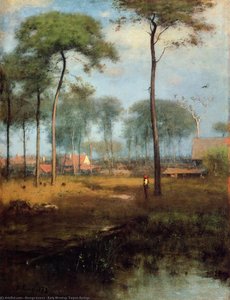
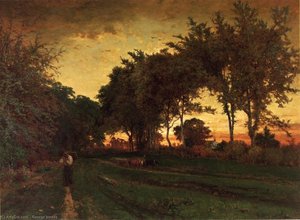
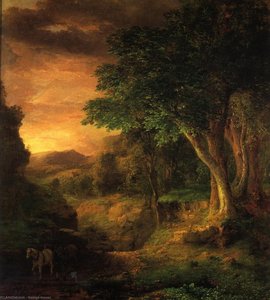
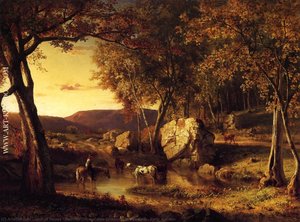
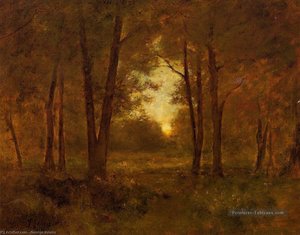
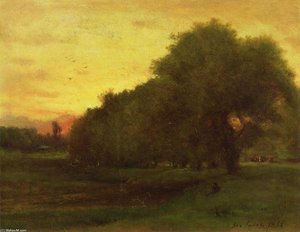
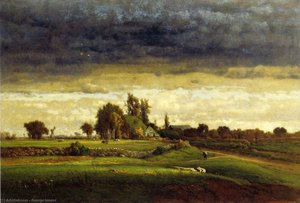
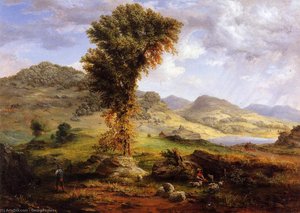
To gaze upon George Inness’s Summer Days, Cattle Drinking Late Summer, Early Autumn is to step across the threshold and into a moment suspended in amber time. This painting, executed in 1857, is far more than a mere depiction of pastoral life; it is a profound meditation on tranquility itself. The scene unfolds with an almost breath-held stillness, capturing the quiet communion between man's domain and nature’s enduring rhythm. Here, the gentle gathering of horses and cows at the edge of a stream forms the heart of the composition, surrounded by the lush vitality of late summer foliage.
The Tonalist Vision: Technique and Atmosphere
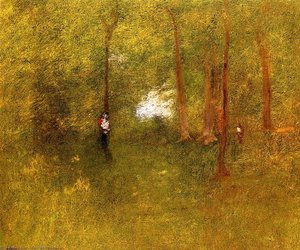
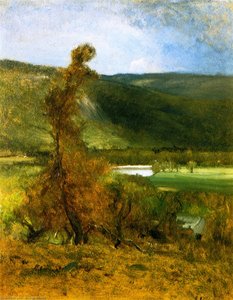
Inness was a master interpreter of light and mood, placing him within the lineage of American landscape painters who sought to evoke feeling as much as they rendered sight. His signature Tonalist style is immediately apparent; it eschews sharp, dramatic contrasts for a harmonious blend of soft hues and atmospheric depth. Observe how the warm colors—the ochres of the earth meeting the deep greens of the trees—are woven together by delicate brushstrokes. These strokes do not merely describe; they suggest, allowing the viewer's eye to wander through the dappled light filtering through the canopy. The overall effect is one of enveloping peace, a palpable sense of breathable air and gentle warmth.
Symbolism in the Natural Gathering
The elements within this canvas carry symbolic weight. The act of drinking from the stream itself speaks to sustenance, renewal, and the cyclical nature of life. The presence of diverse creatures—the grazing cows, the drinking horses, and the scattered birds flitting through the undergrowth—celebrates biodiversity and the interconnectedness of all living things. Furthermore, the subtle inclusion of a human figure observing this tableau suggests humanity’s role not as conqueror, but as quiet witness to nature's enduring majesty. It invites contemplation on our place within the grand, unfolding drama of the natural world.
A Timeless Appeal for the Modern Collector
For the art lover, collector, or designer seeking to infuse a space with soulful depth, this work offers unparalleled emotional resonance. While it anchors itself in the historical context of mid-19th century American landscape painting, its message remains eternally relevant: the necessity of pausing. Owning a reproduction of Summer Days, Cattle Drinking Late Summer, Early Autumn is acquiring not just pigment on canvas, but an invitation to slow down. It transforms any room into a sanctuary, echoing the profound, quiet grandeur that George Inness so masterfully captured for us.
Related Artworks




Artist Biography
George Inness (1825–1894): The Quiet Observer of Nature’s Soul
George Inness, born in Newburgh, New York, in 1825, stands as a pivotal figure in American Impressionism—a movement that sought to capture fleeting moments of beauty and emotion through luminous color palettes and loose brushstrokes. Unlike the grand narratives championed by the Hudson River School, Inness’s artistic vision prioritized introspection and spiritual contemplation, reflecting his profound engagement with philosophical ideas. This dedication resulted in landscapes imbued with a palpable serenity, portraying rural scenes and animal life with remarkable sensitivity to light and atmosphere. His legacy continues to inspire artists today who strive for similar expressive depth.- Early Life & Education: Inness’s formative years were marked by exposure to Transcendentalist thinkers like Ralph Waldo Emerson and Henry David Thoreau, whose emphasis on intuition and connection with the natural world profoundly shaped his artistic sensibilities. He pursued formal training at Yale University before embarking on a self-directed study of art in Paris during the mid-1850s—a crucial period for absorbing Impressionistic techniques.
- Parisian Influences & Artistic Development: In Paris, Inness immersed himself in the burgeoning Impressionist movement, studying under Gustave Courbet and Jean-François Millet. These encounters solidified his commitment to capturing immediate visual sensations rather than meticulously recreating reality. He experimented with plein air painting—working outdoors directly from nature—developing a distinctive style characterized by subtle gradations of color and textured brushwork.
- Notable Landscapes & Paintings: Inness’s oeuvre comprises numerous iconic landscapes that exemplify the movement's aesthetic principles. Works such as “The Dark Side of Twilight” (1869) and “Winter Landscape” (1873) are celebrated for their masterful depiction of atmospheric conditions—particularly mist and snow—and their ability to evoke a sense of profound stillness. His portraits, too, reveal an artist’s keen observation of human psychology.
- Symbolism & Spiritual Vision: Beyond mere visual representation, Inness's paintings convey deeper symbolic meanings rooted in his philosophical convictions. Recurring motifs—such as trees and animals—represent resilience, harmony, and the interconnectedness of all living things. His canvases are not simply landscapes; they are meditations on the sublime beauty of nature and its capacity to inspire spiritual awareness.
- Legacy & Historical Significance: George Inness’s contribution to American art is undeniable. He championed a humanist aesthetic that prioritized emotional resonance over technical virtuosity—a stance that distinguished him from his contemporaries and cemented his place as one of the foremost Impressionist painters of his time. His influence extends beyond painting, inspiring subsequent generations of artists to explore themes of contemplation and connection with the natural world.

george innes
1825 - 1894 , United States of America
Quick Facts
- Artistic Movement Or Style: American Impressionism
- Artists Or Movements Influenced By This Artist: ['Impressionism']
- Artists Who Influenced This Artist: ['Hudson River School']
- Date Of Birth: 1825
- Full Name: George Inness
- Nationality: American
- Notable Artworks:
- The Black Swan
- A Bit of Roman Aqueduct
- Summer Days
- Place Of Birth: Newburgh, New York, United States
Related Articles
Thomas George Webster: Navigating Genre Boundaries & American Identity in 19th-Century Landscape Painting
Explore the captivating genre scenes of Thomas George Webster, a Victorian painter bridging British traditions with American themes. Discover his style, influences & legacy in 19th-century art history.
George Inness: Transcendental Landscapes & the American Search for Spiritual Harmony
Explore the profound landscapes of George Inness, a leading American artist-philosopher. Discover his spiritual approach to painting, influences, and lasting legacy with AllPaintingsStore.
Evoking Nature's Sublime: A Comprehensive Exploration of 19th-Century Landscape Painting
Explore the captivating world of 19th-century landscape painting! Discover renowned artists like Friedrich & Monet, key movements, and find the perfect artwork to bring nature's serenity into your home. Expert insights at AllPaintingsStore.

John George Brown: Capturing American Life & Sentiment in 19th-Century Genre Painting
Explore the captivating genre paintings of John George Brown, celebrated for his realistic depictions of 19th-century American life. Discover his legacy & find museum-quality reproductions at AllPaintingsStore.

Luminism: Capturing Ephemeral Light & Transcendence in 19th-Century American Landscape Painting
Explore the captivating world of Luminism! Discover the key artists, techniques & legacy of this influential 19th-century American art movement. Expert insights & high-quality reproductions at AllPaintingsStore.