
Introduction: The Enduring Power of Art as Social Critique
Social realism is work produced by painters, printmakers, photographers, writers, filmmakers and some musicians that aims to draw attention to the real socio-political conditions of the working class as a means to critique the power structures behind...
From the earliest cave paintings depicting hunts and communal life to the grand historical narratives adorning Renaissance palaces, art has always been more than mere decoration. It’s a mirror reflecting society – its triumphs, its anxieties, and, crucially, its flaws. But beyond simple reflection lies a potent force: social critique. Throughout history, artists have wielded their brushes, chisels, and pens not just to capture beauty, but to challenge power, expose injustice, and provoke change. This impulse, born from observation and empathy, has given rise to some of the most enduring and impactful works ever created, offering us a unique window into the past and a timeless commentary on the human condition.
From Hogarth's Engravings to Daumier's Lithographs: Early Masters of Satire
 South Sea Scheme
Explore William Hogarth’s ‘South Sea Scheme,’ a dramatic 18th-century engraving depicting financial chaos & social satire. A masterpiece of Baroque realism, perfect for art enthusiasts.
The 18th century witnessed the rise of a particularly biting form of artistic criticism – satire. William Hogarth, an English painter and engraver, became renowned for his series of moralizing prints like “South Sea Scheme” (1721). This work isn’t simply a depiction of financial chaos following the bursting of the South Sea Bubble; it's a scathing indictment of greed, speculation, and the societal consequences of unchecked ambition. Hogarth masterfully employed caricature and symbolism – distorted figures representing various social types, allegorical elements hinting at deeper corruption – to create images that were both entertaining and deeply unsettling. His work resonated with a public increasingly aware of economic disparities and political maneuvering.
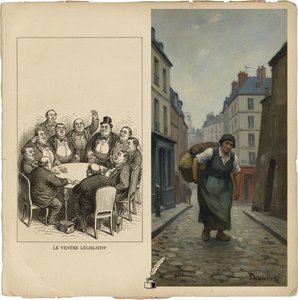
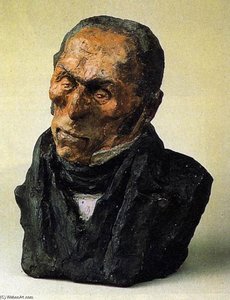
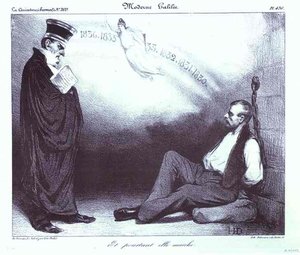
Across the Channel, Honoré Daumier continued this tradition in 19th-century France. Working primarily as a lithographer, Daumier’s art was inextricably linked to the burgeoning world of newspapers and popular culture. “The Legislative Belly” (1834) is perhaps his most famous example of social commentary – a ferocious depiction of the French parliament, reduced to a grotesque assembly consumed by self-interest. Unlike Hogarth's more nuanced approach, Daumier’s satire often bordered on outright condemnation. His lithographs weren’t just images; they were weapons in a battle against political corruption and social injustice, frequently landing him in prison for his outspoken views. The power of his line work – bold, expressive, and unflinchingly honest – continues to captivate viewers today.
Realism and the Representation of Working-Class Life in the 19th Century
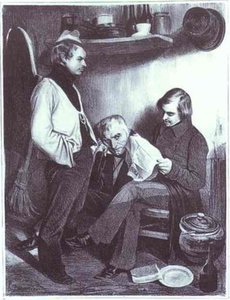 Remembrances of St. Pelagie. (Souvenir de ste Pélagie)
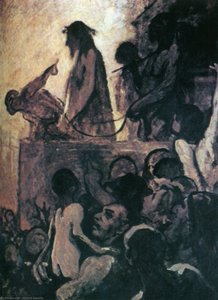
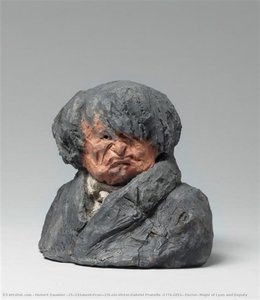
Honoré Daumier (1808-1879) was a French printmaker, caricaturist, painter, and sculptor. Born in Marseille, France, he is renowned for his satirical lithographs that critiqued the social and political landscape of 19th-century France. Daumier’s work
As the Industrial Revolution transformed Europe, a new artistic movement emerged: Realism. Artists like Gustave Courbet rejected idealized depictions of history and mythology, turning their attention instead to the everyday lives of ordinary people. While not always explicitly satirical, Realism’s very subject matter – the toil of laborers, the poverty of urban slums, the harsh realities of rural life – was a powerful form of social commentary. By depicting these often-ignored aspects of society with unflinching honesty, artists challenged prevailing notions of beauty and respectability.
This shift wasn’t merely aesthetic; it was deeply political. Artists like Jean-François Millet sought to elevate the dignity of working people, portraying them not as objects of pity but as individuals deserving of respect. This focus on the human cost of industrialization resonated with a growing socialist consciousness and laid the groundwork for later movements that would explicitly embrace social activism.
American Social Realism: Confronting Political Corruption and Inequality
 Jack Levine
Jack Levine (1915-2010): American Social Realist painter & printmaker famed for satirical critiques of modern life, political corruption, & biblical art. A key Boston Expressionist.
The early 20th century saw the rise of American Social Realism, fueled by the hardships of the Great Depression and a desire to expose the inequalities inherent in capitalist society. Artists like Jack Levine, with his powerfully unsettling depictions of political corruption and biblical scenes imbued with modern anxieties, became central figures in this movement. Levine’s work often featured distorted figures and grotesque imagery, reflecting a deep cynicism about power structures.
William Gropper, another key figure, utilized satirical cartoons and paintings to address issues of labor unrest, war, and societal hypocrisy. His art wasn't simply observational; it was actively engaged in the political debates of the time, often serving as propaganda for socialist causes. The Ashcan School, with artists like John Sloan, also contributed to this movement by depicting the gritty realities of urban life – poverty, immigration, and the struggles of working-class communities.
Global Voices of Protest: Art as a Tool for Challenging Authority
 Azim Azimzade
Discover Azim Azimzade (1880-1943), a pioneering Azerbaijani artist & satirist. Founder of Azeri satirical graphics, known for political posters, book illustrations, and social commentary challenging tradition. People's Artist of the Azerbaijan SSR.
Social Realism wasn’t confined to Europe or America. Artists around the globe utilized similar techniques to challenge authority and expose injustice in their own societies. Azim Azimzade, a pioneering Azerbaijani artist, founded Azeri satirical graphics, using political posters and book illustrations to critique tradition and advocate for social change. His work, often imbued with humor and irony, played a crucial role in shaping public opinion during a period of significant political upheaval.
The common thread uniting these diverse artists is their willingness to use art as a tool for protest – to challenge the status quo, expose hypocrisy, and advocate for a more just world. Whether through biting satire, unflinching realism, or powerful symbolism, they demonstrated that art could be a potent force for social transformation.
The Legacy of Social Commentary in Contemporary Art
While the term “Social Realism” may evoke images of a specific historical period, the impulse to use art as social commentary remains vibrant today. Artists continue to grapple with issues of political corruption, economic inequality, and environmental degradation, employing a wide range of techniques – from traditional painting and sculpture to performance art and digital media.
The enduring power of this tradition lies in its ability to connect with audiences on an emotional level, prompting reflection and inspiring action. From the satirical works of contemporary cartoonists to the politically charged installations of modern artists, the legacy of Hogarth, Daumier, and their successors continues to shape our understanding of the world around us. At WahooArt, we believe in making these powerful artworks accessible to all, allowing you to engage with history and reflect on the enduring relevance of social critique.
- Explore our collection of 19th-century Realist paintings for a deeper understanding of this influential movement.
- Discover satirical prints by Honoré Daumier and William Hogarth, masters of social commentary.
- Find inspiration in the works of American Social Realists like Jack Levine and William Gropper.