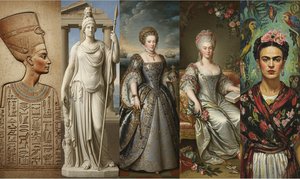
The Rise of Portraiture: Beyond Aristocratic Likenesses
For centuries, portraiture served as a visual testament to power, privilege, and lineage – a realm largely reserved for the aristocracy and those who could afford to commission artists skilled in capturing their likeness. Yet, the 19th century witnessed a profound shift in this tradition, a democratization of the gaze that extended beyond mere representation to encompass a broader spectrum of society and a deeper exploration of human identity. While earlier portraits often emphasized status through opulent attire and grand settings, the burgeoning middle class and evolving artistic philosophies began to demand something more: authenticity, introspection, and a reflection of their own aspirations and anxieties. This wasn’t simply about *looking* like someone; it was about *being* seen – understood, acknowledged, and represented in a way that resonated with their individual character.
The technical advancements of the era played a crucial role. The development of photography, though initially viewed as a threat by some painters, ultimately spurred innovation within portraiture itself. Artists responded by focusing on qualities that photography couldn’t easily replicate – the subtle nuances of emotion, the expressive power of brushwork, and the unique atmosphere created through color and light. This period saw a move away from idealized depictions towards a more honest portrayal of subjects, flaws and all. The very definition of portraiture was expanding, challenging established norms and paving the way for new artistic expressions.
Realism's Revolutionary Gaze: Capturing Everyday Life & Social Critique
 The Enduring Legacy of 19th-Century Realism: A Reflection of Society & Artistic Innovation
Explore the captivating world of 19th-century Realism! Discover key artists, masterpieces & the social commentary behind this influential art movement. Expert insights at .
The mid-19th century gave rise to Realism, a movement that boldly rejected romanticized visions in favor of depicting life as it truly was – often harsh, unglamorous, and deeply affected by the social realities of industrialization and urbanization. Artists like Gustave Courbet didn’t shy away from portraying the working class, challenging the traditional focus on nobility and wealth. His monumental work, The Stone Breakers, though sadly lost during World War II, exemplified this commitment to depicting the dignity and hardship of labor. This wasn't merely about documenting poverty; it was a deliberate act of social commentary, forcing viewers to confront uncomfortable truths about their society.
Realism extended beyond subject matter to encompass a new level of technical precision. Artists meticulously rendered details, striving for accuracy and objectivity in their portrayals. However, this wasn’t simply photographic replication; Realist painters infused their work with emotional weight and moral conviction. They sought to expose the power structures that perpetuated inequality and inspire empathy for those marginalized by society. This commitment to social critique resonated deeply with a growing audience disillusioned with romantic ideals and eager for change.
Self-Portraiture as Introspection: Artists Confronting Identity and the Inner Self
Self-portraiture, or Autoportraiture is the field of art theory and history that studies the history, means of production, circulation, reception, forms, and meanings of self-portraits. Emerging in Antiquity and becoming popular from the Renaissance ...
Alongside the broader movement of Realism, self-portraiture experienced a remarkable surge in popularity during the 19th century. This wasn’t merely about documenting one's physical appearance; it was an act of profound introspection – a means for artists to explore their own identity, anxieties, and artistic vision. Artists like Rembrandt van Rijn produced numerous self-portraits throughout his career, offering a fascinating glimpse into his evolving psyche and mastery of technique. Each portrait served as a visual diary, capturing not only his physical likeness but also his emotional state at different stages of his life.
The rise of individualism in the 19th century further fueled this trend. As society placed greater emphasis on personal expression and self-discovery, artists turned inward, using self-portraiture as a vehicle for exploring their own unique perspectives and challenging conventional notions of identity. This practice also allowed them to experiment with technique and style, pushing the boundaries of artistic representation. The gaze became internalized, shifting from external observation to internal reflection.
Impressionism’s Fleeting Moments: Light, Form, and Psychological Depth in Portraiture
 Madame Gaudibert
Admire Claude Monet’s ‘Madame Gaudibert,’ a stunning Impressionist portrait capturing light & form. Explore its unique style & masterful technique – a timeless masterpiece.
As the 19th century progressed, Impressionism emerged as a radical departure from traditional painting techniques. Artists like Claude Monet abandoned meticulous detail in favor of capturing fleeting moments of light and color. This approach profoundly impacted portraiture, shifting the focus from precise representation to conveying atmosphere, emotion, and psychological depth. Madame Gaudibert, painted by Monet, exemplifies this shift. The artist doesn’t attempt to create a hyper-realistic likeness; instead, he focuses on capturing the play of light on her face and clothing, creating a sense of immediacy and intimacy.
Impressionist portraiture often prioritized subjective experience over objective accuracy. Artists sought to convey not just *what* their subjects looked like but also *how* they felt – their mood, personality, and inner life. This emphasis on emotion resonated with a growing audience fascinated by the complexities of human psychology. The brushstrokes themselves became expressive, conveying movement, energy, and the artist’s own emotional response to the subject.
The Bourgeoisie on Canvas: Status, Morality, and 'Re-Tailoring' Identities
The burgeoning middle class of the 19th century presented a new challenge for portrait artists. Unlike the aristocracy, who often sought portraits that emphasized their lineage and power, the bourgeoisie desired representations that reflected their own values – respectability, hard work, and social mobility. Portraits became tools for constructing and projecting a carefully curated image of success and morality. As research suggests, these portraits were often about “re-tailoring” identities to fit societal expectations.
Artists responded by creating portraits that emphasized the subjects’ accomplishments, domesticity, or philanthropic endeavors. Clothing, settings, and accessories were carefully chosen to convey status and respectability. However, beneath this veneer of propriety often lay a complex interplay of anxieties and aspirations. Portraits became visual narratives, revealing not only what the bourgeoisie wanted to be seen as but also their underlying concerns about social acceptance and upward mobility.
Legacy & Influence: How 19th-Century Portraits Continue to Resonate Today
The innovations in portraiture that emerged during the 19th century continue to resonate with artists today. The emphasis on psychological depth, emotional honesty, and social commentary remains central to contemporary portrait painting. Artists continue to explore questions of identity, representation, and power through a variety of mediums and techniques. From photorealism to abstract expressionism, the legacy of Realism and Impressionism can be seen in countless works.
Moreover, the democratization of the gaze that began in the 19th century has continued unabated. Today, anyone with a smartphone can create self-portraits and share them with the world. While the context may have changed, the underlying desire to be seen – understood, acknowledged, and represented – remains as powerful as ever. At AllPaintingsStore, we celebrate this rich artistic heritage by offering high-quality reproductions of iconic 19th-century portraits, allowing you to bring these masterpieces into your own home and connect with the artists and stories behind them. Explore our collection today and discover the enduring power of portraiture.